Question
How do checkpoints and guardrails in the AI lifecycle help in preempting risks and ensuring operational efficiency?
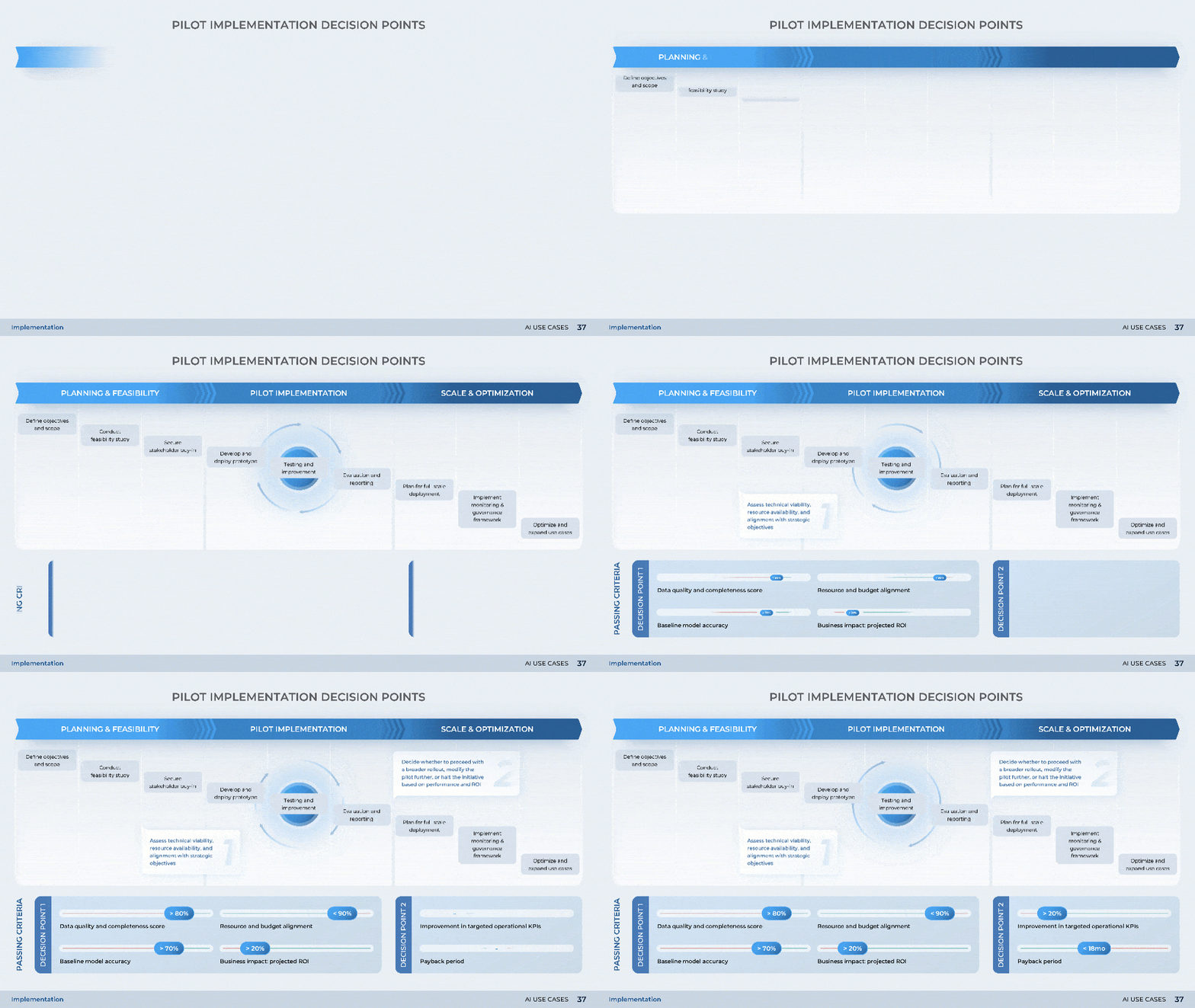
Checkpoints and guardrails in the AI lifecycle play a crucial role in managing risks and ensuring operational efficiency. Checkpoints serve as verification points for technical milestones, but they also embed ethical and operational considerations into daily processes. They ensure that each stage of the AI lifecycle, from security baselining during requirements gathering to performance tuning after pilot launch, is properly managed and meets the set standards. On the other hand, guardrails like iterative model validation or regular user feedback loops allow for real-time adjustments whenever unexpected shifts occur. By anticipating these scenarios, organizations can preempt many of the risks, thereby enhancing operational efficiency.
This question was asked on:
Each stage of the AI lifecycle is tied to specific responsibilities, whether that entails security baselining during requirements gathering or performance tuning after pilot launch. The significance of checkpoints is not limited to verifying technical milestones; it extends to embedding ethical and operational considerations into day-to-day processes. Meanwhile, guardrails such as iterative model validation or regular user feedback loops enable real-time calibration whenever unexpected shifts occur. By anticipating these scenarios rather than reacting to them, organizations can preempt many of the risks highlighted in earlier discussions.
Asked on

Preview (38 Slides)










Join for free.
Get new presentations each week.
Receive new free presentations every Monday to your inbox.
Full content, complete versions — No credit card required.
Trusted by top partners