Question
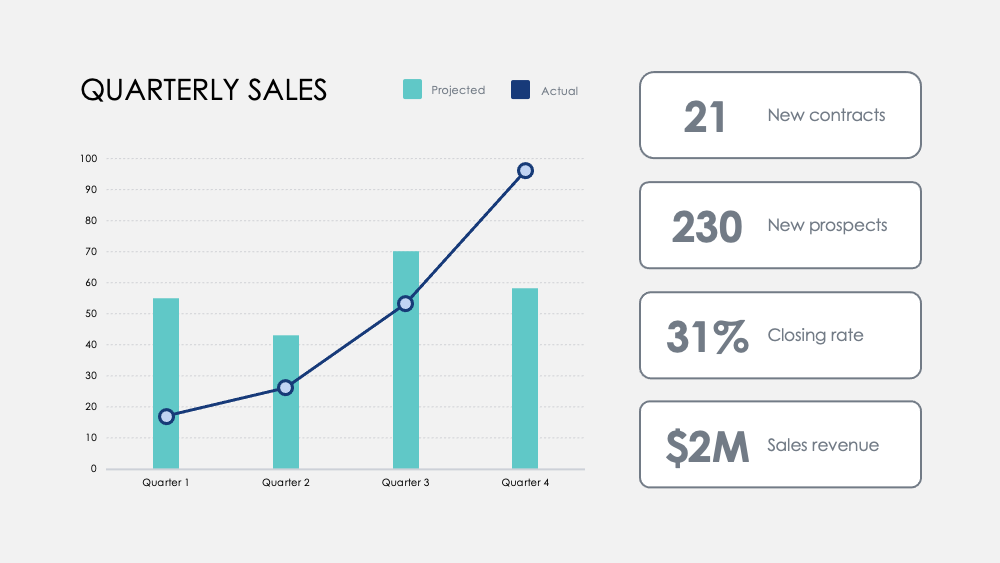
There are several ways to visualize revenue tracking. You can use bar graphs or line charts to track revenue over time. Pie charts can be used to show the proportion of revenue from different sources. A scatter plot can show the relationship between two variables, such as advertising spend and revenue. A heat map can show revenue by geographic region. A treemap can show the proportion of revenue from different business units or product lines. A waterfall chart can show the cumulative effect of sequential positive and negative values, which can be useful for understanding net revenue. A funnel chart can show the revenue generation process from initial contact to final sale.
This question was asked on:
Competitive analysis: compare your company's revenue, new subscribers and average customers to your competition. Visualizes the competitive landscape and analyze your rival's gross revenue by quarter to your own. Department and product advantages: Correlate department success across key activities and measure contributions to its overall success. Contrast product advantages with simple visual analysis. User feedback: Survey users and visualize key discoveries to learn how your customers perceive your products and services. Customer distribution: Discover customer demographics with sales data to visualize your key markets. Revenue: Track revenue across new accounts, projects, or partnerships. Track margins across products and compare revenues across years to discover the most significant growth increases and revenue drops. Treemap: Compare relationships between business ventures in a branched hierarchy and visualize ratios by scale. Option Comparison: Weigh potential business moves and ...





Receive new free presentations every Monday to your inbox.
Full content, complete versions — No credit card required.