Question
Mismatching talent, role, and value in an organization can lead to several negative consequences. Firstly, it can result in a false sense of security as organizations often track role criticality and individual capability separately. Secondly, it can lead to inefficiencies and underperformance as employees may not be able to fully utilize their skills or fulfill their roles effectively. Lastly, it can lead to employee dissatisfaction and high turnover rates as employees may feel undervalued or misplaced.
This question was asked on:
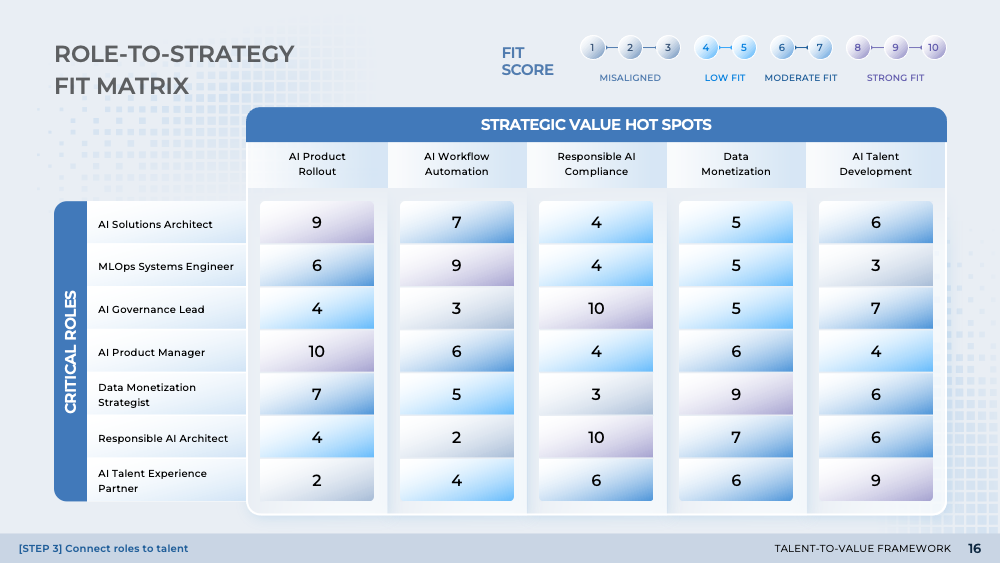
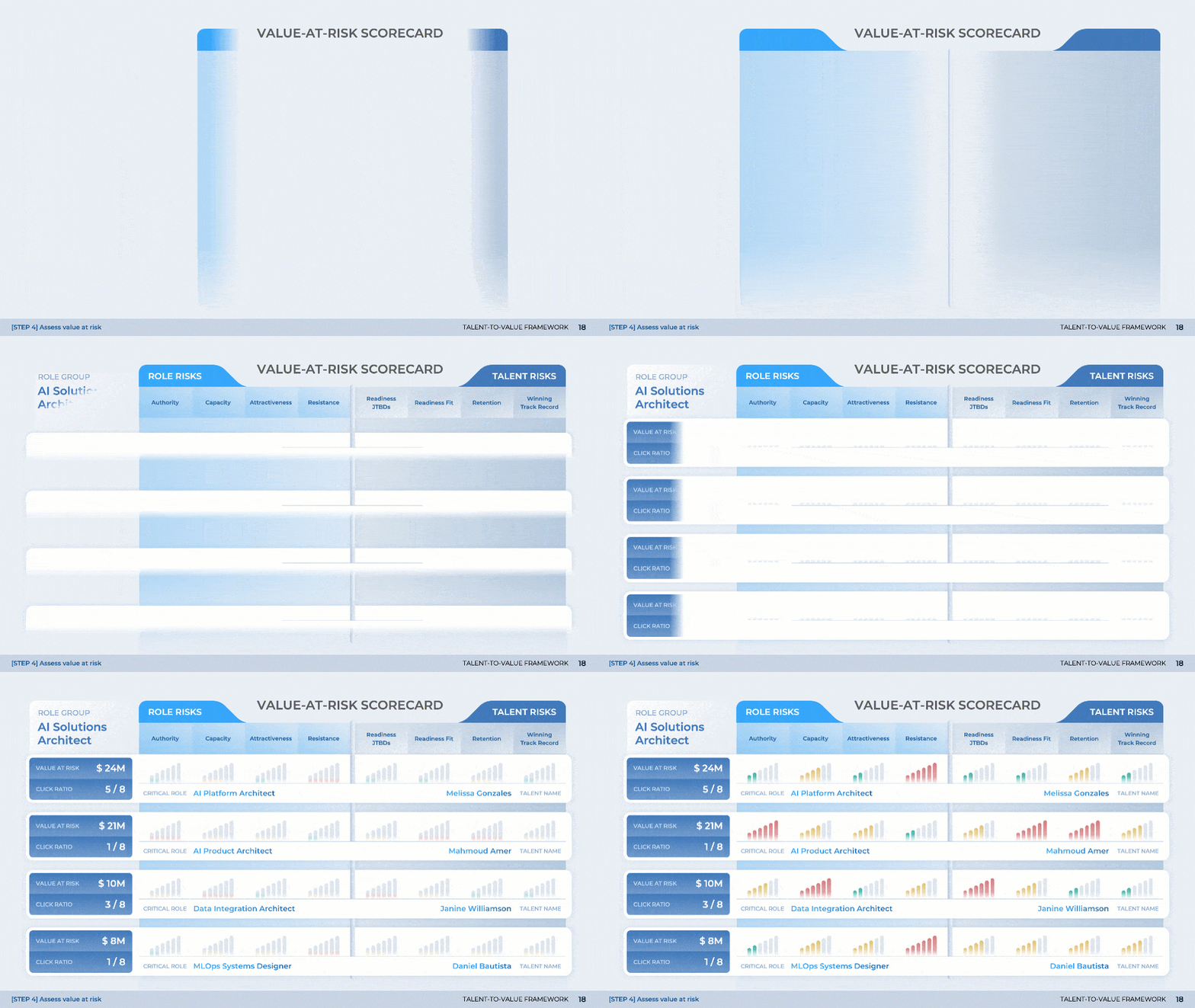
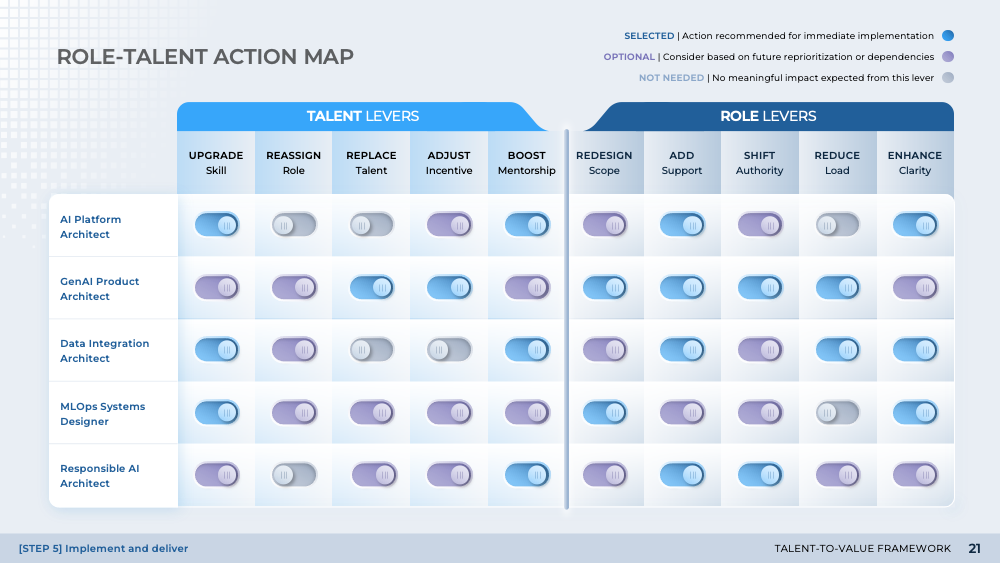
So then what happens when talent, role, and value actually get mismatched? Too often, organizations track role criticality and individual capability separately, which leads to a false sense of security. On a , we get a consolidated view: each critical role is evaluated on structural dimensions like authority, capacity, and resistance, while the person occupying that role is evaluated on readiness, retention, and track record. These recall the same dimensions shown in the role-to-value talent card from the previous step.












Receive new free presentations every Monday to your inbox.
Full content, complete versions — No credit card required.