Question
A well-constructed histogram has several key features. First, it accurately represents the data by separating it into groupings called bins. The bins should be of equal size and cover the entire range of the data. Second, the histogram should clearly visualize the distribution of the data, showing patterns such as the central tendency, spread, and skewness. Third, it should be customizable to fit different specifications. Lastly, it should provide filters to decide how to slice the data.
This question was asked on:
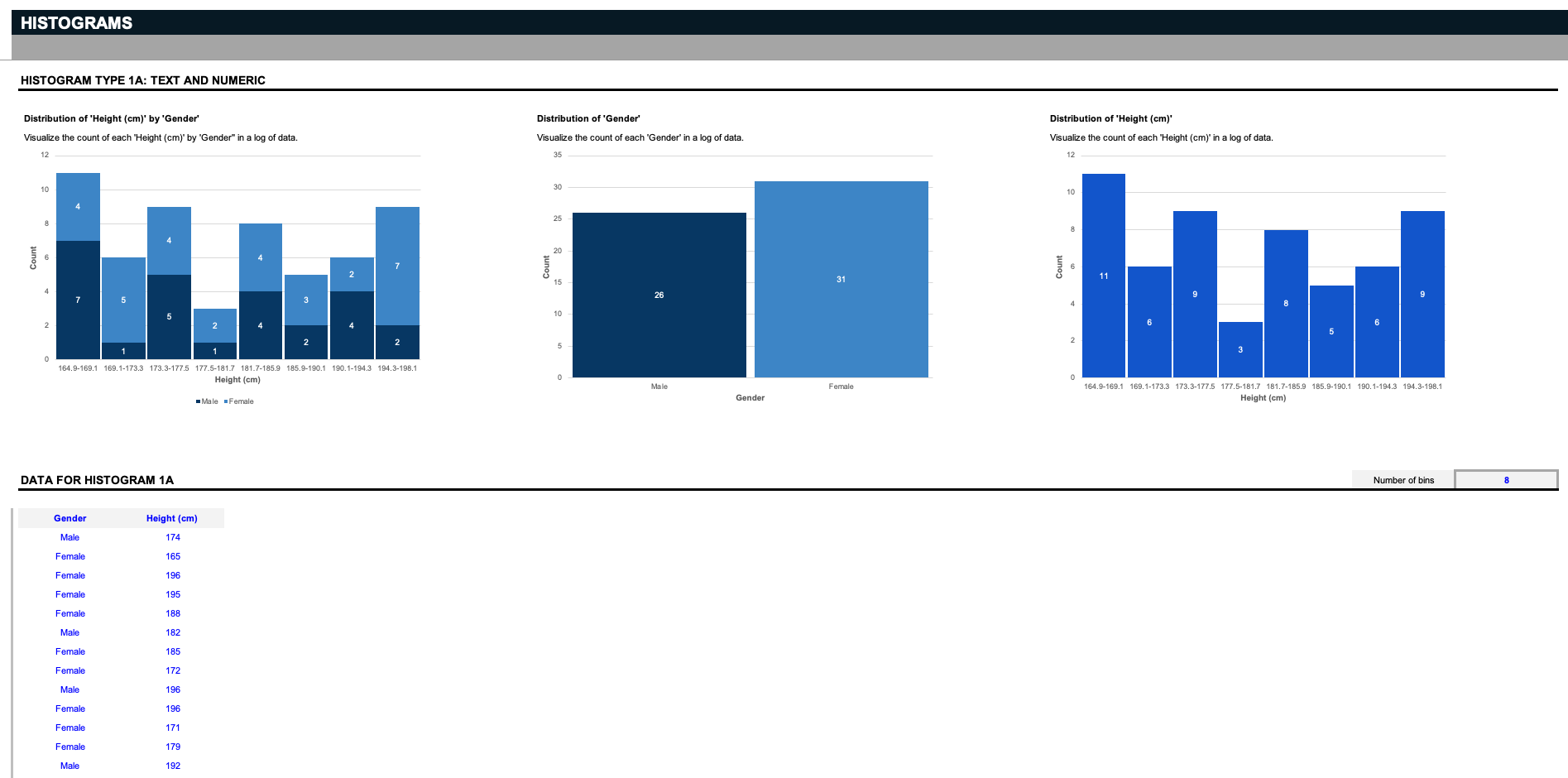
Say you're a scientist, and you have a list of data that involves a specific gender and height. The first three histograms visualize the count of each height by gender, the distribution of the two genders, or the distribution of all the heights. But remember: these inputs can be customized to anything you want; say you run a warehouse, and you want to organize related parts by their respective sizes; delete the inputs in blue, and replace them with your specifications. Histograms work by separating data into groupings called bins. Here, we provide a simple filter to decide how to slice the data.





Receive new free presentations every Monday to your inbox.
Full content, complete versions — No credit card required.