



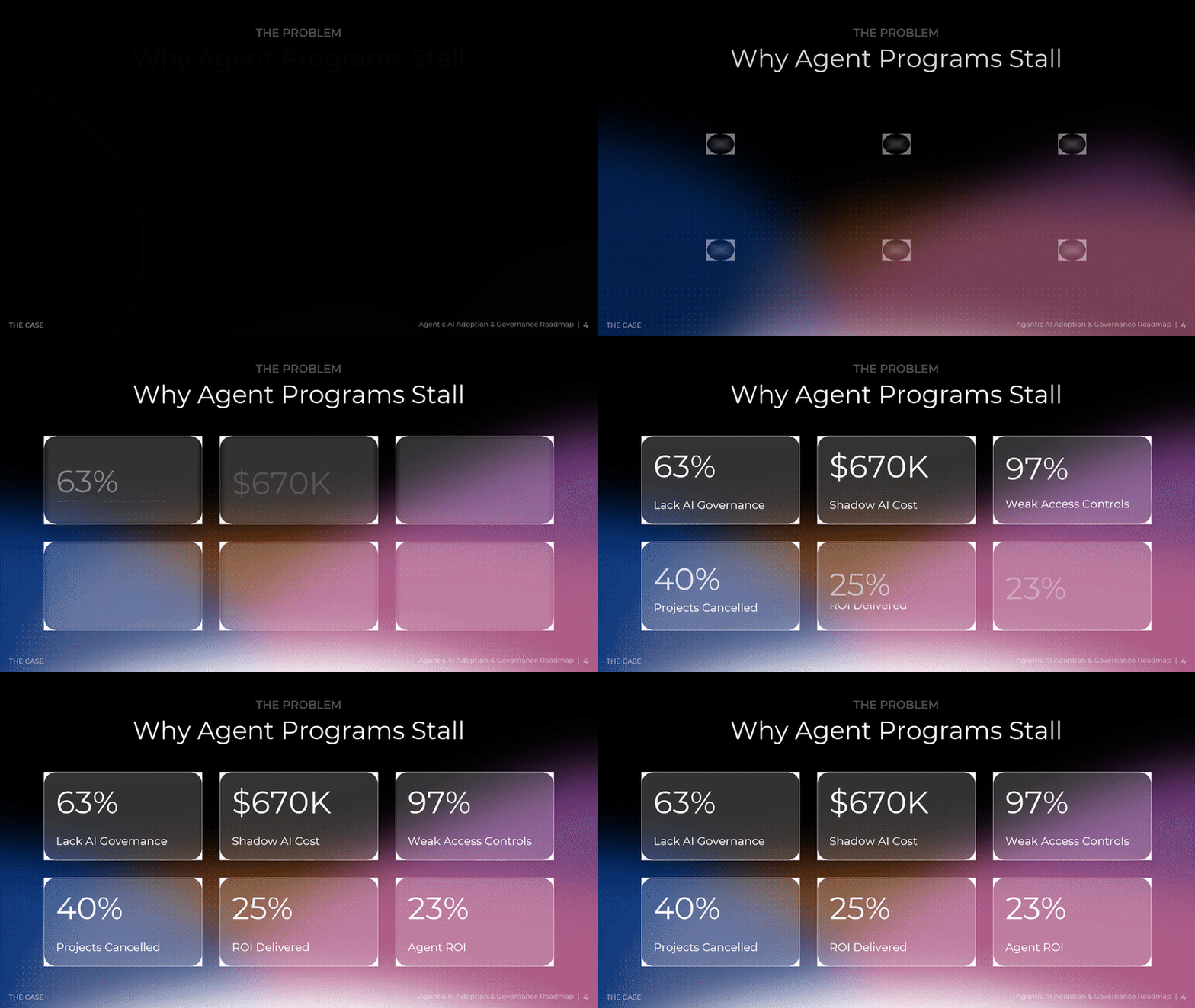









Many organizations rush to deploy AI agents, but few can control them at scale. Capability now grows faster than the controls that keep it safe, and pilots stall before they reach production. This framework gives leaders a governed path from the first experiment to full enterprise scale. It matches each level of agent autonomy with the right controls, oversight, and accountability, so value grows without a loss of trust or a rise in hidden risk.
Agentic AI is now a board-level priority. Gartner predicts that 40% of enterprise applications will include task-specific AI agents by the end of 2026, up from less than 5% in 2025. The reward is large, but so is the risk when governance lags behind capability. Programs that scale without a control system tend to fail on cost, trust, or compliance.
Close the Assurance Debt Gap
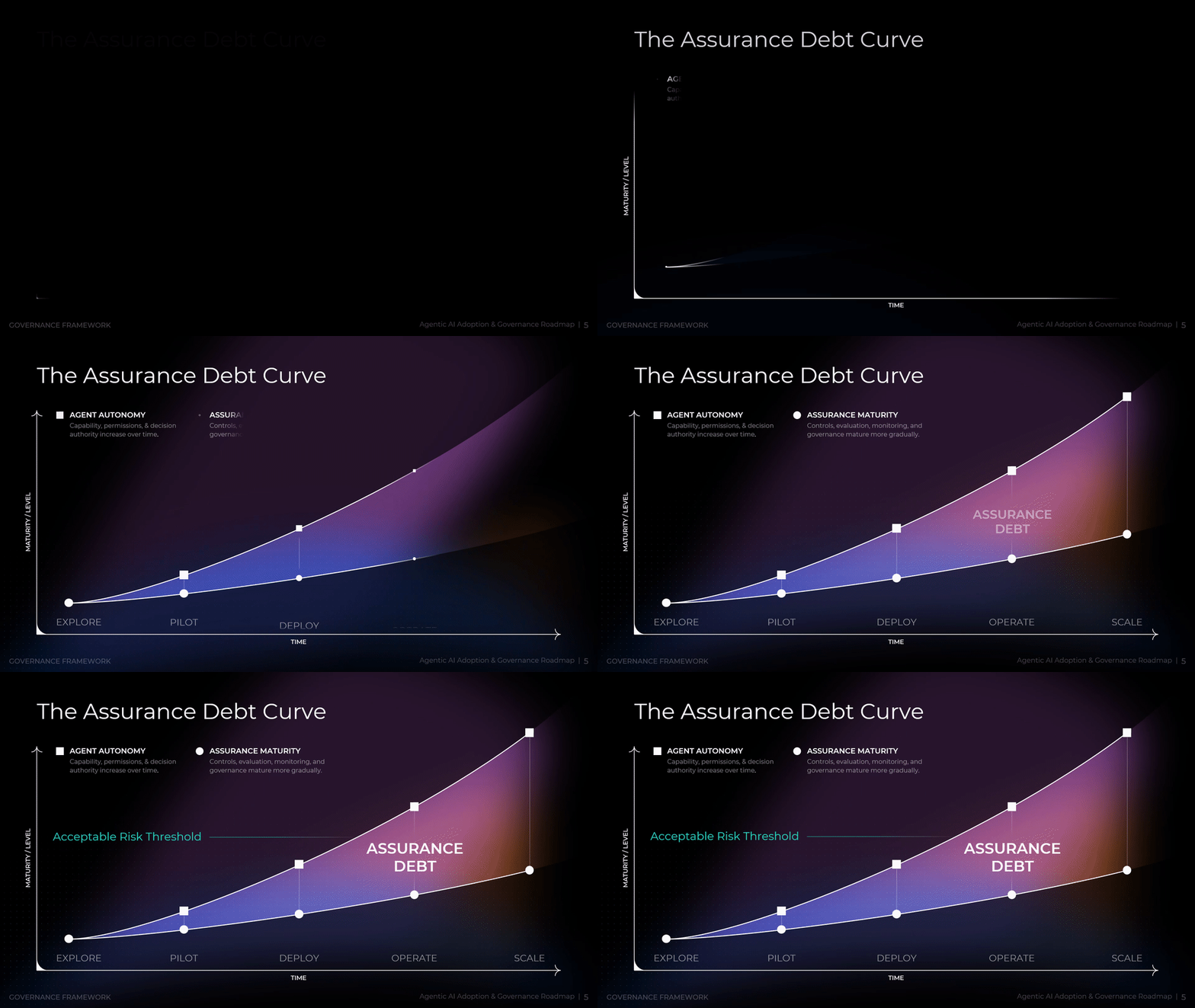
Most agent programs fail for one reason. Autonomy expands quickly, while assurance, the controls and monitoring that make autonomy safe, matures slowly. That gap is where cost overruns, shadow tools, and failed audits appear. Leaders often see the symptoms but not the shared cause. This section names the gap and gives leaders one model to spot it and close it before it widens into a crisis.
The first tool shows why speed alone is dangerous. It plots two lines across five stages: Explore, Pilot, Deploy, Operate, and Scale. One line tracks agent autonomy, which rises fast as permissions and decision authority expand. The second tracks assurance maturity, which rises slowly as controls, evaluation, and monitoring catch up. The space between them is assurance debt. Teams place each program on the curve, mark the acceptable risk threshold, and treat any point above that line as a signal to slow autonomy or invest in controls. It turns a vague worry into a picture leaders can act on together.
The second tool stacks the whole program into four layers held together by a single governance spine. The Foundation layer covers data, infrastructure, and identity. The Agents layer covers how agents are built and run, with audit trails and escalation paths. The Assurance layer covers risk, ethics, human review, and policy. The Value layer covers outcomes, ROI, and KPIs. The spine applies one governance model across every layer, so controls do not fragment as the program grows. Managers assign a named owner to each layer, then use the spine to keep policy consistent from raw data up to business value.

Earn Autonomy Step by Step
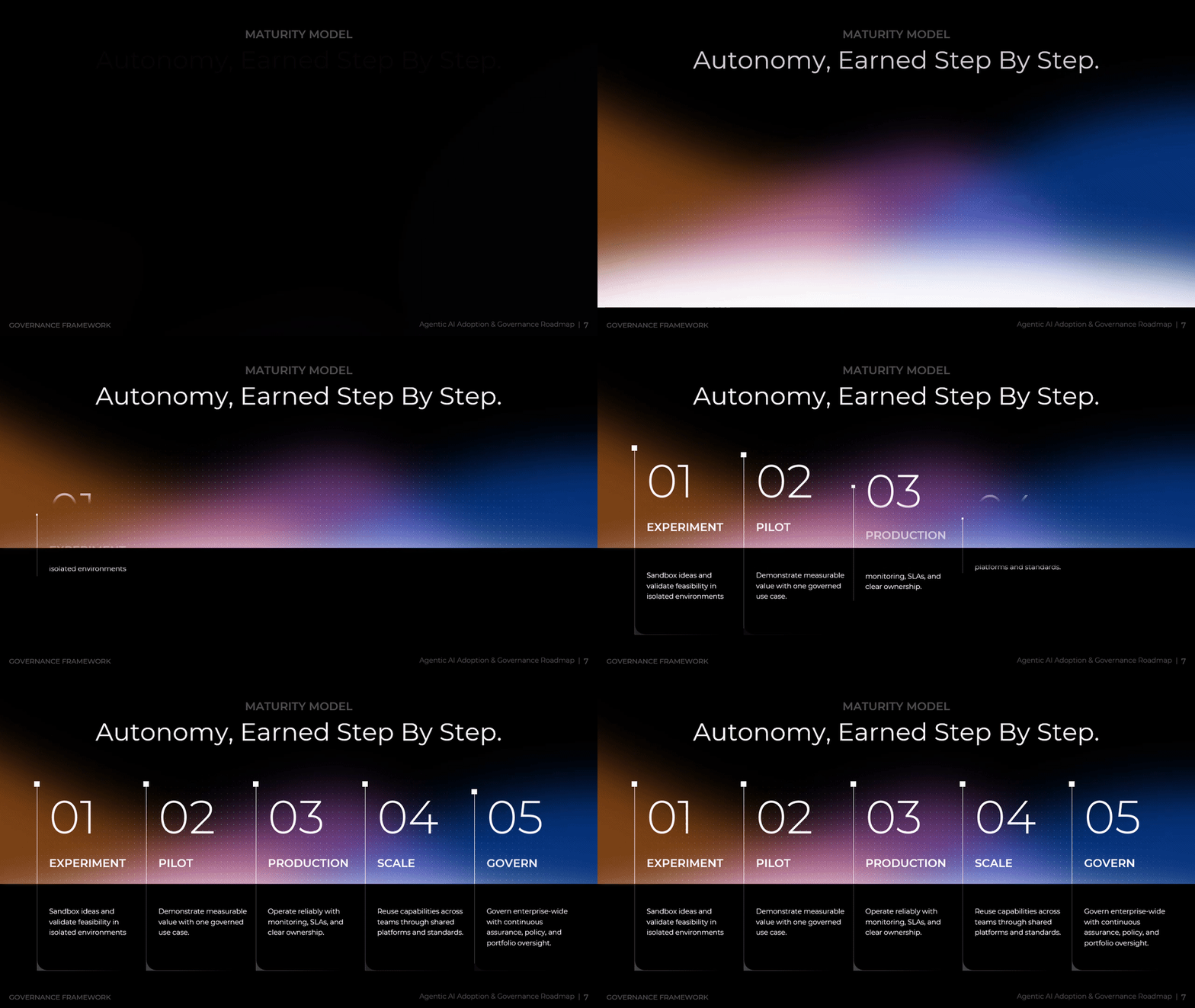
Autonomy should be earned, not granted on day one. Agents that act freely without proof of reliability create risk that no dashboard can fix later. Many programs stall here because they jump straight to broad automation and lose the trust of the business. This section gives teams a staged model where each level of freedom depends on evidence from the level below. Trust grows with results, and control stays in step with capability.
The maturity model sets five stages that move from safe testing to full governance. In Experiment, teams sandbox ideas and test feasibility in isolated environments. In Pilot, they prove value with one governed use case. In Production, agents run with monitoring, SLAs, and clear ownership. In Scale, teams reuse capabilities across the business through shared platforms and standards. In Govern, the enterprise runs continuous assurance, policy, and portfolio oversight. Teams find their current stage, meet the exit criteria, then advance. No stage is skipped, and each one earns the freedom of the next.
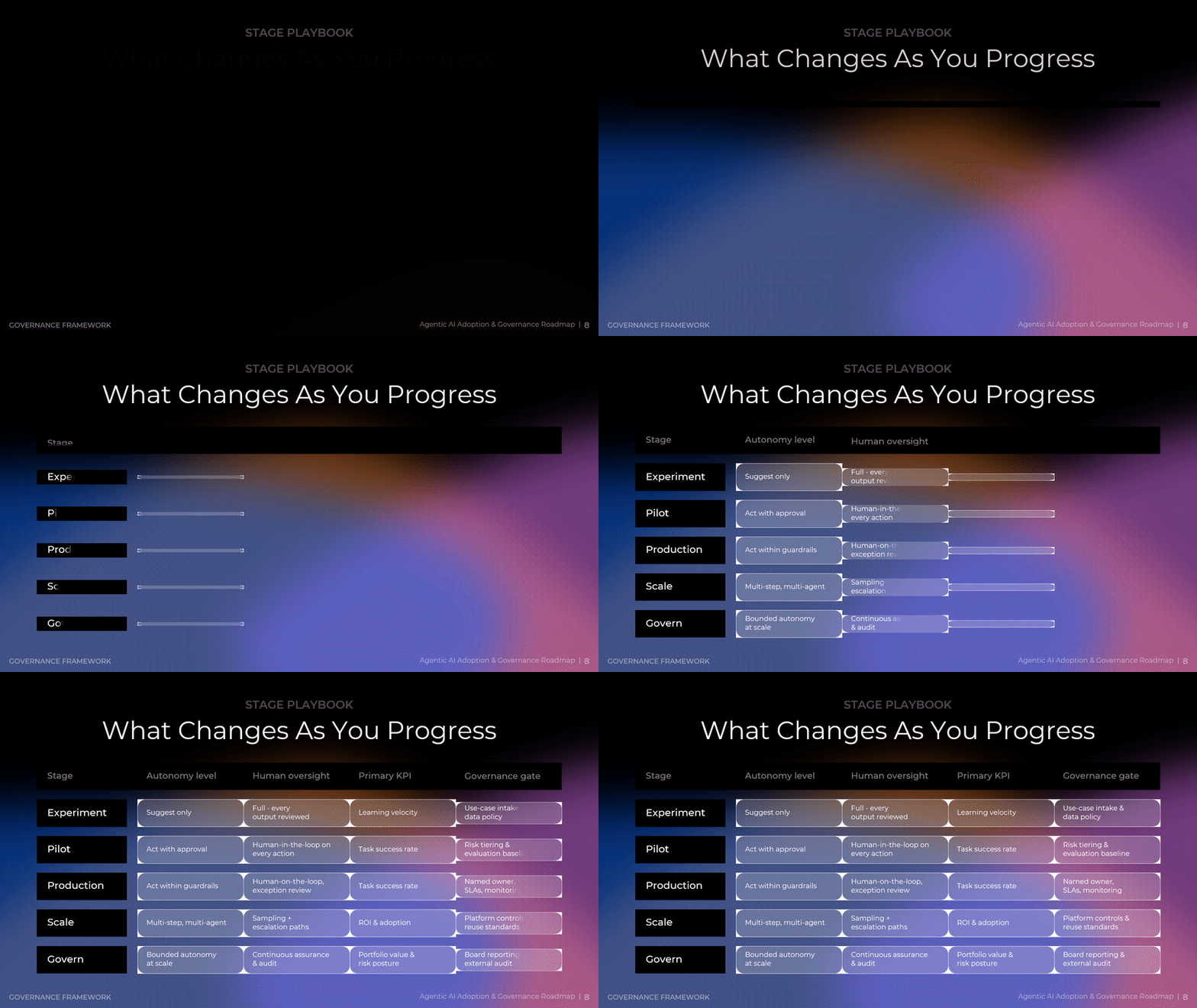
The stage playbook turns that ladder into a working table. Each row is a stage, and the columns set the autonomy level, the type of human oversight, the primary KPI, and the governance gate that must pass. Early on, agents only suggest, humans review every output, and the metric is learning velocity. Later, agents act within guardrails, humans supervise by exception, and the metric shifts to ROI and adoption. Managers read across the row for their current stage to see exactly which controls, metrics, and approval gates apply, so oversight matches real risk rather than habit.
Download presentation
Agentic AI Governance Roadmap
 PowerPoint
Free to join · No credit card · Already a member? Log in
Choose the Right Use Cases
Not every task deserves an agent, and not every organization is ready to scale one. Wasted effort on the wrong use case is a common cause of stalled programs. This section helps leaders judge readiness first, then rank opportunities by value and risk, so the first wins are both safe and visible to the business.
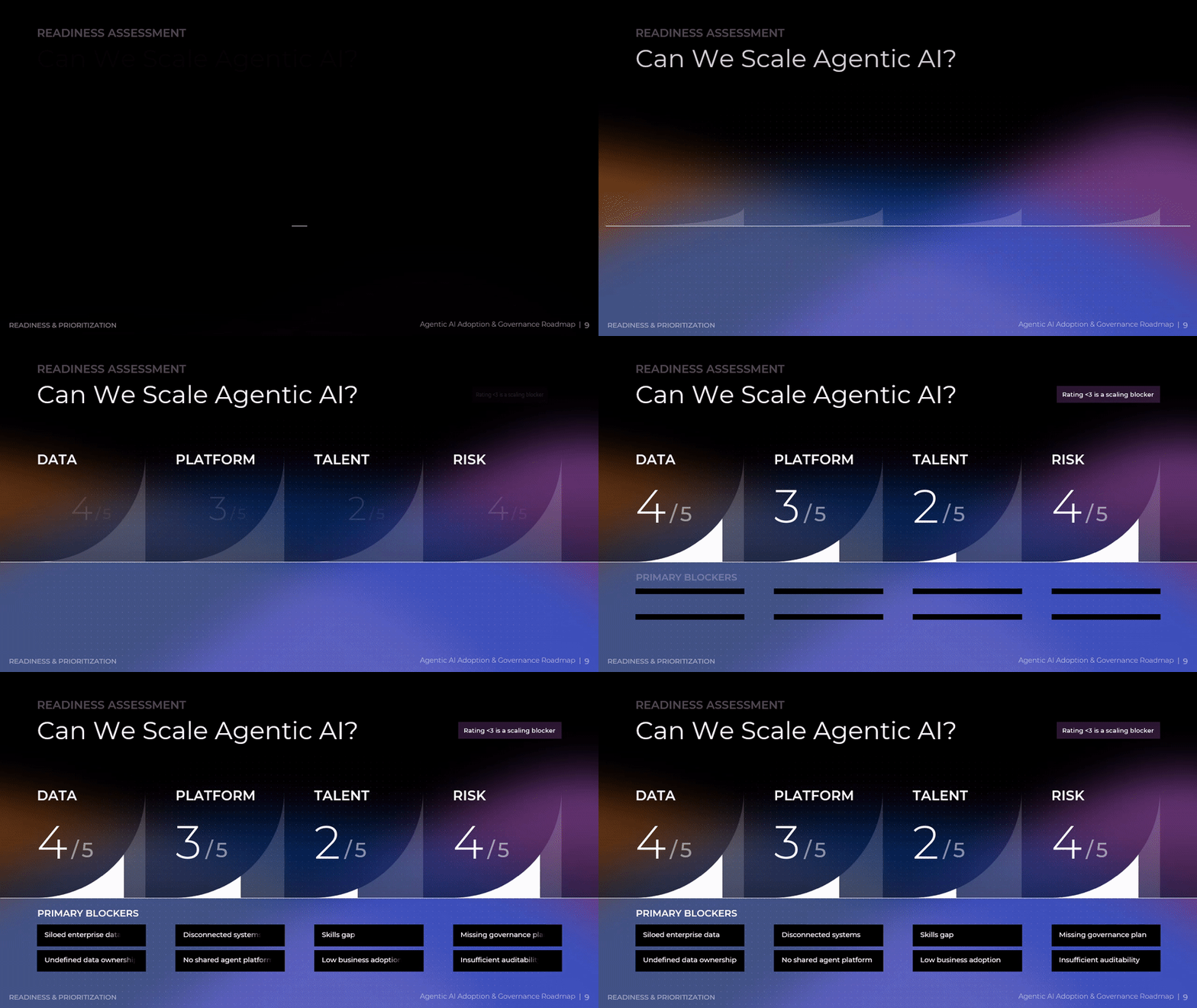
The readiness assessment scores four dimensions that decide whether an organization can scale agents: Data, Platform, Talent, and Risk. Each is rated on a five-point scale, and any score below three is a scaling blocker. The tool also lists the common blockers behind each low score, such as siloed data, no shared agent platform, a skills gap, or a missing governance plan. Teams rate each dimension honestly, then fix the weak areas before they expand. This prevents an expansion built on a foundation that cannot hold the weight.
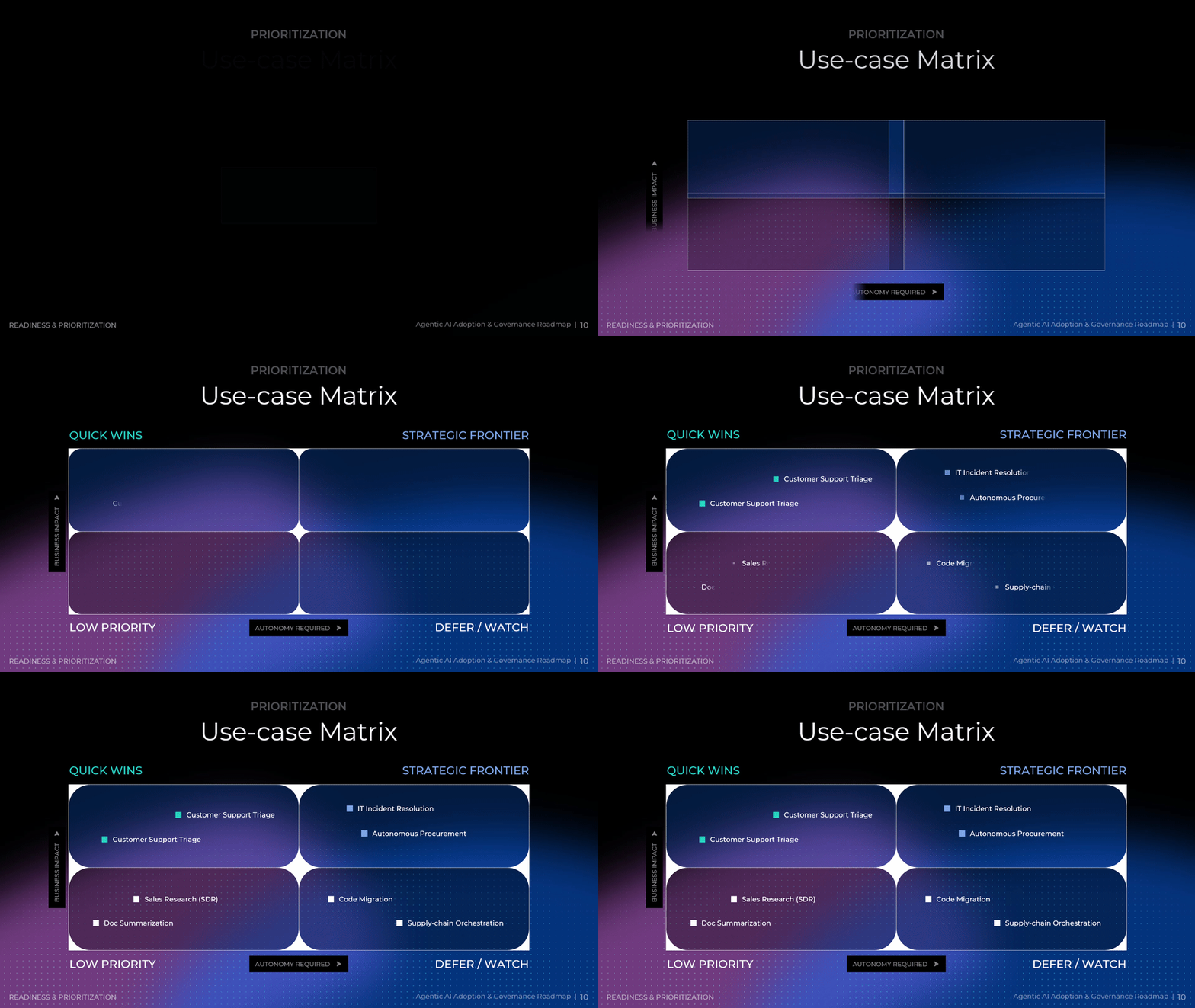
The use-case matrix ranks candidates on two axes: business impact and autonomy required. High impact and low autonomy fall into Quick Wins, the safe places to start. High impact and high autonomy sit in the Strategic Frontier, worth the effort but only with mature controls. Low-value tasks land in Low Priority or Defer and Watch. Teams plot each candidate, such as customer support triage or autonomous procurement, and read its position. The matrix keeps the first projects in the quick-win corner, where value is high and the risk of a failed launch stays low.
The opportunity portfolio deepens that view into a full comparison table. Each use case is scored on business value, autonomy, risk, and time-to-value, from a two-month support triage agent to a nine-month supply-chain orchestration effort. The table lets managers weigh a fast, low-risk win against a slower, higher-value bet. From these scores, teams build a wave plan that sequences projects by payback and risk. The portfolio view moves the conversation from single pet projects to a balanced set of bets that the business can fund and defend.

Autonomy With Accountability
An agent that acts on behalf of the business still needs a human name behind every decision. When ownership is unclear, small errors turn into incidents with no one to resolve them. This section defines the full agent lifecycle and the roles that govern it, so accountability stays with people even as agents act. New roles, from an agent product owner to a human oversight lead, replace the old idea that software runs itself.
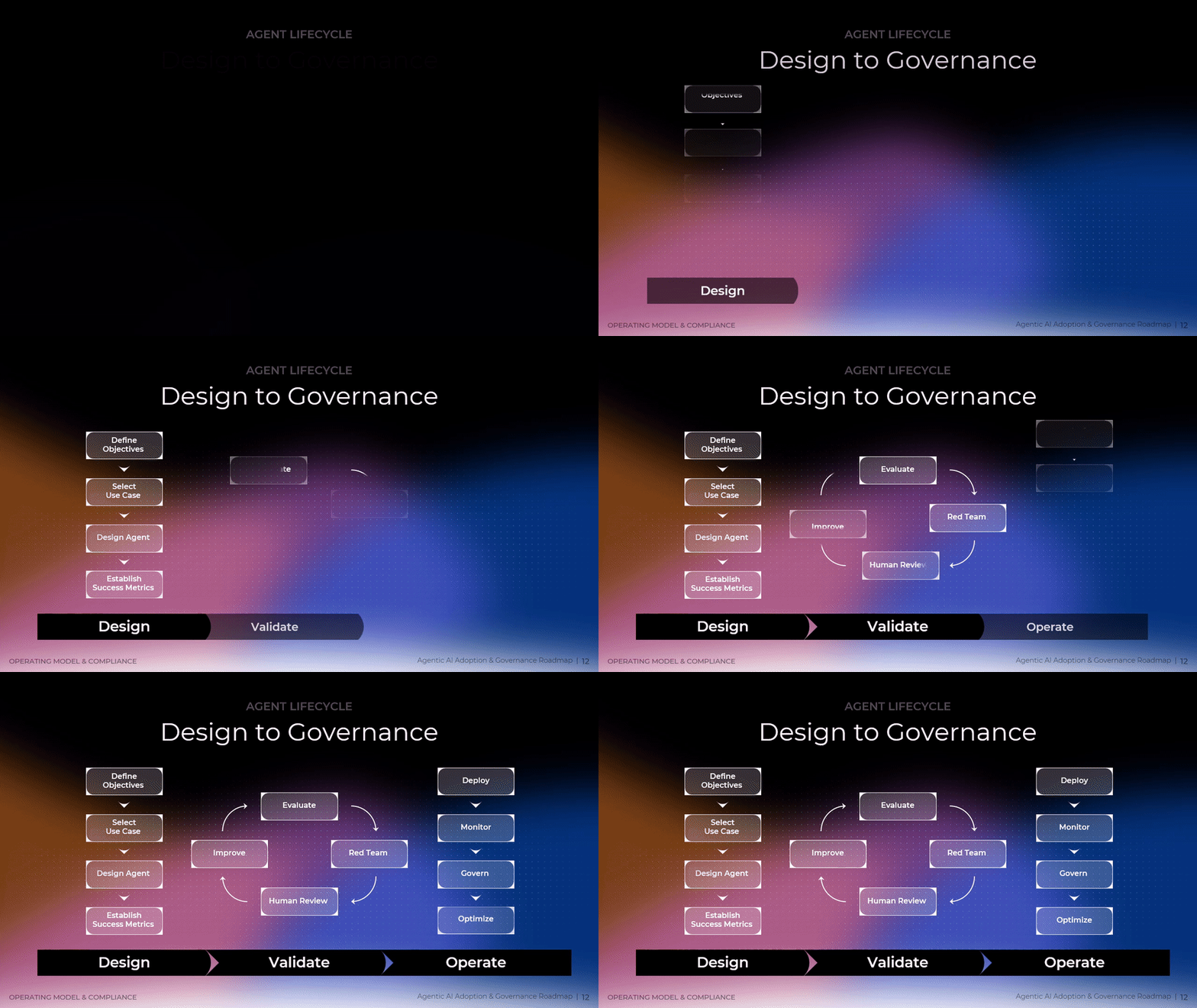
The agent lifecycle lays out one repeatable path from idea to live governance. It groups the work into three phases. Design covers clear objectives, use-case selection, success metrics, and the agent build. Validate covers evaluation, red-team tests, and human review before any launch. Operate covers deployment, monitoring, governance, and steady improvement once the agent is live. Every agent runs through the same gated flow, so no agent reaches production without proof that it works and controls that hold. Teams use the lifecycle as a checklist that keeps quality and safety consistent across many agents at once.
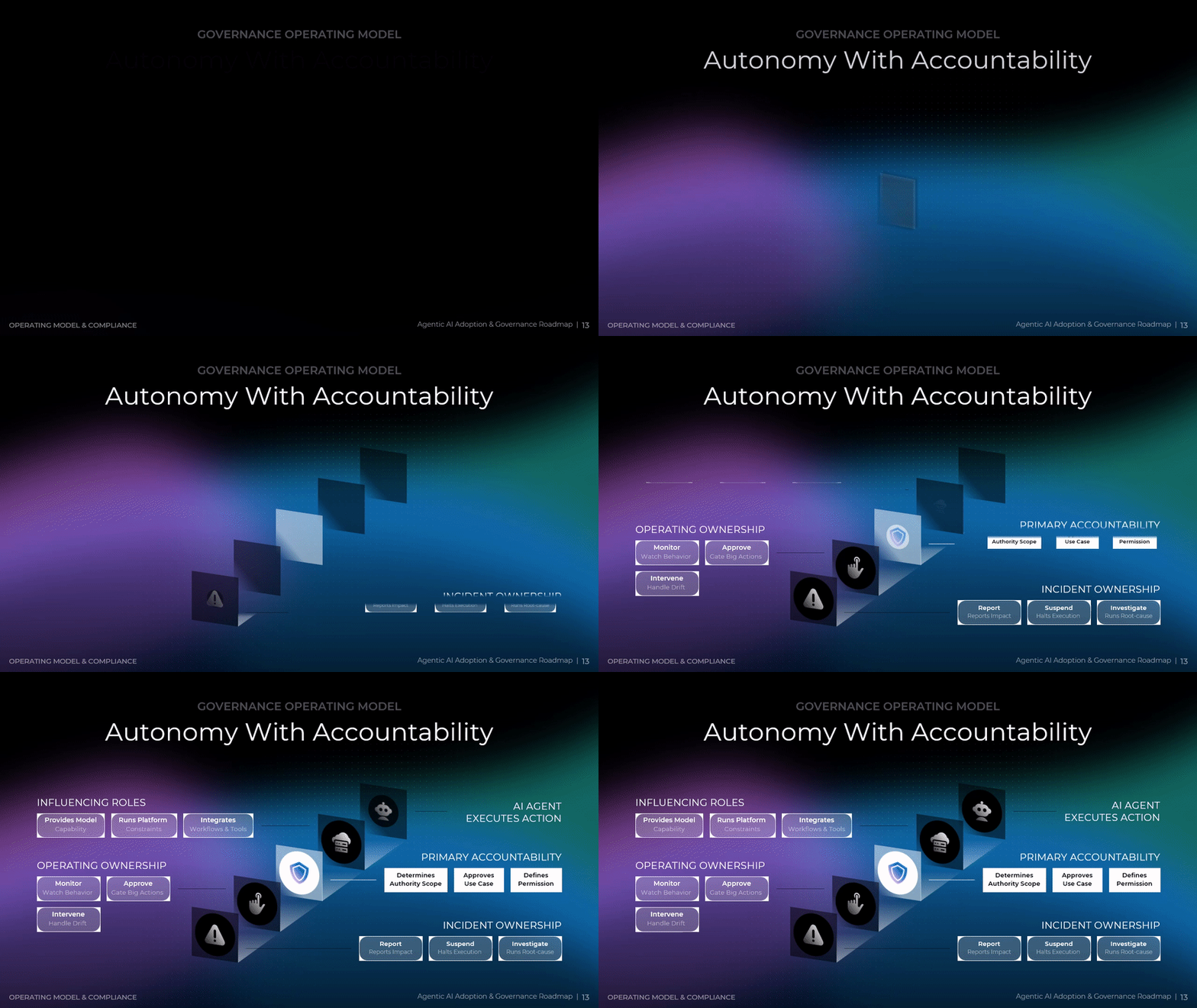
The governance operating model splits responsibility into clear roles around the agent that executes the action. Influencing roles supply the model capability, the platform constraints, and the workflow integration. Owners hold primary accountability: they set authority scope, approve the use case, and define permissions. A monitoring role watches behavior, approves big actions, and steps in on drift. An incident role reports impact, suspends execution, and runs root-cause analysis. Managers map a real named person to each role. The model makes sure that when an agent acts, a specific human answers for its authority, its behavior, and any incident it causes.
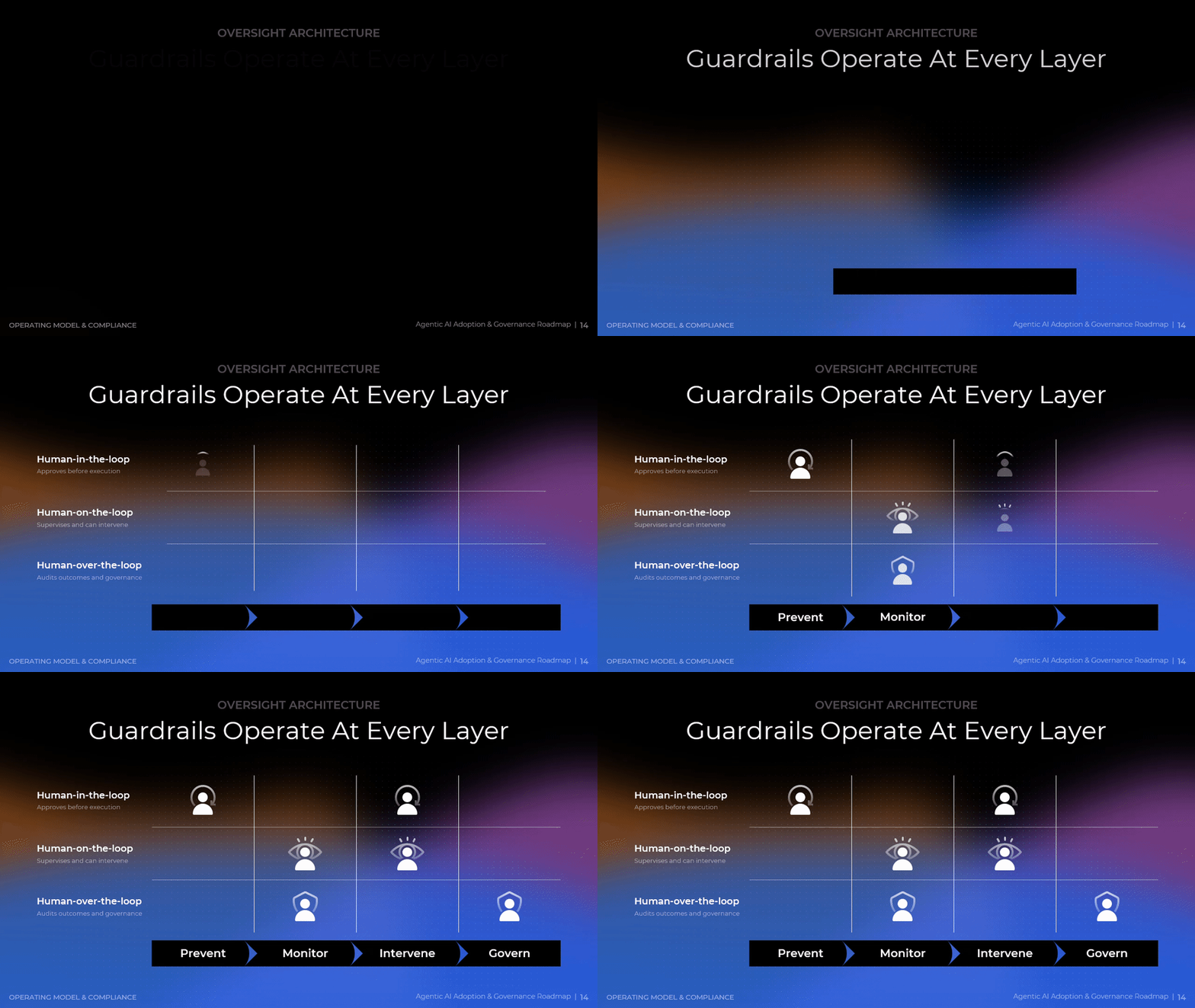
The oversight architecture sets three layers of human control that match effort to risk. Human-in-the-loop approves each action before it runs, and fits high-risk tasks. Human-on-the-loop supervises live and can step in, and fits medium-risk tasks that need speed. Human-over-the-loop audits outcomes and governance after the fact, and fits low-risk, high-volume tasks. Together the layers cover prevent, monitor, intervene, and govern. Teams assign the right layer to each use case based on its risk tier, so heavy oversight goes where harm is likely and light oversight frees capacity where it is safe.
Download presentation
Agentic AI Governance Roadmap
PowerPointFree to join · No credit card · Already a member? Log in
Ship With Confidence
Speed to production means little without proof that an agent is safe and compliant. Regulators, boards, and customers all want evidence, not promises. This section pairs a pre-deployment checklist with the major regulatory frameworks and a time-boxed plan, so teams can launch quickly and still stand behind every agent when hard questions arrive.
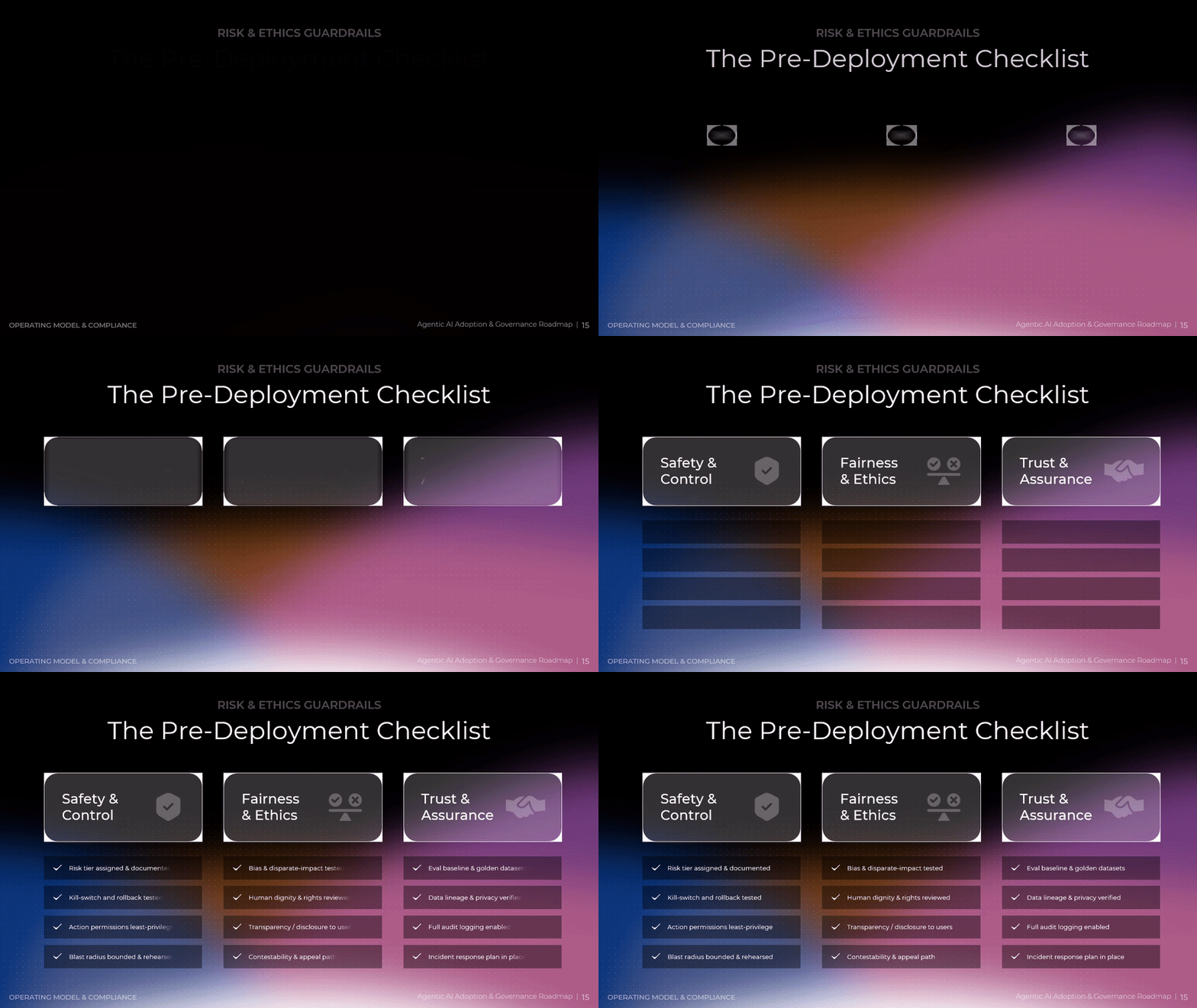
The risk and ethics guardrails turn safety into a concrete pre-deployment checklist. It groups items under three themes. Safety and control covers an assigned risk tier, a tested kill-switch, least-privilege permissions, and a bounded blast radius. Trust and assurance covers bias tests, a human-dignity review, user transparency, and a clear appeal path. Fairness and ethics covers an evaluation baseline, verified data lineage, full audit logging, and an incident response plan. No agent ships until every box is checked. Teams use the list as a hard gate, so ethics and safety become a required step rather than an afterthought.
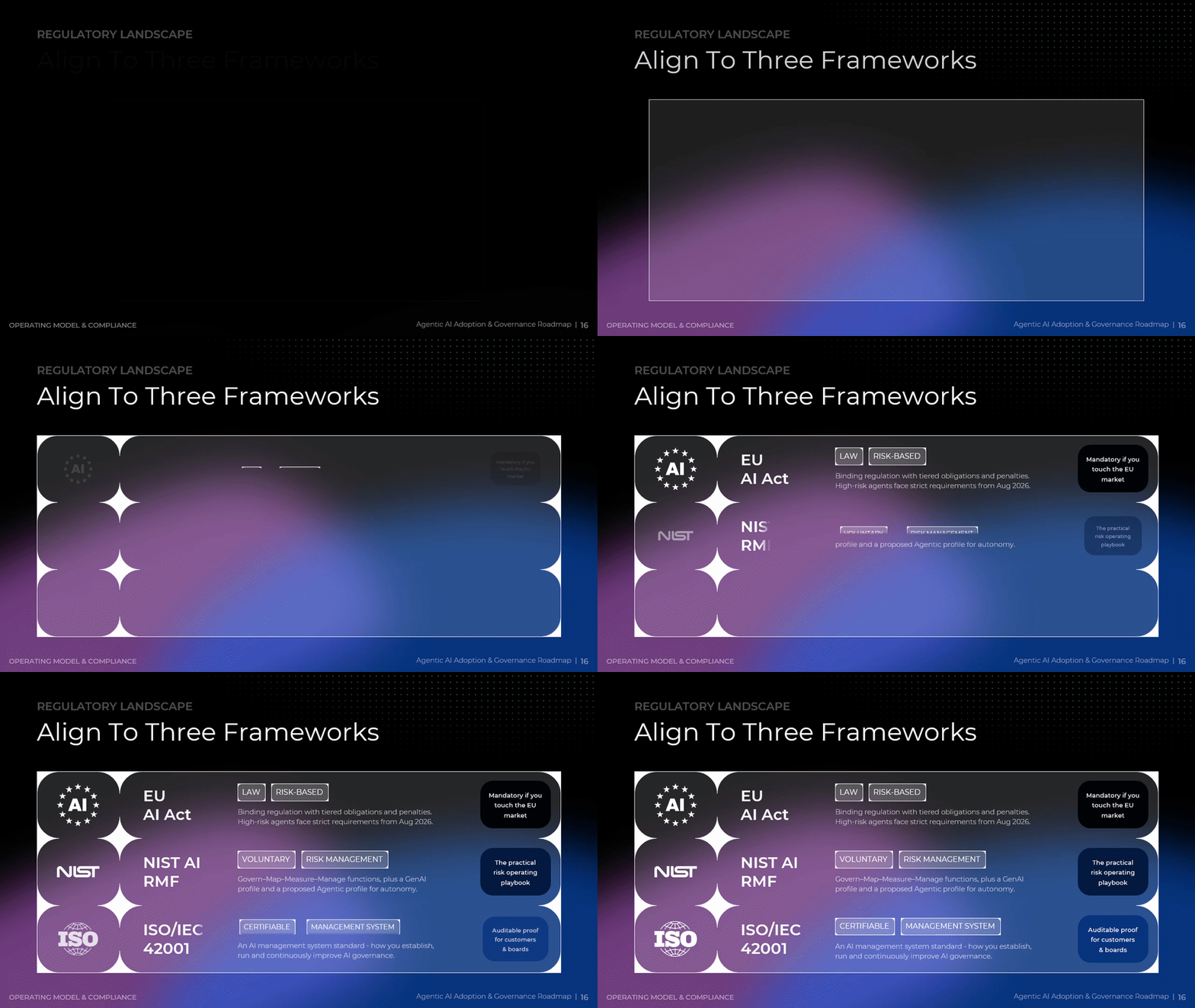
The regulatory landscape aligns the program to three frameworks that customers and regulators expect. The EU AI Act is binding law with tiered obligations, and high-risk agents face strict requirements from August 2026. The NIST AI Risk Management Framework is a voluntary playbook built on Govern, Map, Measure, and Manage functions. ISO/IEC 42001 is a certifiable management standard that proves how governance is run and improved. Teams map their obligations against each one and keep the evidence. This is the same discipline Gartner urges through a board-approved RACI and pre-deployment gates that mirror the EU AI Act and NIST AI RMF.
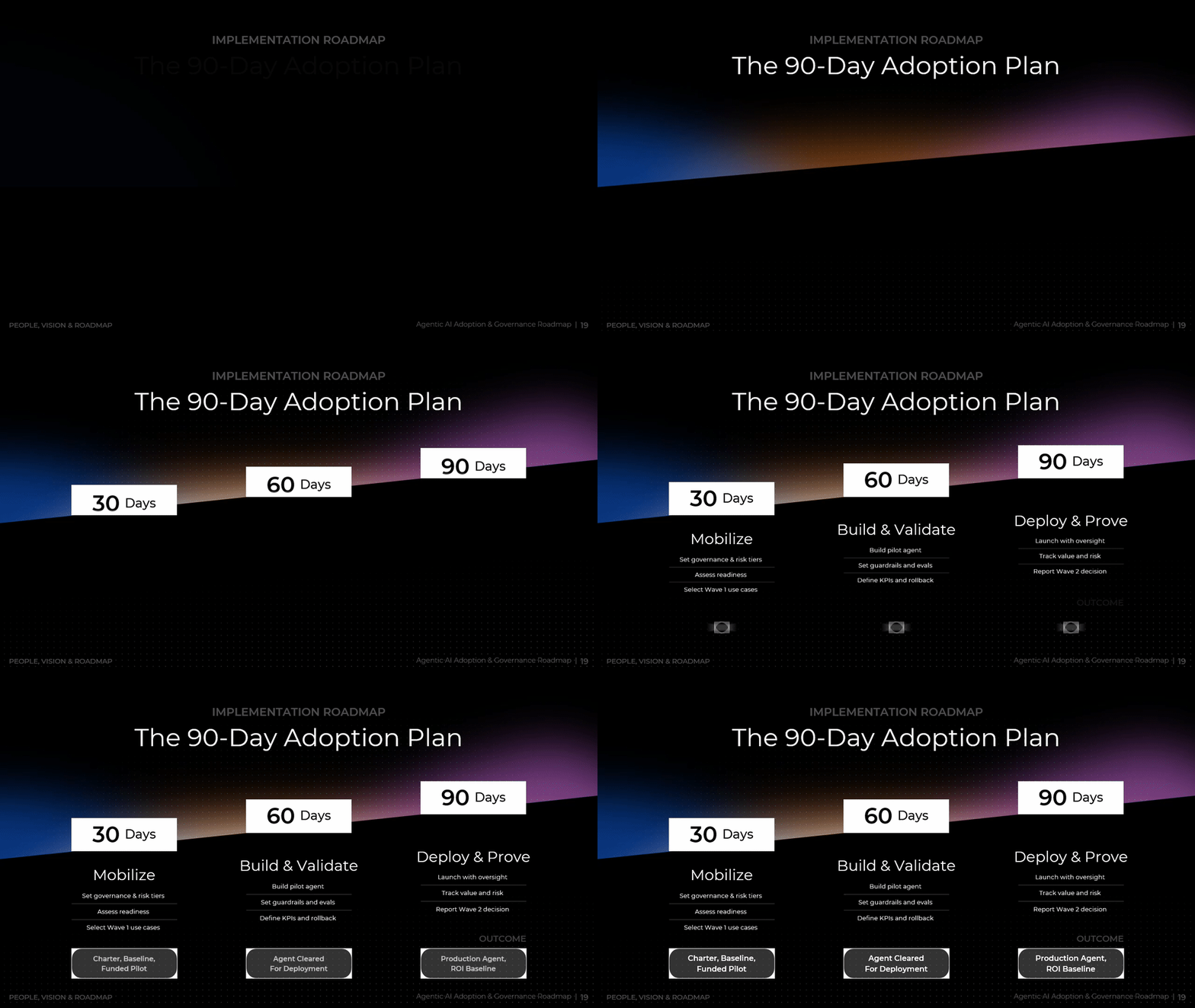
The 90-day adoption plan converts the whole framework into a dated schedule with three waves. In the first 30 days, teams mobilize: set governance and risk tiers, select the first use cases, and stand up a funded pilot with a charter and baseline. In the next 30 days, they build and validate: set guardrails and evals, define KPIs and rollback, and clear the agent for deployment. In the final 30 days, they deploy and prove: launch with oversight, track value and risk, and produce a production agent with an ROI baseline. Each wave ends with a named outcome, so progress is measured in results, not activity.
Agent capability is no longer the hard part. The hard part is scale that stays safe, and that depends on governance built in from the start, not added after an incident. Gartner warns that more than 40% of agentic AI projects will be canceled by the end of 2027, often for weak risk controls and unclear value. This framework is a direct answer to that risk. It names the gap between autonomy and assurance, sets a staged path where freedom is earned, and ranks use cases by real value. It fixes accountability on named people, layers human oversight by risk, and proves compliance against the frameworks that regulators and boards trust. The 90-day plan turns all of it into motion. The organizations that win with agents will not be the ones that move first. They will be the ones that can show what their agents do, prove it to a skeptic, and pass the audit that follows. Governed autonomy, not raw capability, is the discipline that separates a lasting agent program from an expensive experiment.
Download presentation
Agentic AI Governance Roadmap
PowerPointFree to join · No credit card · Already a member? Log in