








Strategic Roadmap
Strategic plans often win approval in the boardroom and then stall in execution. Many organizations set bold goals but lack a clear path that connects ambition to quarterly action, named owners, and measurable results. This Strategic Roadmap framework turns long-term vision into a disciplined execution system. It guides leadership through five stages - diagnose, choose, prioritize, sequence, and govern - so every initiative receives a wave, an owner, a budget, and a decision gate that keeps the plan honest.
Strategy execution remains a weak point for most companies. Research published in Harvard Business Review found that only 55% of middle managers can name even one of their company's top five priorities (Sull, Homkes, and Sull, 2015). When priorities stay invisible, capital and talent scatter across too many fronts, and the strategy loses force before it reaches the front line. A roadmap closes this gap. It makes priorities visible, sequenced, and accountable across the whole organization.
Set the Vision Across Three Horizons
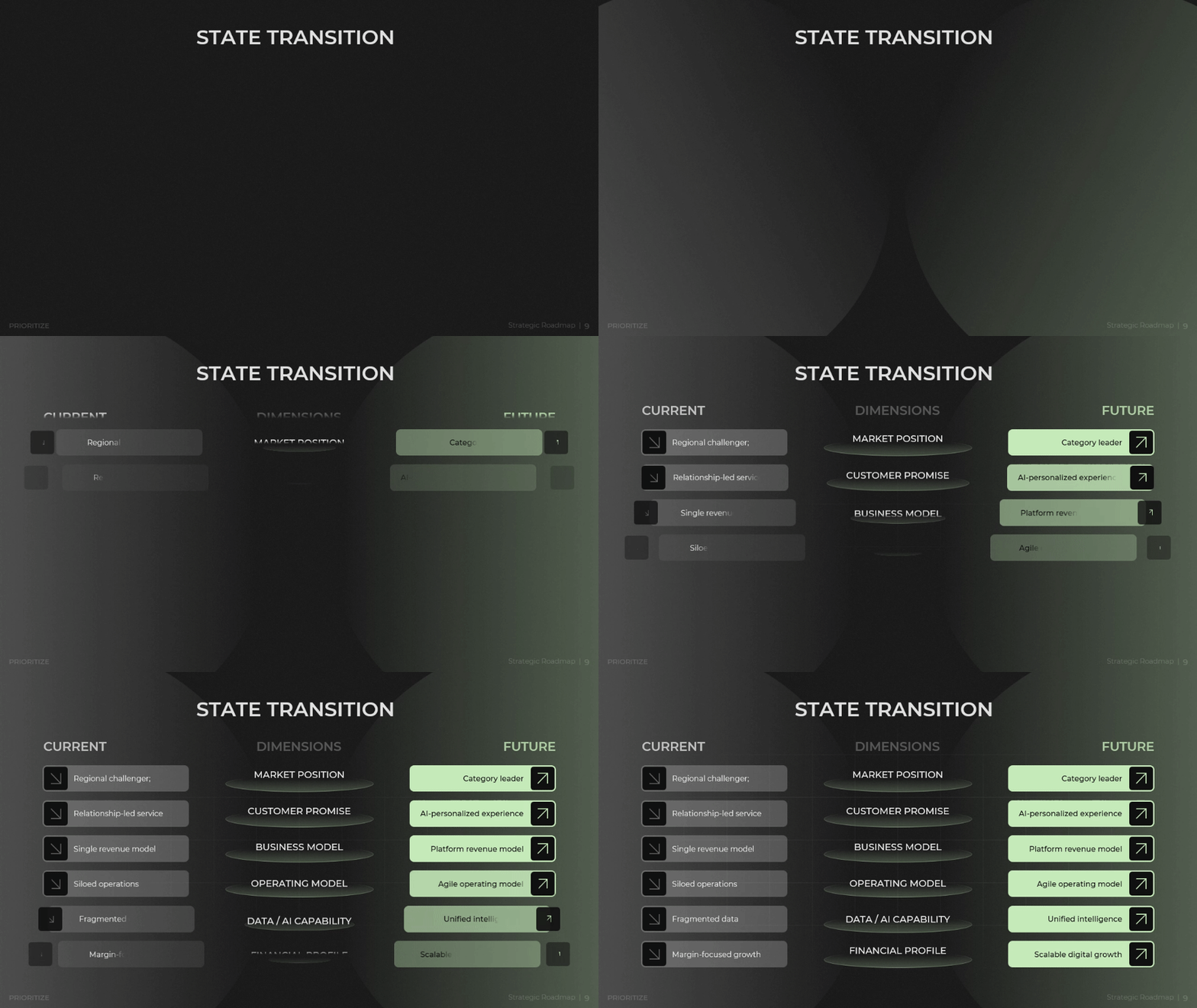
Most strategies fail at the first step: leadership teams mix short-term fixes with long-term bets in one list. When every goal lives in the same time frame, teams cannot tell what matters now and what can wait. The Vision Horizon component solves this problem. It separates strategic intent into three clear stages - current, near-term, and future - so each goal sits in its proper place. Executives gain a single picture of where the organization stands today and where it intends to go. The result is a vision that the whole company can read in one minute and remember after one meeting.
Consider a mid-size industrial distributor with $80 million in revenue. The leadership team wants to defend its core business, expand into adjacent product lines, and prepare for a platform-based model within five years. Without a horizon structure, all three ambitions compete for the same budget cycle and the same management attention. With the horizon view, the team assigns each ambition to its own stage, with its own pace and its own resource plan. Conflicts surface early, and trade-offs become explicit decisions rather than silent compromises.
The first horizon view focuses on the current stage. Editable fields cover goals such as core operations, customer retention, existing revenue streams, and process inefficiencies. Managers replace the sample entries with their own priorities and keep the layout intact. A second view covers the near-term horizon, with goals such as expansion into adjacent segments, automation adoption, strategic partnerships, and new digital channels. The same structure repeats across all three stages, so the audience learns to read the format once and follows it everywhere.
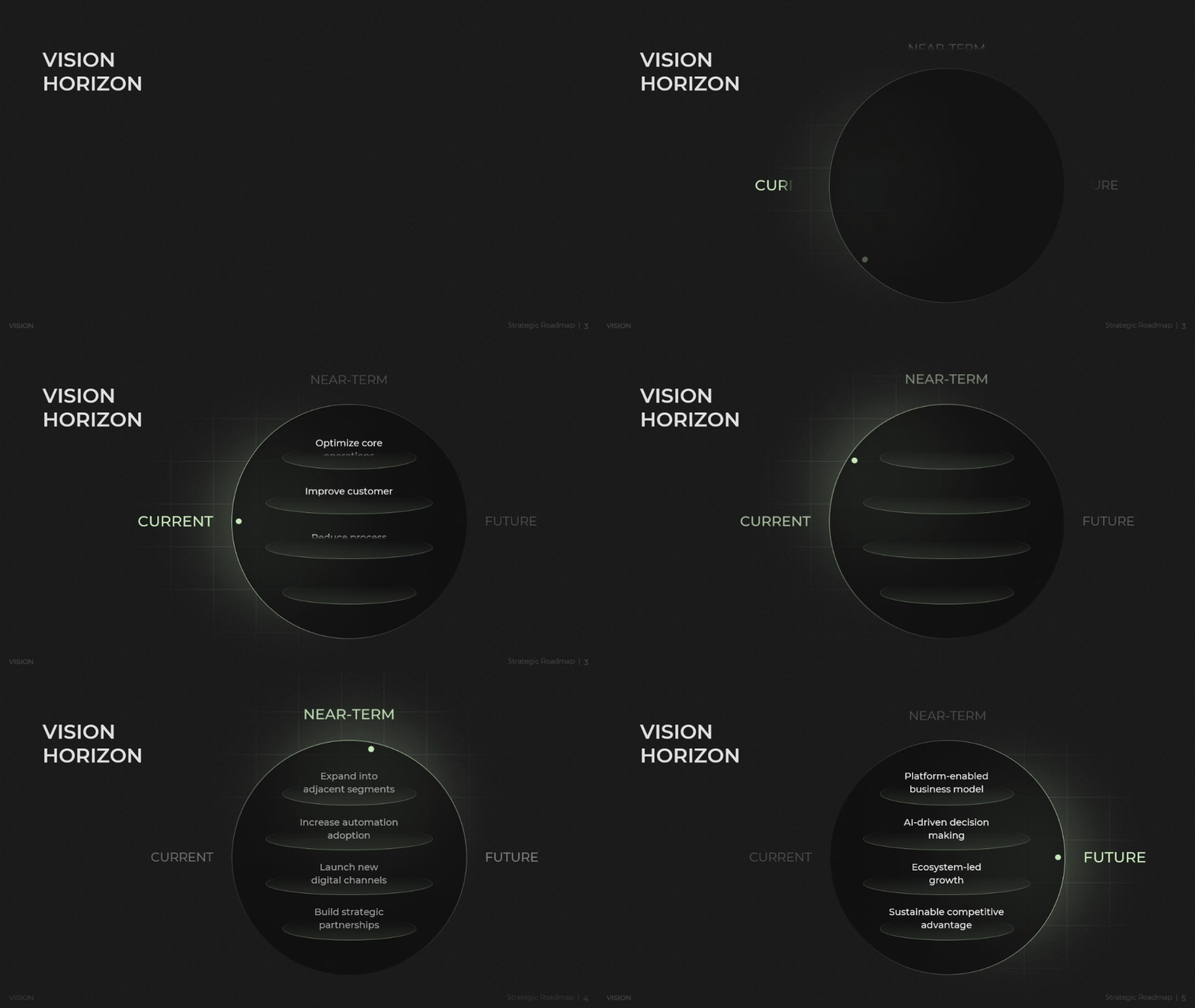
The future view completes the arc. It captures long-range ambitions such as a platform-enabled business model, AI-driven decision support, sustainable competitive advantage, and ecosystem-led growth. Together, the three views form a narrative that moves from stability to transformation, and each statement can be tailored to the organization's own language.
Diagnose Market Forces and Internal Readiness
A roadmap built on assumptions collapses under contact with reality. The diagnose stage grounds strategy in evidence. It examines two questions in sequence: what changes outside the organization, and how ready the organization is to respond. External forces become scored inputs rather than vague worries, and internal capabilities convert into measurable maturity levels. Leadership debates shift from opinion to data, and the case for change becomes hard to dismiss.
The cost of a weak diagnosis is well documented. A global survey by Bridges Business Consultancy found that 48% of organizations fail to reach at least half of their strategic targets, and poor analysis of the starting position ranks among the most common causes. Companies that skip the diagnostic step often fund initiatives that solve yesterday's problems, while real threats such as new competitors and cost pressure grow unattended. A structured diagnosis costs a few weeks of effort and protects years of investment.
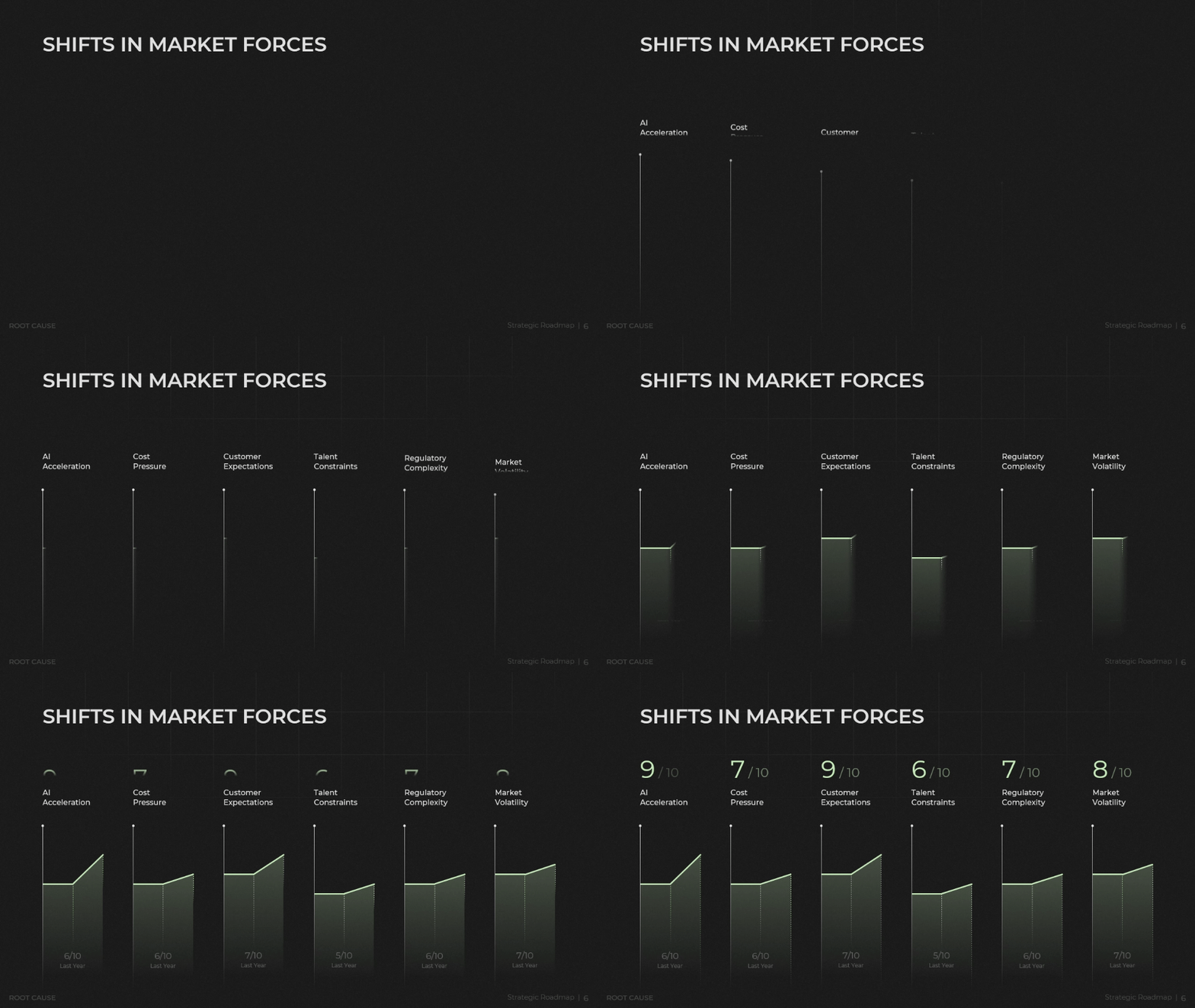
The market forces view scores six external pressures - AI acceleration, market volatility, regulatory complexity, talent constraints, customer expectations, and cost pressure - on a ten-point scale, with last year's score shown for comparison. A force that jumps from six to nine in one year signals where the strategy must respond first. Teams can rename any force to match their industry, such as supply chain risk for a manufacturer or interest rate exposure for a lender, and the year-over-year format still works.
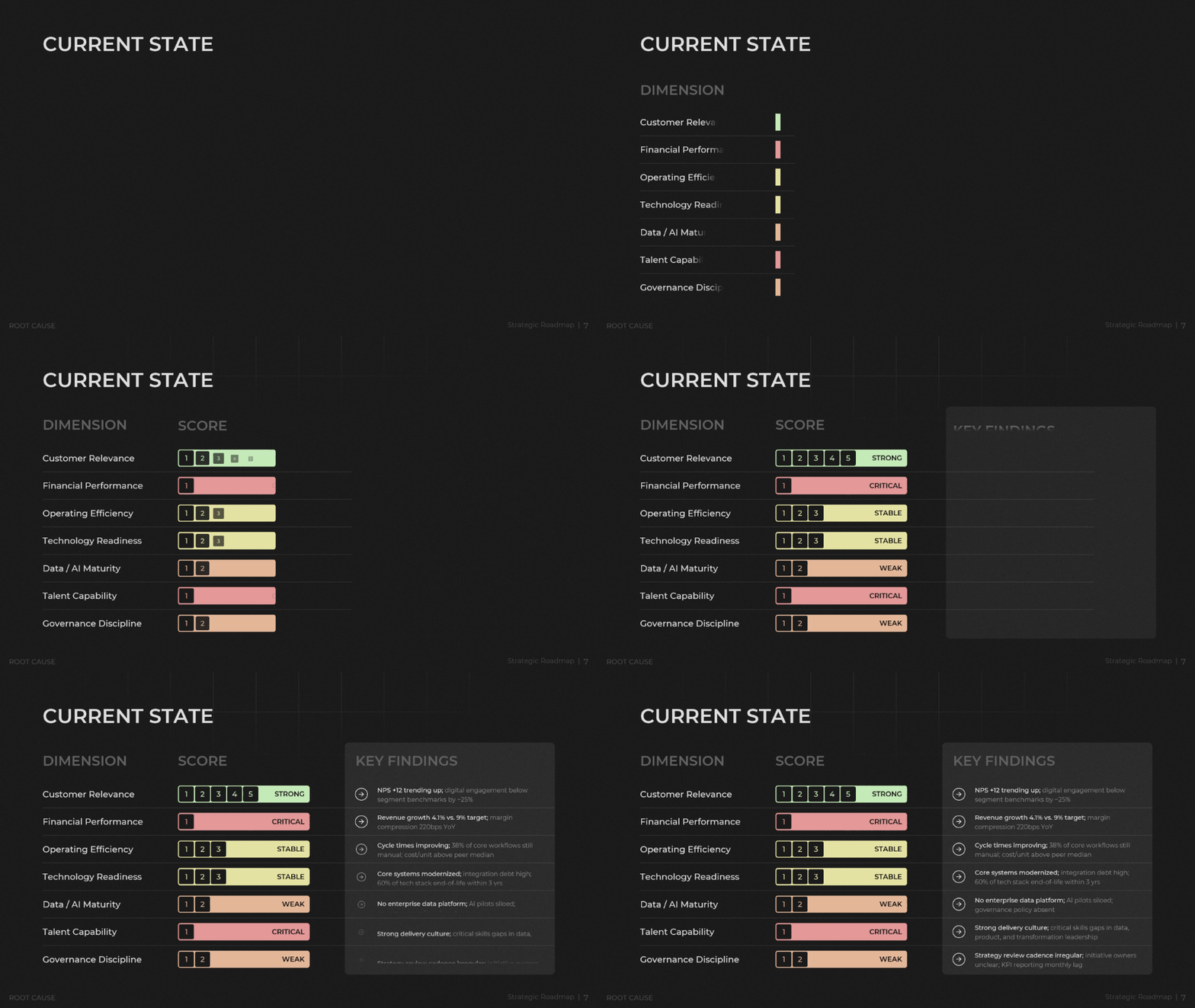
The current state assessment then turns inward. Seven dimensions - customer relevance, financial performance, operating efficiency, technology readiness, data and AI maturity, talent capability, and governance discipline - each receive a score from one to five, with status labels from critical to strong. A key findings column pairs every score with the evidence behind it, such as revenue growth against target or the share of manual workflows. Managers update the scores after each review cycle, and the scorecard becomes a living record of organizational health.
Download presentation

Strategic Roadmap
PowerPoint
20 Slides
To continue, enter your email:
Prioritize with Gap Analysis and a Portfolio Matrix
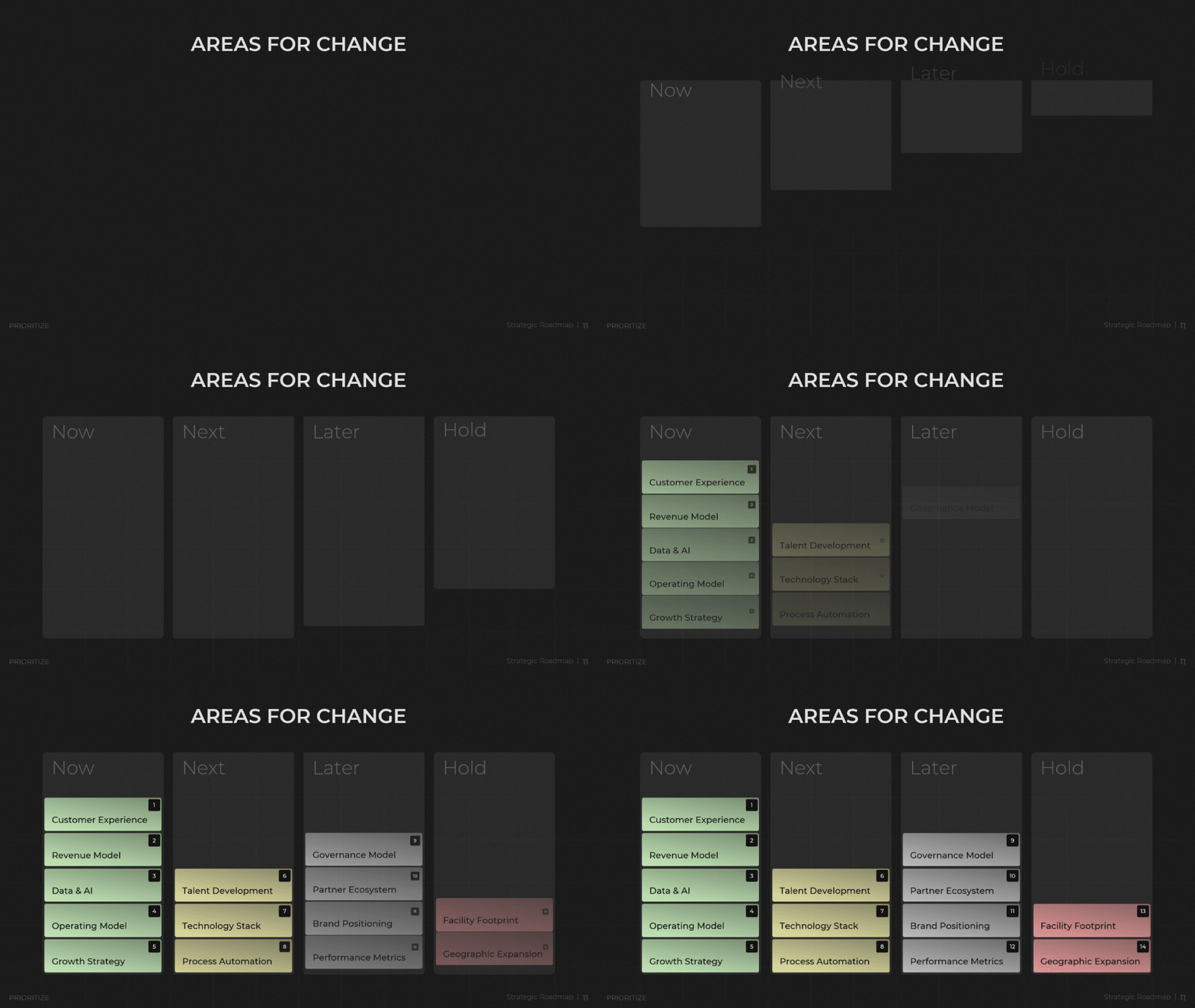
Most organizations have more ideas than capacity. The prioritize stage forces a ranked order. It compares the size of each strategic gap against the value and complexity of the initiatives meant to close it. Leaders end the quiet practice of treat-everything-as-a-priority and commit to a sequence the organization can actually deliver. Resources flow to the few moves that matter most, and lower-value work moves to a hold list without drama. The framework also supports a Now, Next, Later, and Hold classification for up to fourteen areas of change, from growth strategy and operating model to brand positioning and facility footprint, which keeps the full universe of options visible even after the ranking is done.
Picture a software firm with fourteen candidate initiatives and budget for six. In the absence of a shared ranking method, the loudest sponsor wins, and the portfolio fills with pet projects. With a shared gap analysis and portfolio matrix, the same debate takes one afternoon. Each initiative receives a position based on value and complexity, the gaps with critical priority claim the first wave, and the remaining items get an honest later or hold label that everyone understands.
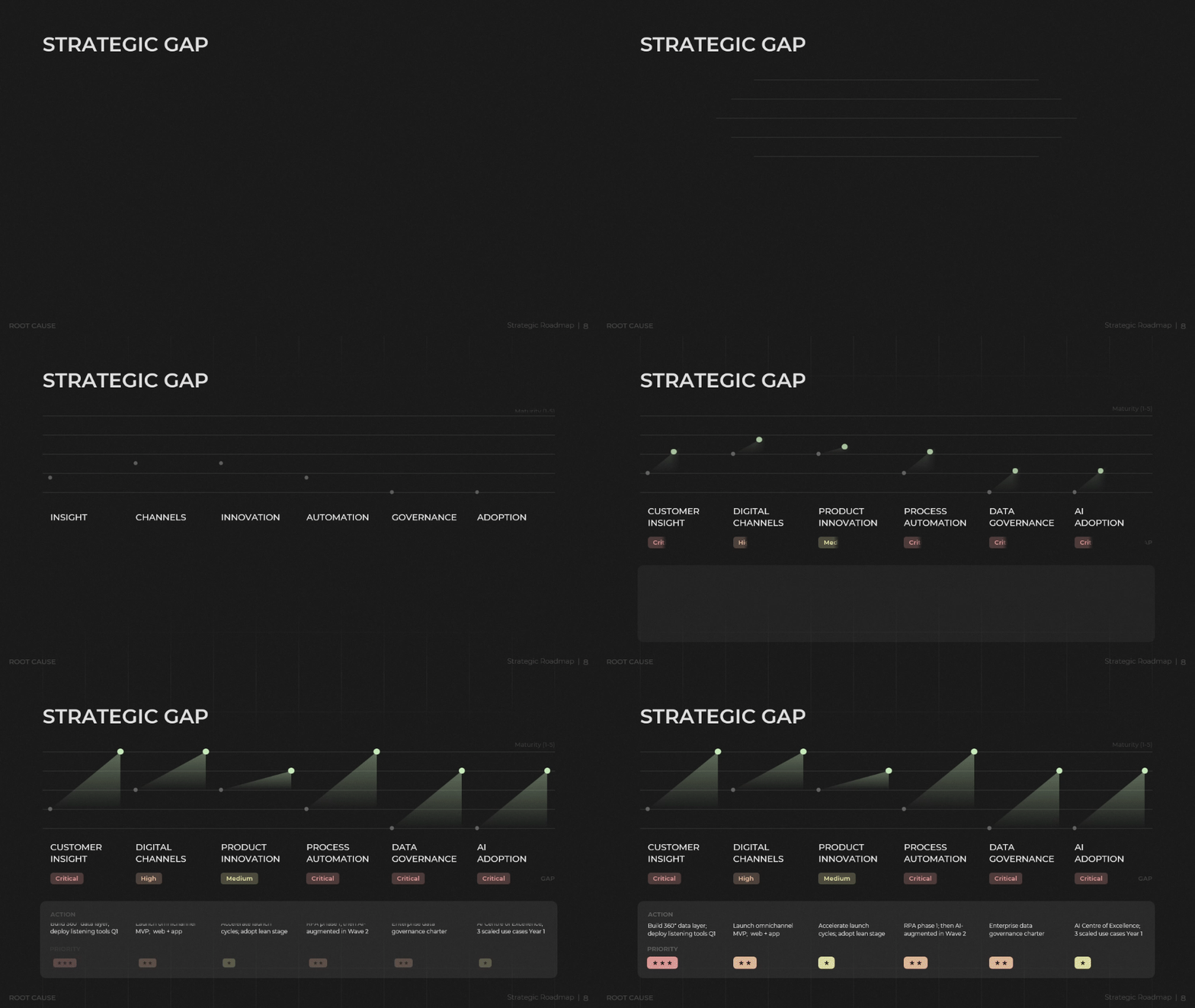
The strategic gap view rates maturity across six capability areas, from customer insight to AI adoption, and marks the gap level of each one as medium, high, or critical. An action row connects every gap to a concrete response, such as an enterprise data governance charter or an omnichannel MVP, so analysis leads straight to commitment.
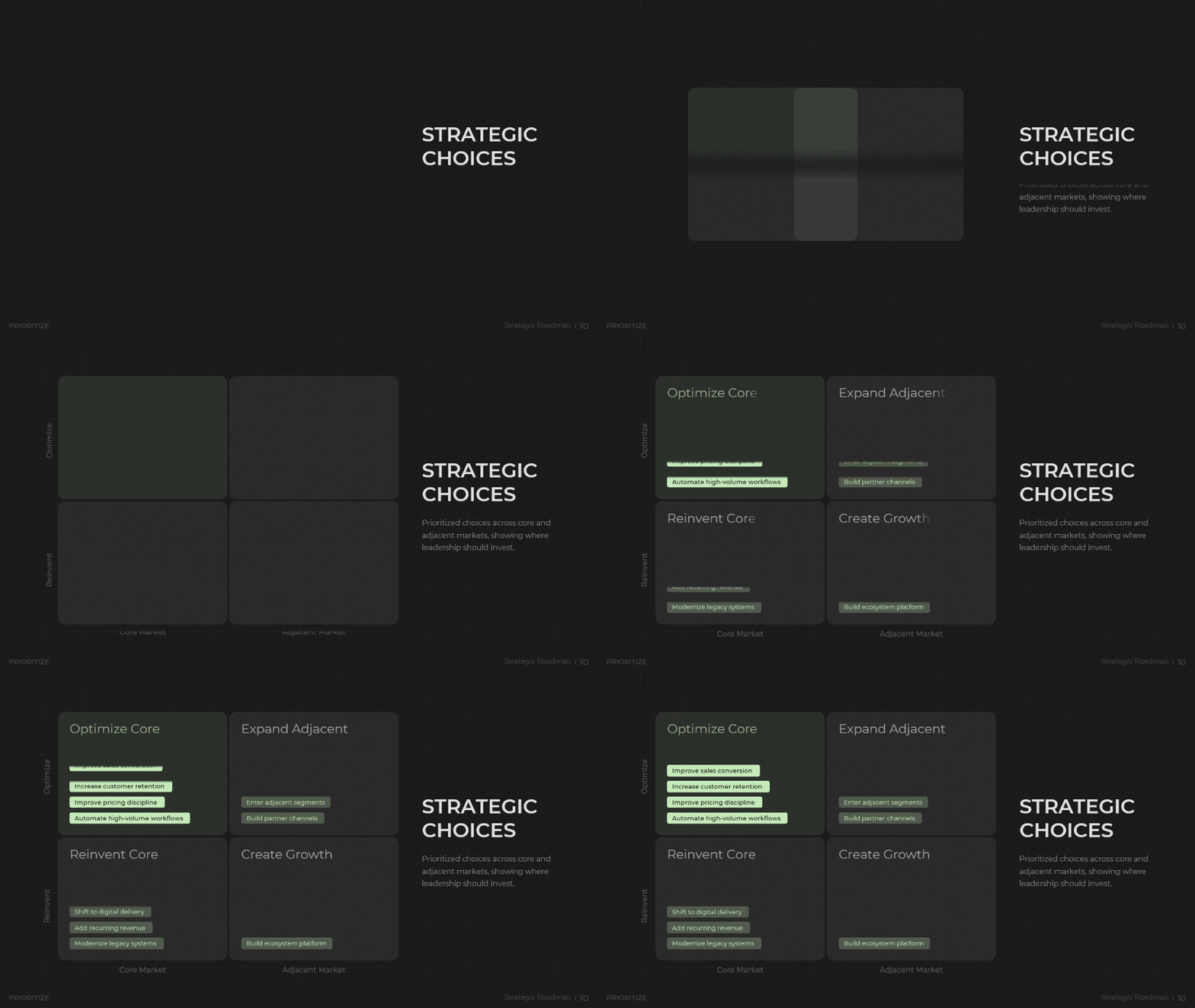
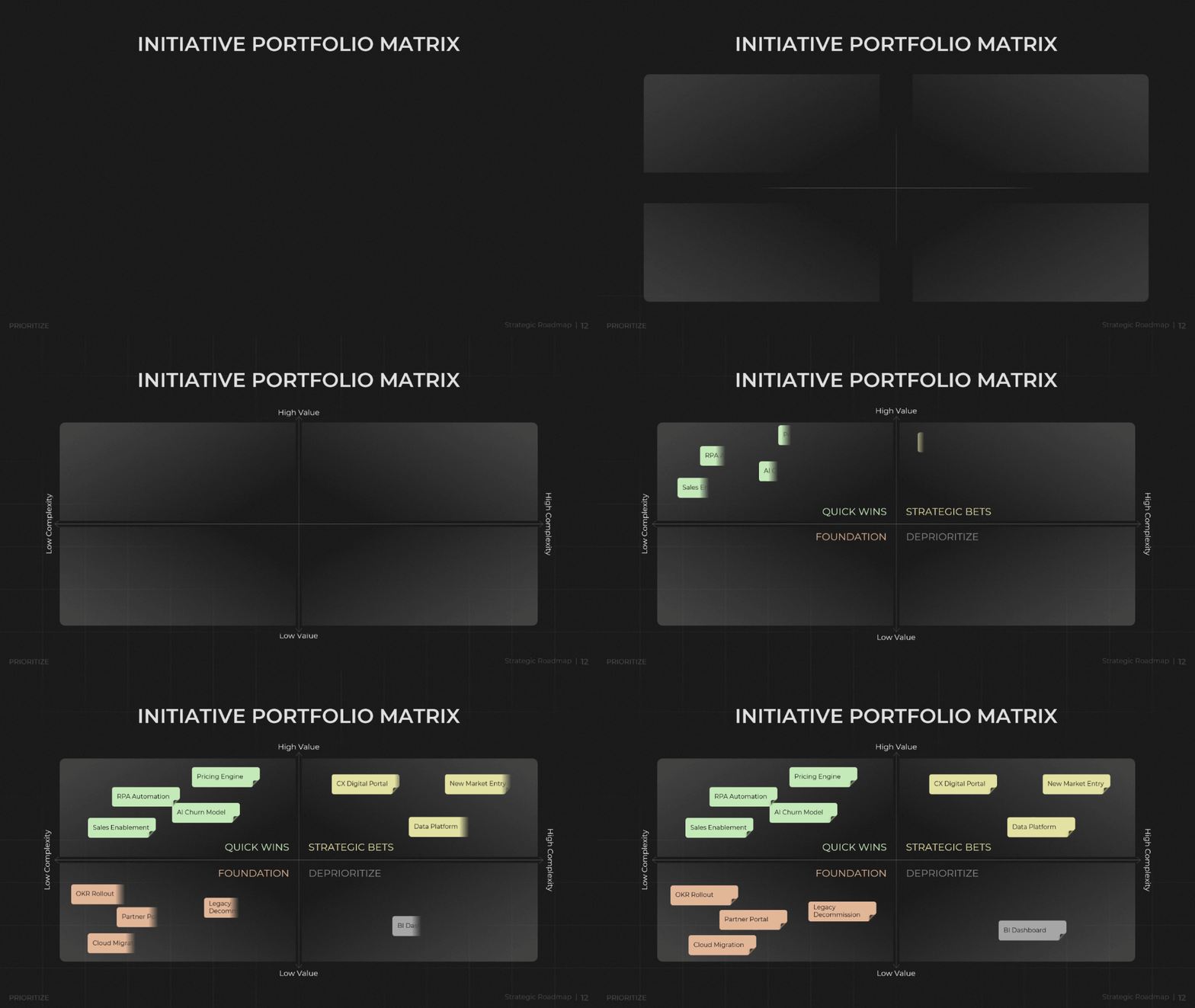
The initiative portfolio matrix then plots every initiative on two axes: value and complexity. Four quadrants emerge - quick wins, strategic bets, foundation, and deprioritize. A pricing engine may land in quick wins, while a new market entry sits in strategic bets and a legacy decommission falls into the foundation zone. Managers place each label during a working session, and the finished matrix doubles as a one-page portfolio summary for the board.
Sequence Execution into Waves and Owners
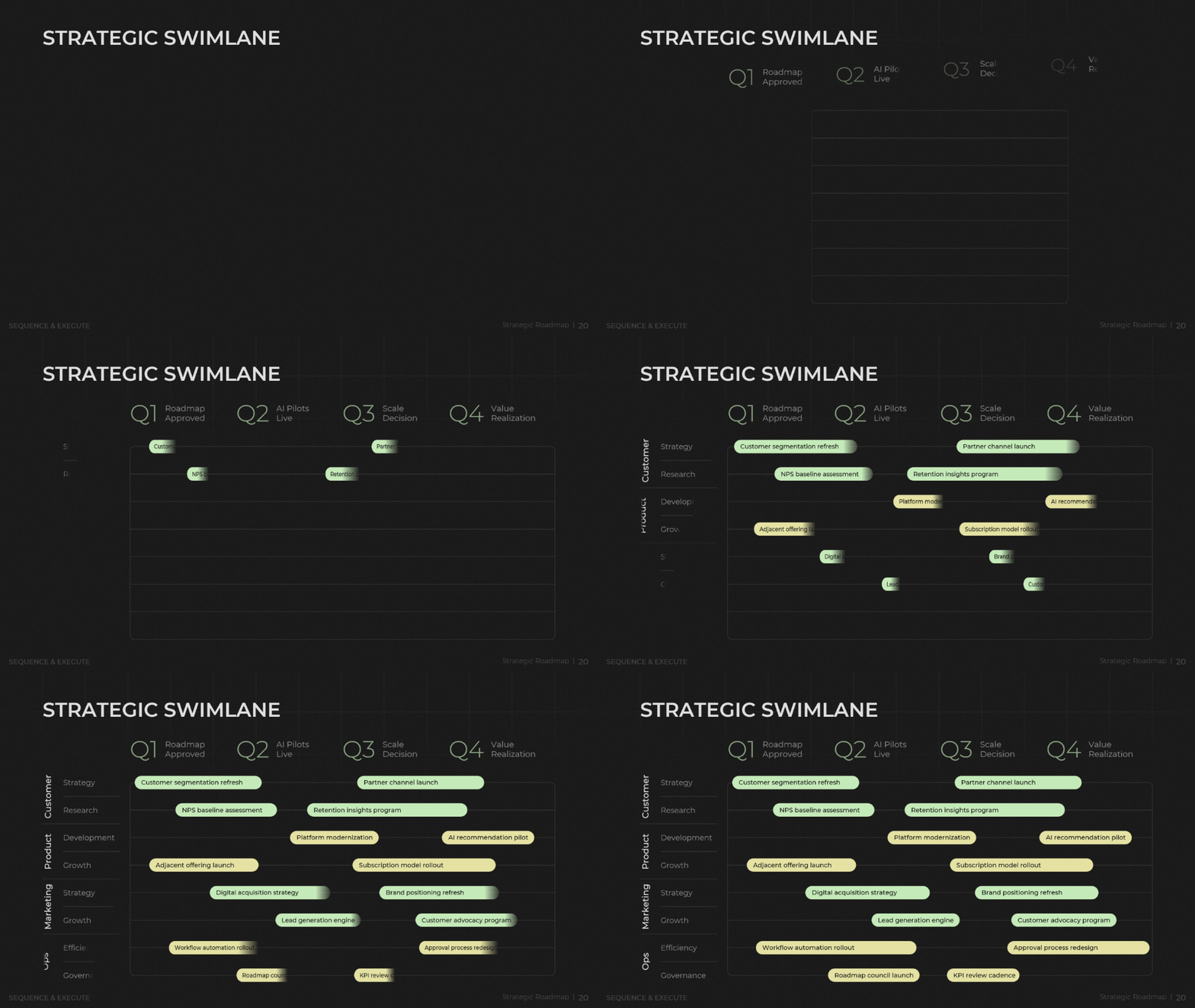
A ranked list is not yet a plan. The sequence stage places initiatives into time-bound waves with owners, milestones, and resource needs. Dependencies become visible before they cause delays, and every quarter has a defined purpose. Teams know what to build first, what to scale next, and what to defer, which protects focus and prevents the overload that ends most transformation efforts.
The risk of poor sequencing is real. McKinsey research reports that about 70% of large-scale change programs fall short of their stated goals, and unclear staging of work appears again and again among the causes. Organizations that pack every initiative into year one exhaust their best people within two quarters. Organizations that sequence with discipline build capability first and harvest results on schedule.
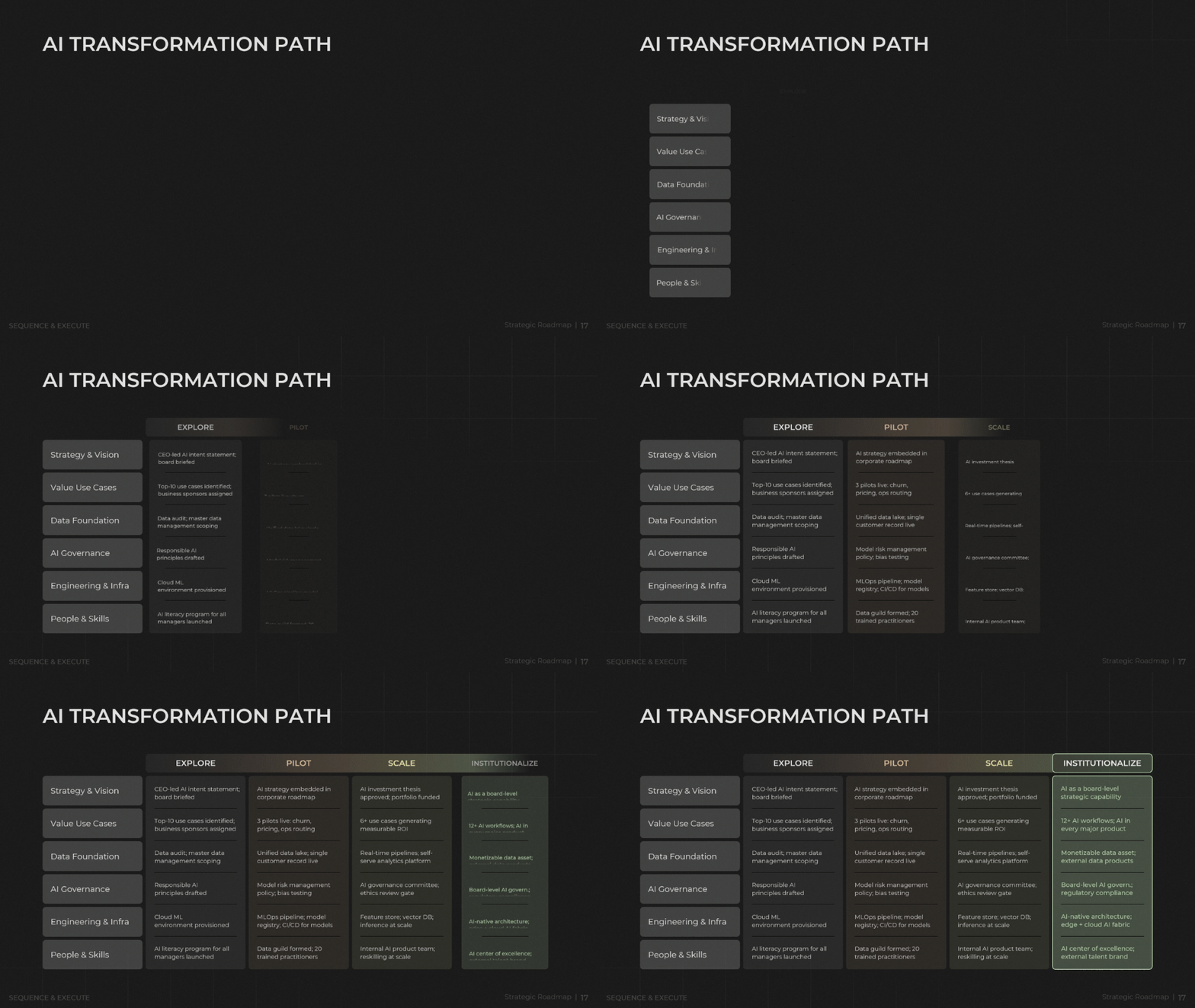
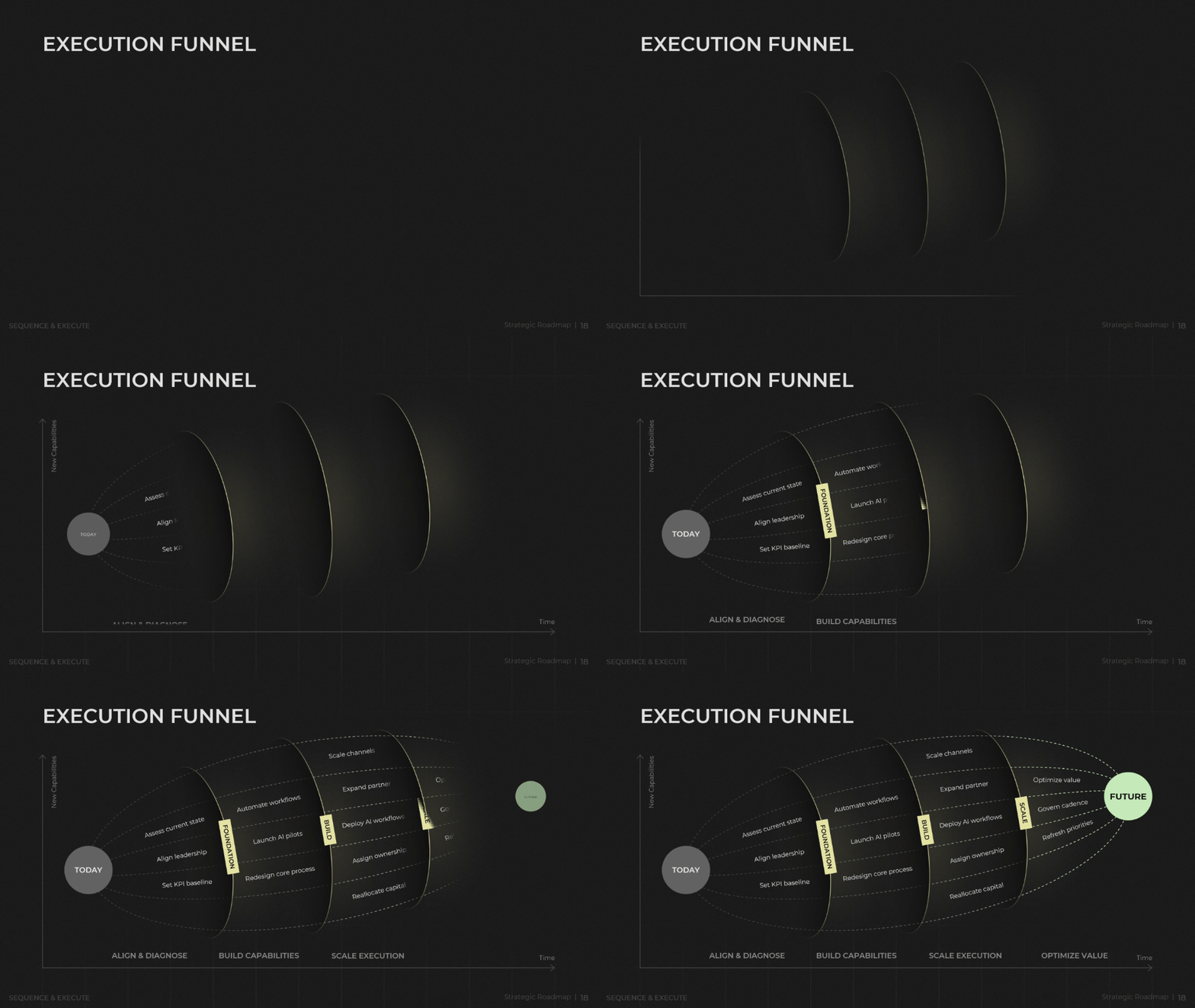
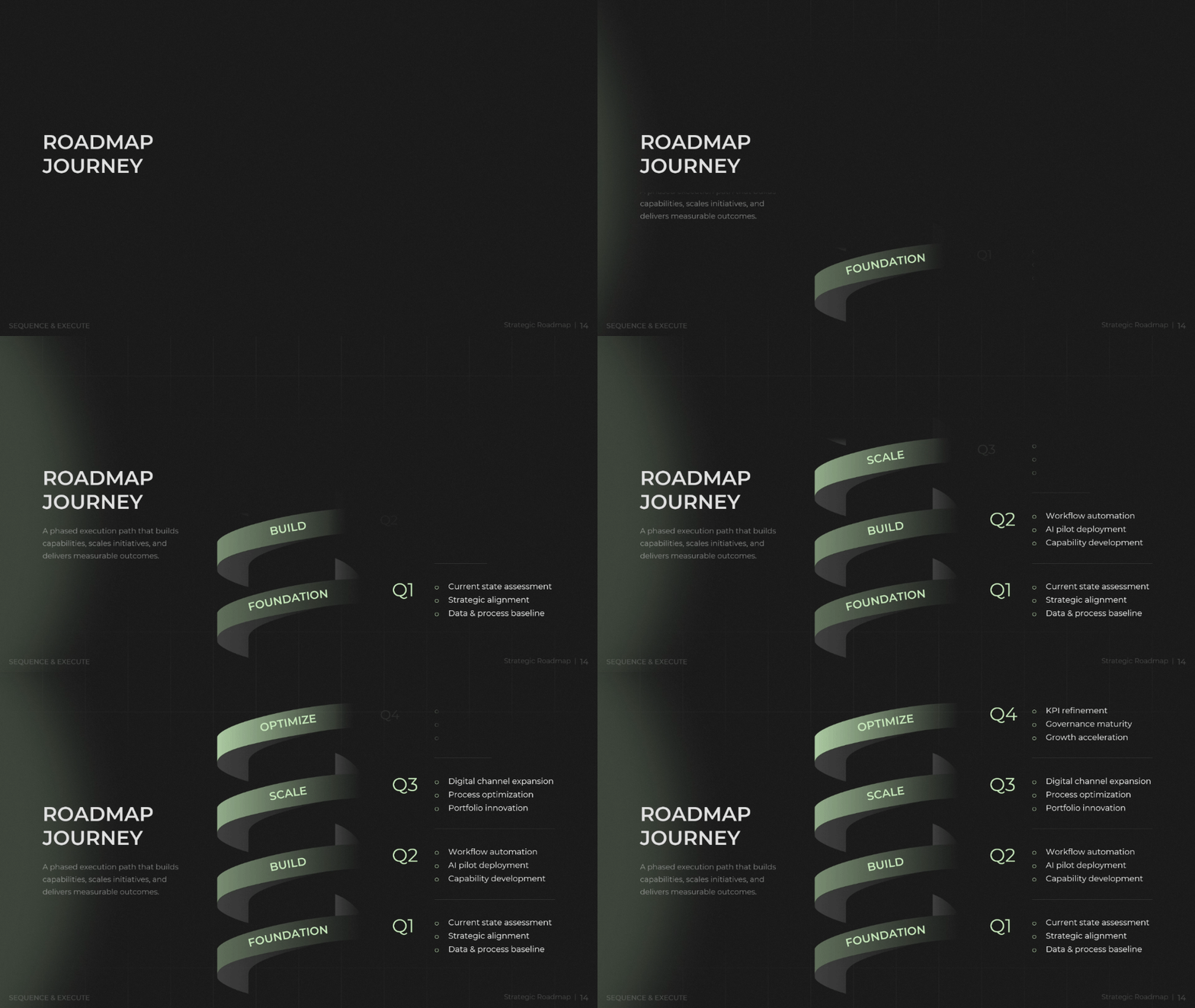
The roadmap journey view divides the first year into four phases - foundation, build, optimize, and scale - and maps each quarter to a small set of outcomes, from a current state assessment and data baseline in Q1, to workflow automation and AI pilots in Q2, digital channel expansion in Q3, and growth acceleration in Q4. The phased path makes the pace of change explicit and easy to communicate to teams, boards, and investors alike.
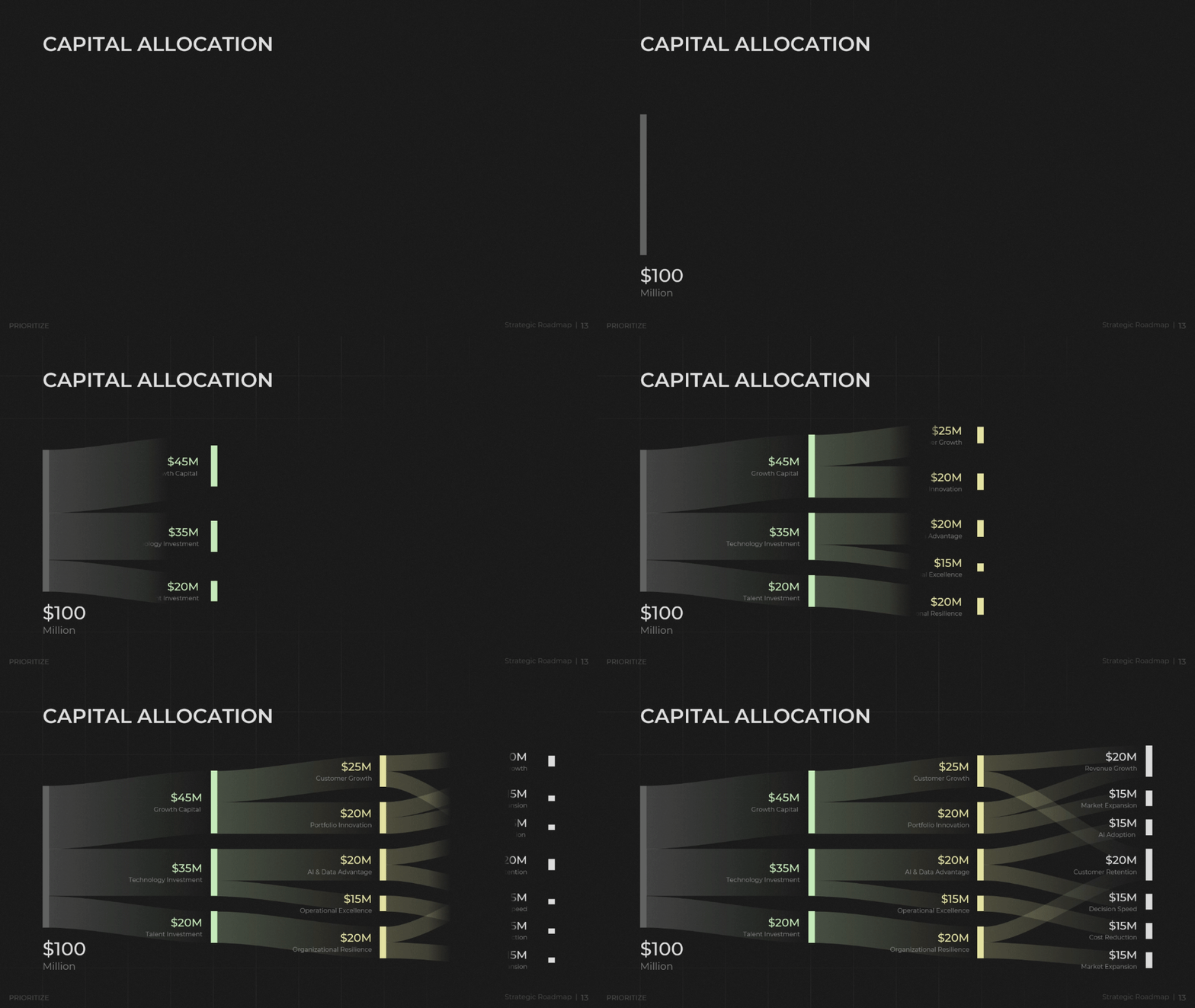
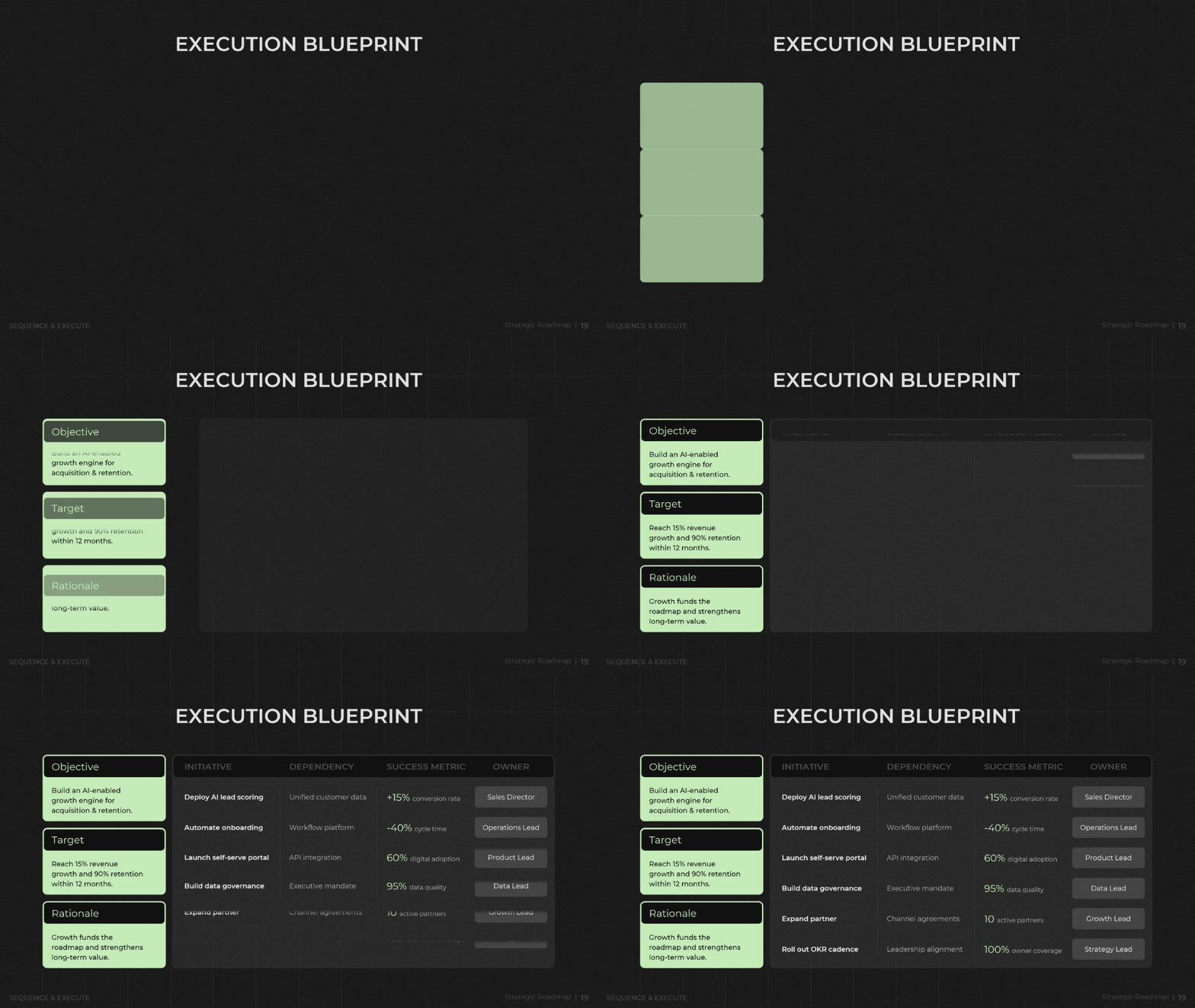
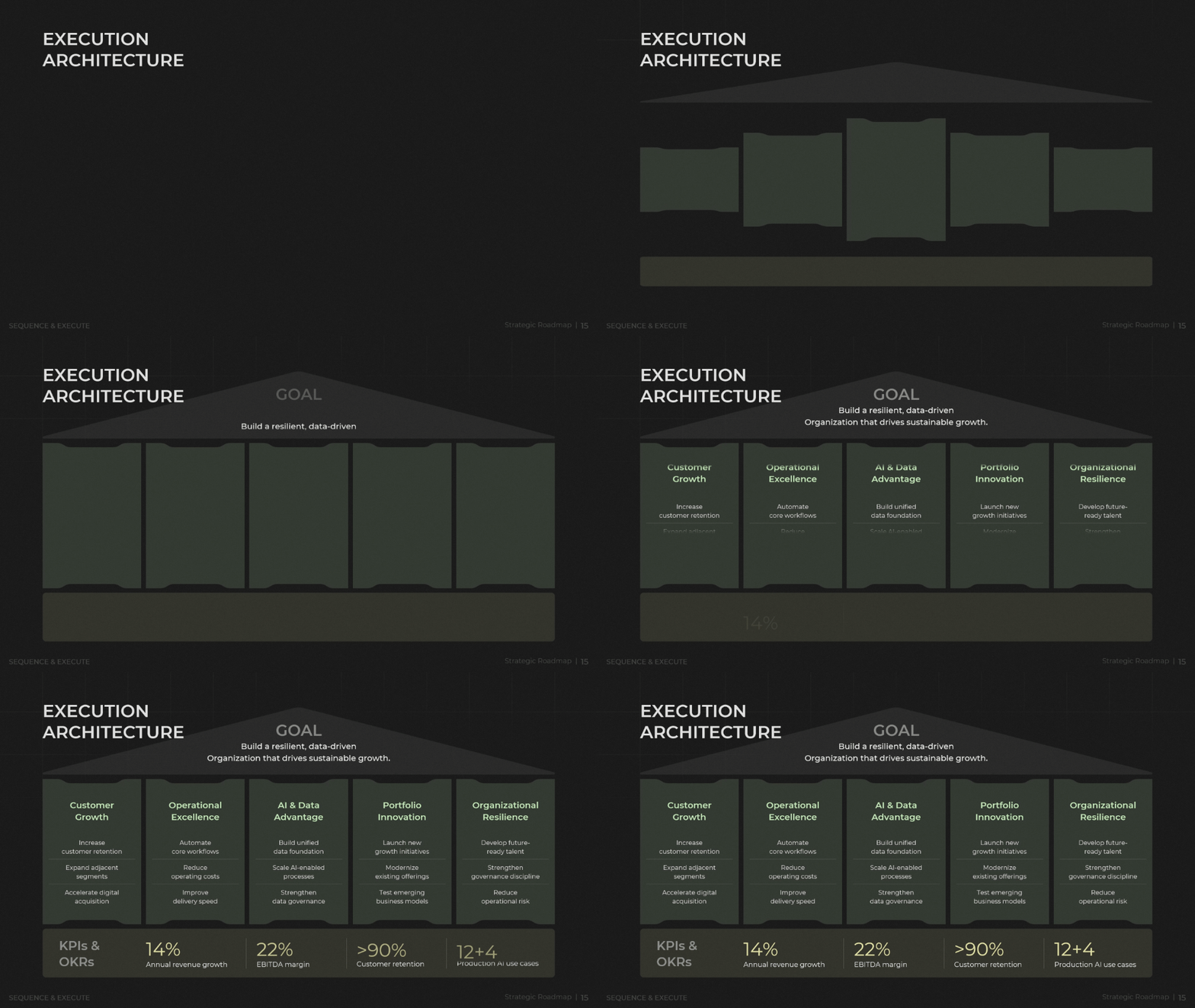
The execution architecture connects the overall goal to five strategic pillars - customer growth, operational excellence, AI and data advantage, portfolio innovation, and organizational resilience - and ties the structure to hard targets such as 14% annual revenue growth, a 22% EBITDA margin, and customer retention above 90%. Each pillar holds three editable workstreams, so the cascade from goal to action fits on a single page.
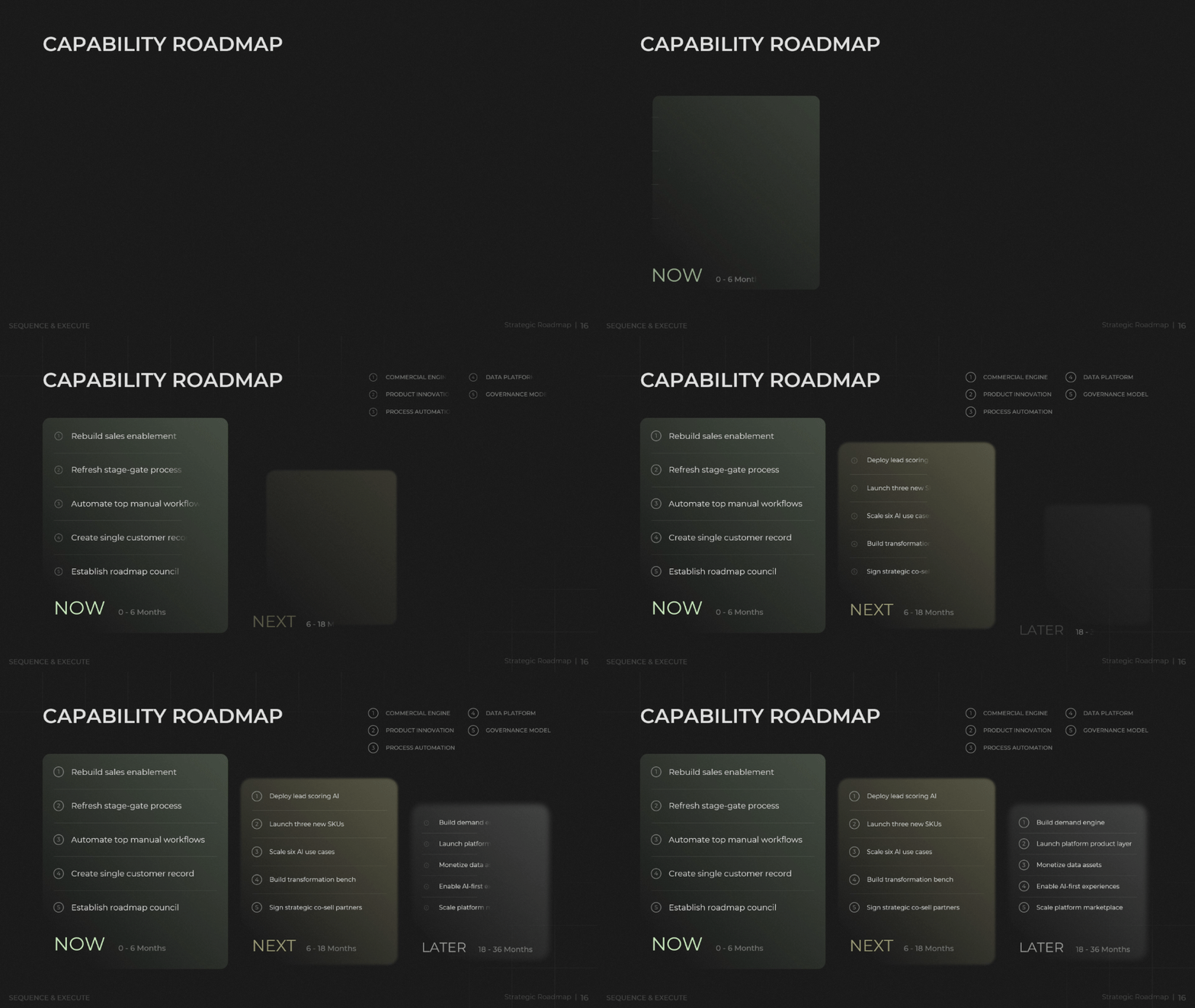
The capability roadmap then spreads initiatives across three time bands: now (zero to six months), next (six to eighteen months), and later (eighteen to thirty-six months). Early entries focus on enablers such as sales enablement, a refreshed stage-gate process, and a single customer record. Mid-term entries deploy what the foundation makes possible, such as lead scoring AI and strategic co-sell partners. Later entries shift toward platform products and data monetization. Managers adjust the entries to their own portfolio and review the bands at every quarterly checkpoint, so the roadmap stays current as conditions change.
Download presentation
Strategic Roadmap
PowerPoint
20 Slides
To continue, enter your email:
Govern with a Dashboard and Decision Gates
Plans drift without a governance rhythm. The govern stage installs two instruments: a value realization dashboard that tracks outcomes against targets, and a set of quarterly decision gates that force explicit choices. Course corrections happen on schedule instead of in crisis, and initiatives that underperform lose funds before they consume another year. Accountability becomes part of the calendar, not a reaction to bad news. Over time, the cadence itself becomes a competitive asset, because the organization learns faster than rivals that review their strategy once a year.
Consider a manufacturer that funds twelve initiatives in January and reviews them the following December. By then, three initiatives have stalled, two have drifted from scope, and nobody can say when the trouble started. With a quarterly gate structure, the same problems surface within ninety days, while the cost of a pivot is still small. The discipline of a scheduled go, pivot, or stop decision often saves more capital than any single initiative earns.
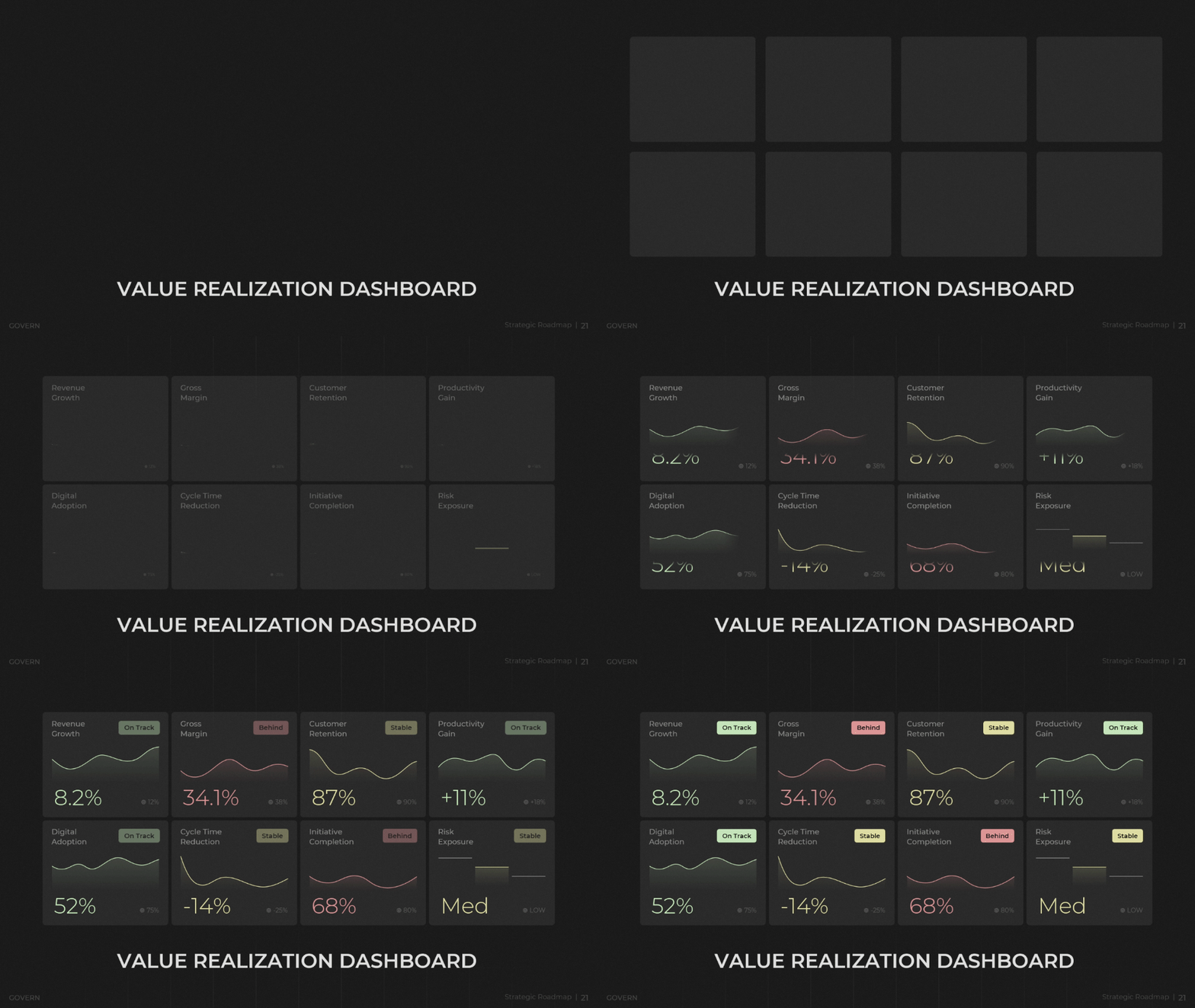
The value realization dashboard tracks eight measures - revenue growth, gross margin, customer retention, productivity gain, digital adoption, risk exposure, cycle time reduction, and initiative completion - each with a current value, a target, and a status flag such as on track, stable, or behind. Executives read the health of the whole portfolio in under a minute.
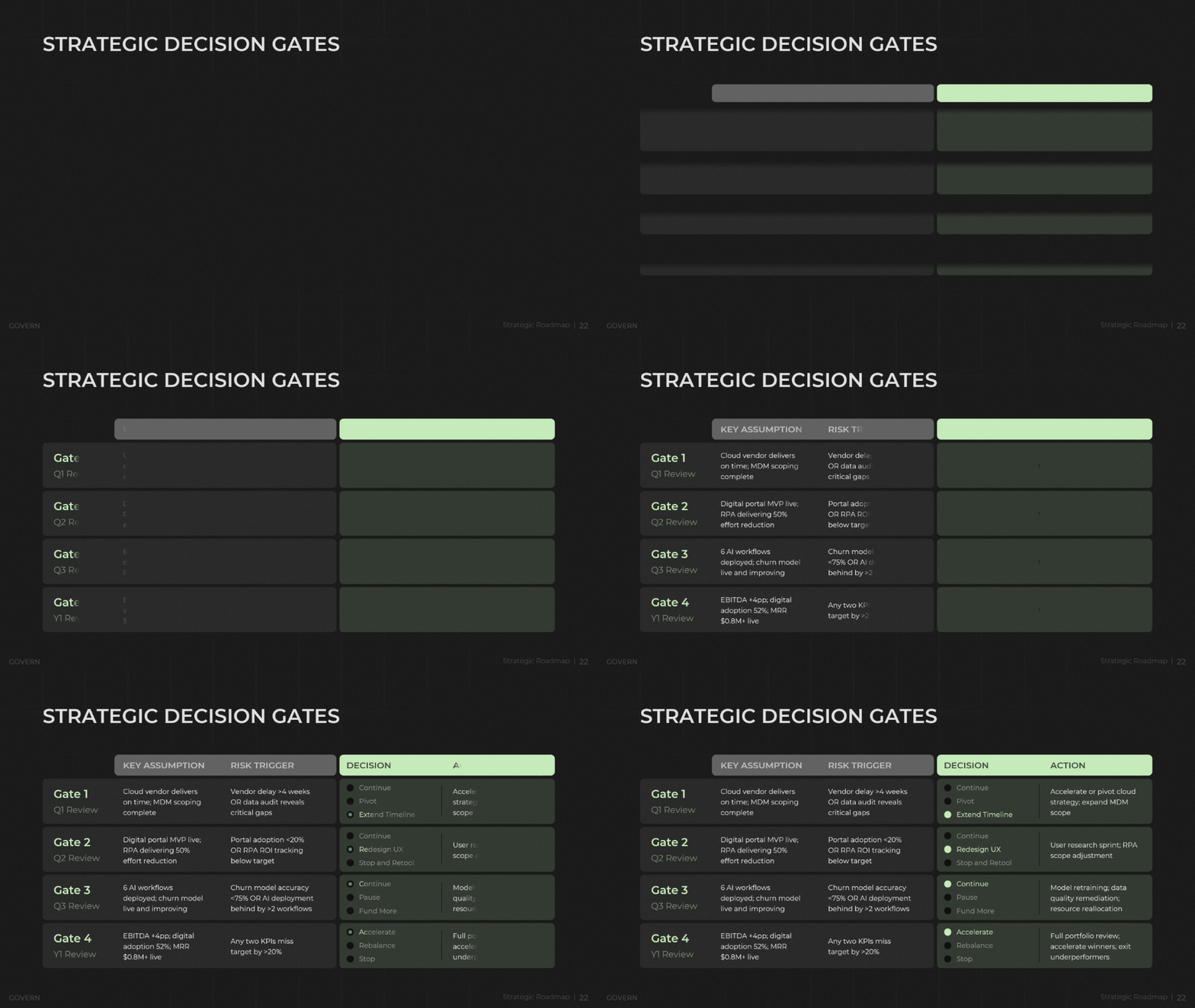
The strategic decision gates view defines four review points across the year. Every gate states a key assumption, a risk trigger, and a menu of actions, from continue or extend to pivot or stop. For example, a Q3 gate may continue funds if six AI workflows run live, or pause the program if model accuracy falls below 75%. A year-one gate goes further: if any two KPIs miss their targets by more than 20%, the executive team runs a full portfolio review, accelerates the winners, and exits the underperformers. The format removes ambiguity from hard conversations and gives the executive team a shared script for every review.
A strategy earns its value only when it turns into delivered results. The five stages of this framework - diagnose, choose, prioritize, sequence, and govern - form a closed loop rather than a one-time exercise. The horizon views give the organization a destination. The diagnostic scorecards replace opinion with evidence. The gap analysis and portfolio matrix turn a long wish list into a ranked commitment. The wave structure converts that commitment into quarters, owners, and milestones. The dashboard and decision gates keep the whole system honest as conditions change. Organizations that adopt this discipline gain something more durable than a plan: the ability to re-plan with speed and confidence whenever the market shifts. A strategic roadmap, maintained with this rigor, transforms strategy from an annual document into a continuous management capability.
Download presentation
Strategic Roadmap
PowerPoint
20 Slides
To continue, enter your email: