







Introduction
Do your goals feel clear at inception but struggle to follow through execution? Our collection of Goal-Setting Frameworks closes the gap between ambition and delivery. It translates intent into structure, and structure into momentum. OKRs sharpen focus through measurable outcomes and visible progress. SMART Goals bring precision to priorities that risk staying abstract. 4DX bridges strategy and execution as it anchors daily behavior to a small set of critical goals. And additional approaches, such as MBO, BHAG, V2MOM, and the Golden Circle, broaden the toolkit for different contexts and leadership styles. Use these frameworks to help create alignment, improve follow-through, and make progress legible to teams and leaders alike.

Disciplined goal setting practices reduce execution drag and accelerate decision cycles. Teams spend less time to debate priorities and more time to act on them. This consistency compounds into stronger performance signals, better resource allocation, and higher confidence from stakeholders who can see results rather than intentions.
Objectives & Key Results (OKR)
OKRs work best when ambition outpaces clarity. In fast-moving organizations, teams often agree on direction but diverge on what progress actually looks like. The OKR structure forces that ambiguity into the open by separating what matters from how success will be measured.

Objectives articulate intent in plain language, while key results impose precision through outcomes that cannot hide behind effort or activity.
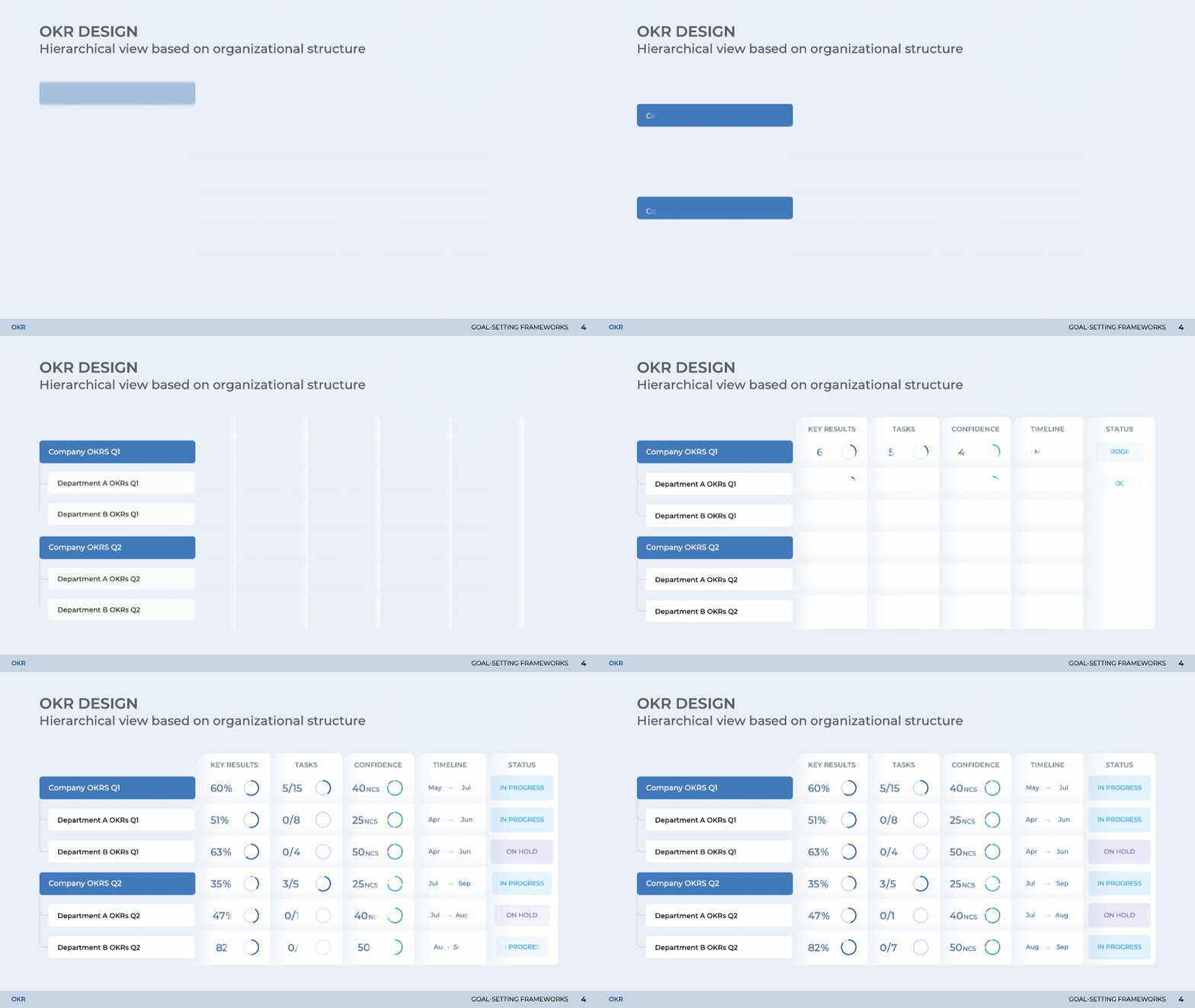

In practice, OKRs create a shared operating rhythm across levels of the organization. Leadership uses them to signal strategic focus without prescribing tactics. Teams translate that focus into concrete results that reflect their specific scope and constraints. Because progress is visible and regularly reviewed, trade-offs surface earlier. Teams learn where to double down, where to course-correct, and where work no longer justifies attention. The visual trackers and progress states shown in the template reinforce this discipline by making momentum and slippage equally visible, which reduces narrative bias during reviews and planning conversations.

The real value of OKRs emerges over time. Repeated cycles sharpen judgment about what constitutes a meaningful result versus a comfortable target. Teams become more deliberate about setting outcomes that stretch capability without detaching from reality.

Download presentation

Goal-Setting Frameworks
PowerPoint
21 Slides
To continue, enter your email:
SMART Goals
Many teams struggle not because of the lack of ambition goals, but because goals leave too much room for interpretation once work begins. The SMART structure removes that ambiguity by forcing specificity around scope, measurement, feasibility, relevance, and time horizon. Each dimension acts as a constraint that sharpens thinking before execution starts.

SMART goals translate broad intent into commitments that teams can actually manage week to week. They clarify what success means without overengineering the path to get there. This balance makes SMART goals effective for operational objectives, capability development, and near-term execution targets where accountability matters.
Teams gain tighter feedback loops because results tie directly to defined measures and deadlines. Managers hold more productive check-ins since discussions center on facts rather than intentions. Over time, SMART goals raise execution discipline by making trade-offs explicit and by discouraging vague commitments that drain capacity without delivering value.

Four Disciplines of Execution (4DX)
Strategic goals exist, but day-to-day behavior continues to drift toward urgent tasks that feel productive while leaving the most important outcomes untouched. The Four Disciplines of Execution counter this pattern by narrowing attention to a Wildly Important Goal (WIG) and by redefining execution as a series of deliberate weekly choices rather than a distant end state.

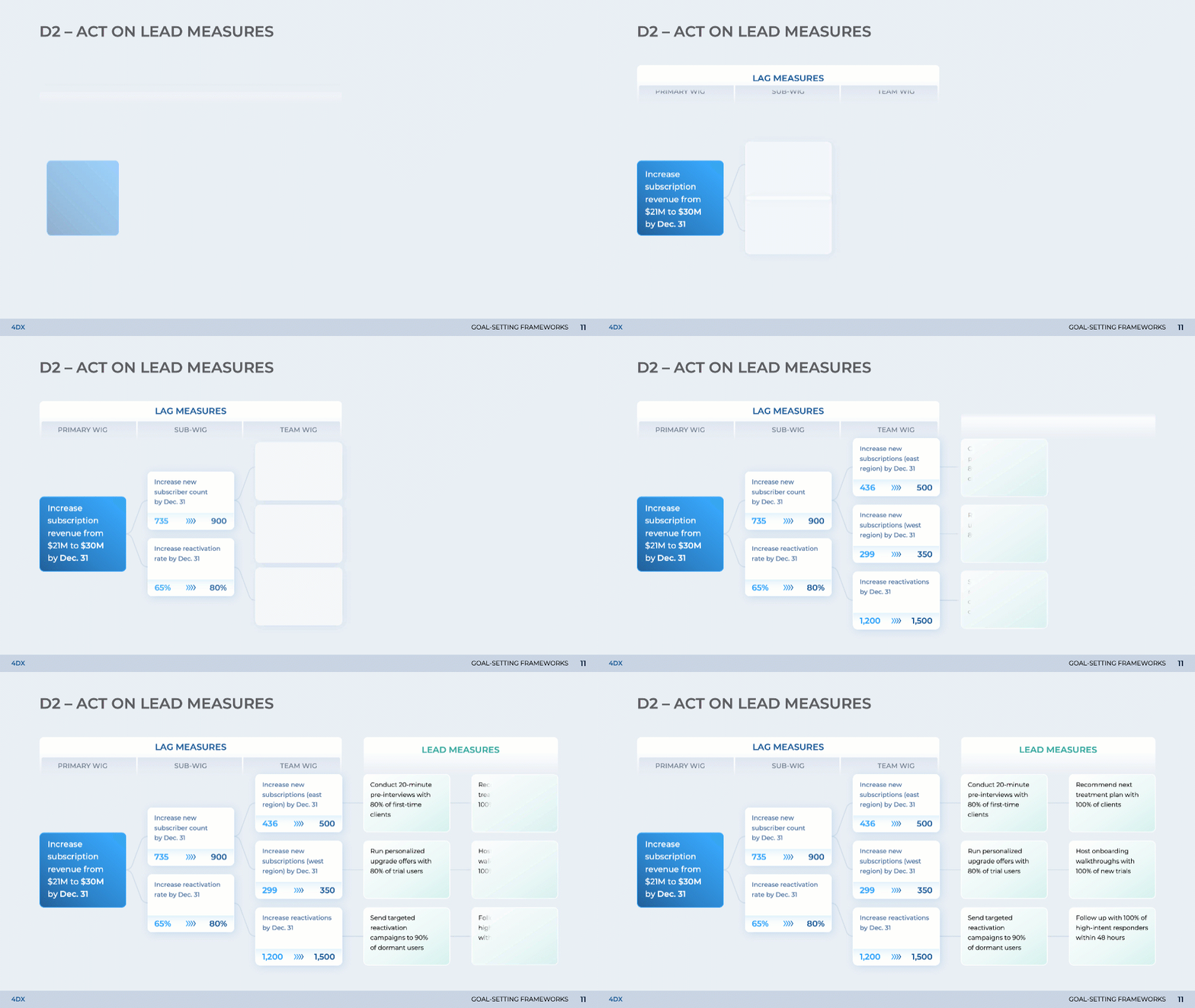
Instead of managing results after the fact, teams commit to lead measures that they can influence directly and repeatedly. These measures shift focus from performance reporting to performance creation.

The scorecard reinforces this mindset by making progress immediately visible and simple to interpret, which sustains engagement beyond leadership reviews. The cadence of weekly commitments closes the gap between strategy and action by forcing teams to decide what they will do differently in the next seven days, not what they hope will improve over the quarter.

Download presentation
Goal-Setting Frameworks
PowerPoint
21 Slides
To continue, enter your email:
Additional Goal Setting Frameworks
Management by Objectives (MBO)
MBO links individual objectives directly to organizational priorities, which reduces ambiguity around expectations and performance evaluation. The framework creates a clear contract between managers and contributors by defining targets upfront and assessing outcomes against agreed criteria. This makes it particularly effective for sales, operations, and functional roles with stable processes and measurable outputs.


Big Hairy Audacious Goal (BHAG)
BHAG stretches ambition beyond incremental improvement. It is not designed to manage short-term execution, but to reframe what success could look like over a longer horizon. A well-constructed BHAG challenges assumptions about scale, capability, and competitive position while remaining grounded enough to feel directionally achievable.

V2MOM
V2MOM aligns complex organizations where clarity breaks down across layers. By explicitly linking vision, values, methods, obstacles, and measures, it forces leaders to articulate not just what they want to achieve, but how they intend to get there and what could stand in the way. V2MOM is especially effective in matrixed or fast-scaling organizations where teams must make decentralized decisions without losing coherence. Its strength lies in making strategic logic visible and testable, which improves alignment without heavy-handed control.

Golden Circle
By starting with why, the Golden Circle framework helps organizations connect execution to meaning, which matters when differentiation and trust drive performance as much as efficiency. When paired with concrete measures and delivery discipline, the Golden Circle prevents goals from becoming purely mechanical. It reminds teams that metrics exist to serve intent, not replace it.

Conclusion
Strong goals do more than set direction; they shape how decisions get made and work gets done. When applied with intent, Goal-Setting Frameworks turn strategy into daily judgment calls teams can execute with confidence. The result is not just clearer goals, but more reliable progress in environments defined by constant change.
Download presentation
Goal-Setting Frameworks
PowerPoint
21 Slides
To continue, enter your email:


