













Content now shapes how buyers discover and trust a brand. Yet only 32% of B2B marketers keep a documented strategy, according to the Content Marketing Institute. The gap shows in results. Mature programs report content effectiveness near 64%, while early-stage teams sit close to 6%. A system, not effort alone, separates the two groups. The volume of content only rises each year, so the teams that win are the ones that turn output into a process others can repeat. This framework treats content as an operation with defined stages, not a stream of one-off posts.
Mine Proven Demand, Not Guesses
The first stage removes guesswork from where ideas come from. Instead of a blank page, teams start from evidence that an audience already wants a topic. The benefit is a higher hit rate and less wasted production. Each idea carries a signal of demand before a single asset gets made, so the team spends its hours on topics with a real chance to land. Guesswork is expensive because it hides its cost. A weak topic still consumes a full production cycle, and the team learns it was wrong only after the work ships. Demand-led ideation moves that judgment to the front, where a bad idea costs a moment of review rather than a week of effort.
Consider a mid-size software company with a small marketing team. When ideas come from internal opinion, most posts underperform and morale drops. When the same team studies over-performing content in its niche, the questions buyers keep asking, and its own best past pieces, the pattern of demand becomes clear. The team then builds on proven interest rather than hope, and the cost of each miss falls sharply.
The Content-Market Fit view is where a manager confirms an idea is worth the effort. It works as three overlapping conditions: real audience demand, the team's own credibility on the subject, and a topic the team can produce again and again. An idea earns a place only when it sits in the center, where all three meet. Managers should test each candidate topic against the three circles and drop any idea that satisfies only one or two.

The deconstruction view teaches teams to study winners and take them apart. It splits any proven piece into five parts: the hook that earns the watch, the story that holds attention, the format that carries the message, the visual choices on screen, and the sound. A manager applies it by picking ten proven pieces in the niche and labeling each part, which turns vague admiration into a reusable parts list for the team's own work.

Engineer the First Few Seconds
The second stage makes the opening of every asset deliberate. Attention is won or lost almost at once, so a strong hook is the largest single lever on reach. The benefit is a higher hold rate: more viewers stay past the first frames, and platforms reward that hold with wider distribution. A weak hook wastes even excellent content behind it. This stage moves the hook from an afterthought to the first design decision. The team drafts the opening before the body, because a hook that fails means the body never gets seen. The result is content that earns its audience instead of one that assumes it.
The numbers make the stakes plain. Research cited by Animoto found that 71% of TikTok users decide whether to keep watching within the first three seconds. HubSpot reports that short-form videos under one minute average only 16 seconds of watch time, so the opening must work fast. A hook is not decoration. It is the gate that decides whether the rest of the asset gets a chance.
The hook anatomy view gives teams a repeatable structure for that opening. It works in three moves: stop the scroll with a visual shift, orient the viewer with a first line that says what this is, and open a gap that sparks a question without resolving it. Managers should draft each hook against all three moves in order, and cut any opening that skips the orient step, since a confused viewer leaves before the gap can pull them in.

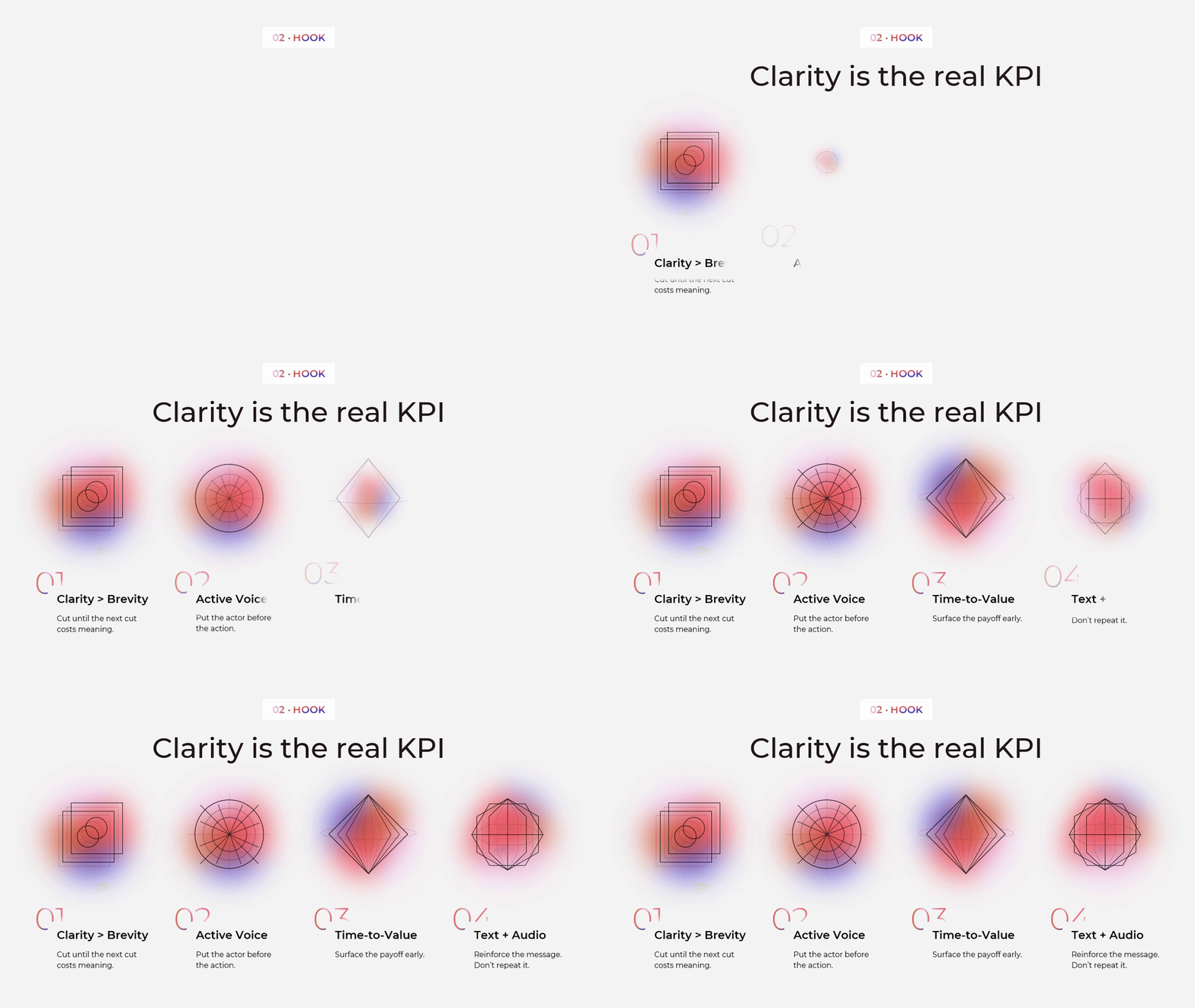
The clarity view corrects the most common hook mistake, which is to chase brevity over sense. It sets four checks: cut only until the next cut would cost meaning, put the actor before the action, surface the payoff early, and let text and audio reinforce one message rather than repeat it. A manager uses it as a final pass on any script, and treats clarity, not word count, as the real measure of a finished hook.
Download presentation
Build From What Already Works
The third stage lowers the cost of a blank page. Teams assemble each asset from proven parts instead of an empty draft, which speeds production and protects quality at the same time. The benefit is steady output that does not sacrifice standards, because the strongest elements carry forward while only the weak parts get rebuilt. Speed and quality usually pull against each other. A block-based build eases that tension. The team reuses what already earns attention and spends its limited creative energy only on the parts that need it, so cadence rises without a drop in the work.
Creative quality earns this focus. Nielsen research found that strong creative drove a large share of the sales lift from advertising, with earlier analysis attributing about 65% of that lift to the creative itself. For a content team, the lesson is direct: how well an asset is built matters more than how much is produced. A disciplined build process protects the part of the work that moves results the most.
The build workflow view sets a clear order for the work. It runs as six steps: break a proven winner into its parts, keep the parts that already excel, rebuild the weak parts until they match, recombine everything in the team's own way, publish because finished beats flawless, and refine based on the result. Managers should treat the steps as a checklist for each asset, which stops the team from restarting from zero every time.

The split-bucket view shows where to invest original thought and where to lean on proven patterns. It divides the work into two buckets: a create bucket for the core idea and angle that must stay the team's own, and a copy bucket for hooks, structures, visuals, and sound that can be adapted from content that already performs. A manager applies it by sorting each element into one bucket, which keeps originality where it counts and saves time everywhere else.

Make Once, Publish Many
The fourth stage extracts full value from every idea. One core asset becomes many pieces, so reach expands without a matching rise in production cost. The benefit is efficiency and coverage together: the team meets its audience across channels while it still produces a manageable number of original ideas. Most teams underuse their best work. A strong asset gets published once and then sits idle, even though it took the most effort to make. This stage treats each pillar asset as raw material for many formats, so the return on that effort multiplies rather than expires after one post.
This practice has a name and a clear rationale. MarTech defines content atomization as the break of one comprehensive asset into smaller standalone pieces that fit different platforms and audience needs. The audience is spread thin across channels, and Sprout Social reports the typical user moves between nearly seven social networks each month. Most of the audience never saw the original, so a second and third publication in a new form reaches new people rather than repeats old ones.
The repurpose view maps one original into a full set of derivatives. It shows a single core asset fanning out into a written thread, audio snippets, quote graphics, a newsletter section, short clips, and a carousel. A manager uses it as a production plan, and decides up front how many derivatives each pillar asset should yield, so the team plans for reuse from the start instead of as an afterthought.

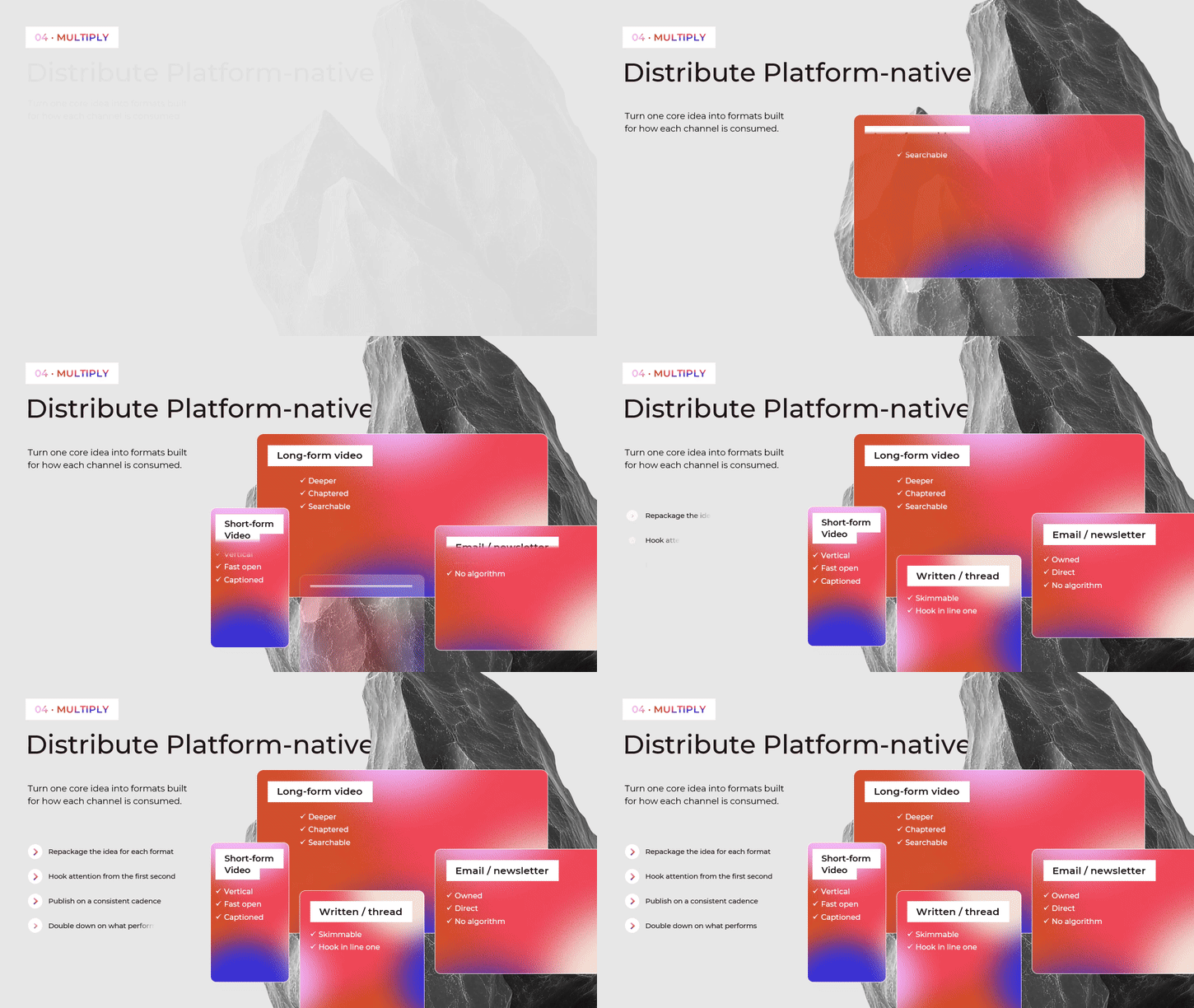
The platform-native view prevents the common error of one post copied across every channel. It reshapes a single idea into formats built for how each channel is consumed: deeper and chaptered for long-form video, owned and direct for email, fast and captioned for vertical clips, skimmable with the hook in line one for a written thread. Managers should adapt the format to the channel, keep a consistent cadence, and double down on whichever versions perform.
Download presentation
Close the Loop and Compound
The final stage turns performance into the next brief. Measurement feeds ideation, so the system learns from every cycle and improves on its own. The benefit compounds over time: each rep makes the next one sharper, and both reach and the content library grow together rather than reset with each post. Without a loop, a team repeats the same mistakes and never knows which choices drove a result. With one, every published asset becomes an experiment that returns a lesson. Those lessons accumulate, and the gap between the team and its competitors widens with each cycle.
Maturity data shows what a working loop is worth. The Content Marketing Institute found effectiveness near 64% among the most mature programs, against roughly 6% for the earliest stage. Wistia reports that audiences typically get about halfway through a video, which gives teams a concrete retention signal to read and act on. A team that reads these signals and adjusts will pull away from one that does not.
The feedback view defines the few metrics that matter and how to act on them. It tracks hook rate, watch and retention, rewatches and shares, follower conversion, and output cadence, then asks the team to change one variable at a time so the cause of any change is clear. Managers should pick the single metric with the most leverage, usually hook rate, and run one deliberate change per cycle rather than many at once.

The maturity view lets a team locate itself and plan the next move. It lays out four stages: random posting on vibes, a repeatable hook and build process, a systematized operation run by roles and cadence, and a compounding stage where every rep improves the next. A manager marks the team's current stage, names the one capability needed to advance, and uses that as the near-term goal for the whole content function.

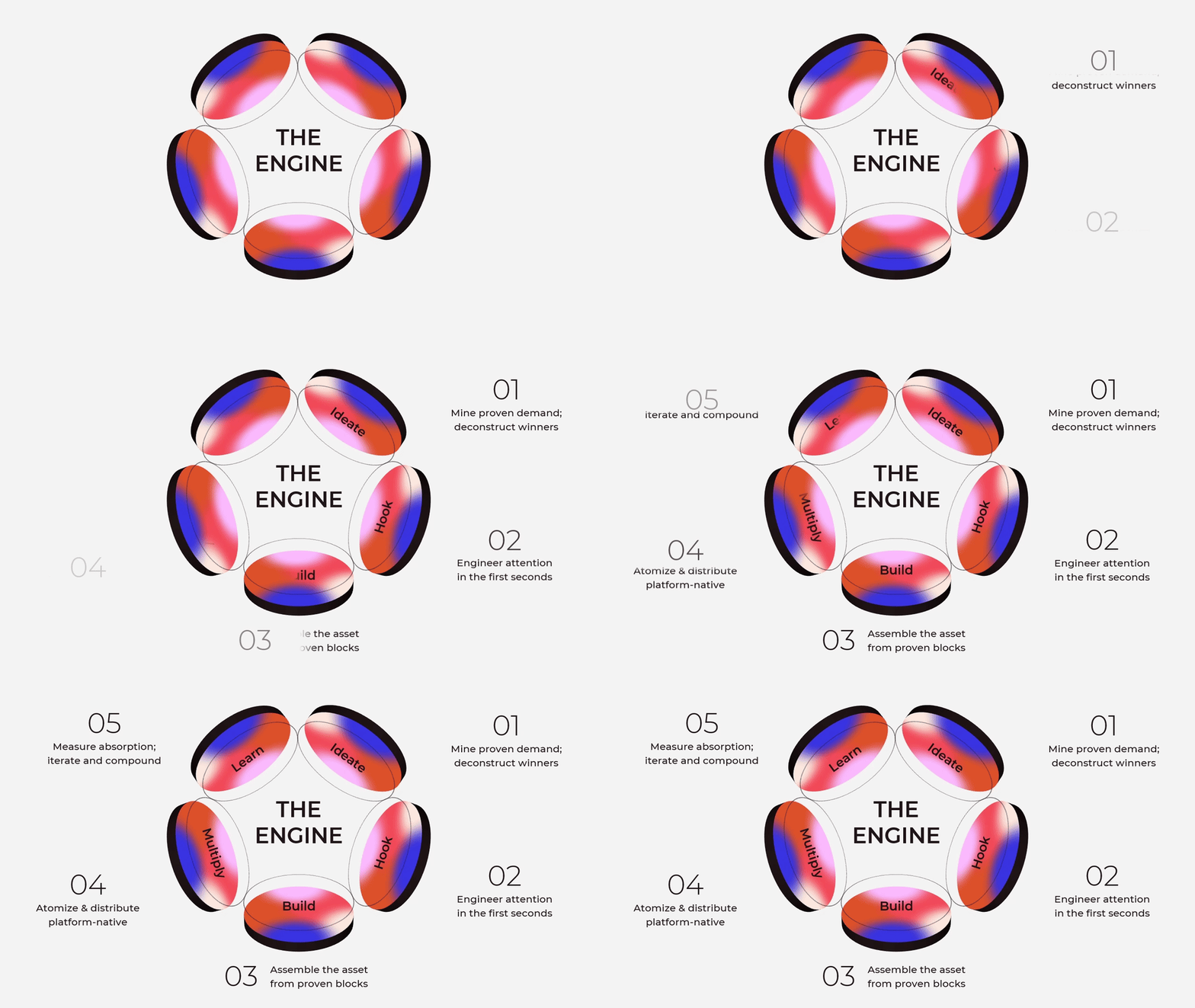
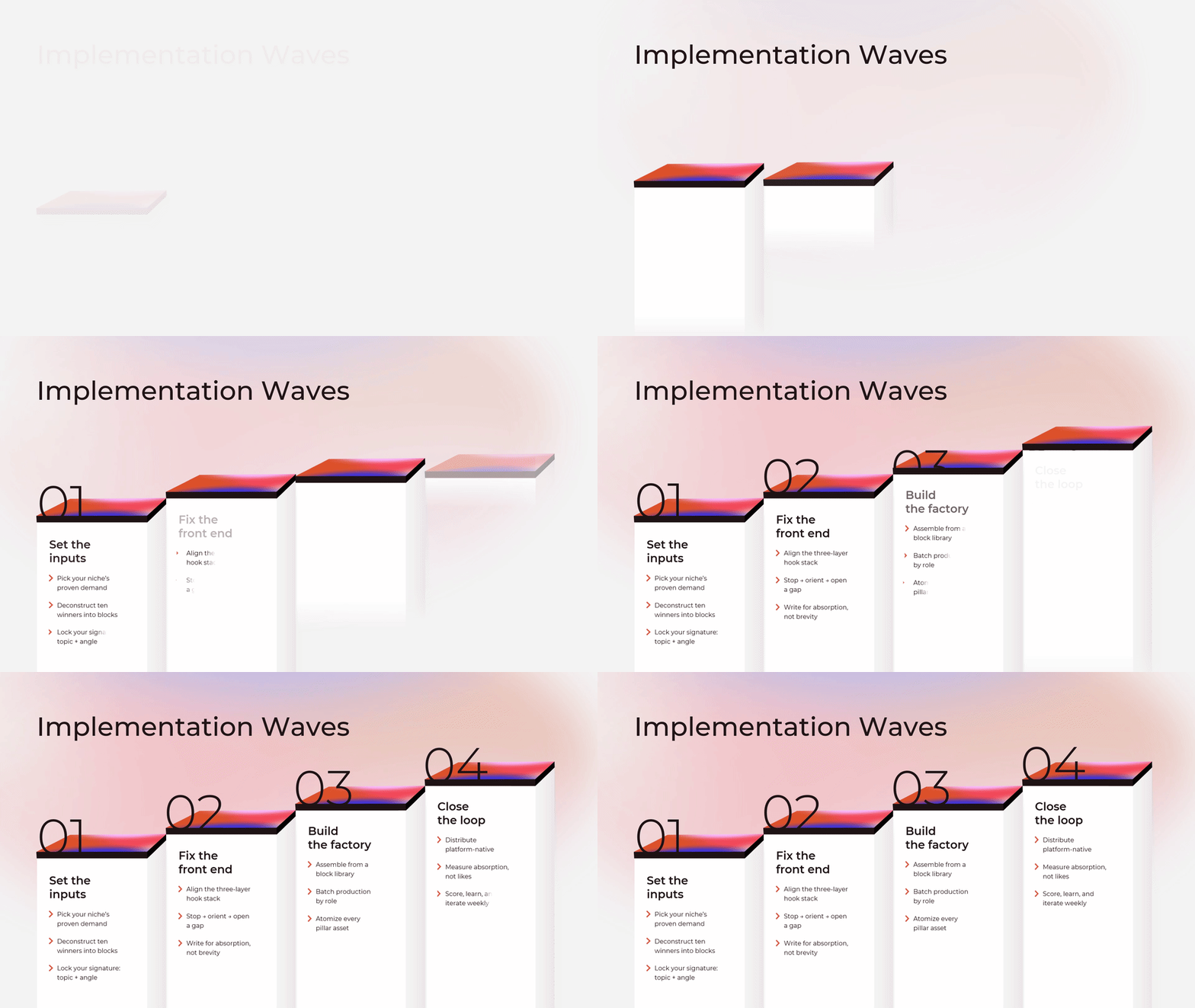
Content stops being a series of lucky hits once it runs as a system. The five stages connect into a single loop: proven demand feeds sharper ideas, engineered hooks earn the watch, a disciplined build protects quality, atomization spreads the work across channels, and measurement returns to shape the next brief. Each stage supports the others, and the gaps that once drained effort, the missed hooks, the single-use assets, the silent results, close one by one. What replaces them is a repeatable capability the whole team can run, one that survives a change in staff and scales as the team grows. The organizations that treat content this way move past guesswork and luck, and build an asset that grows more valuable with every cycle. The reward is not a single viral post but a durable engine that produces reach on purpose. Content maturity is less about talent on any given post and more about the discipline of the system behind all of them.