







Brand distinctiveness now carries more commercial weight than differentiation. Research from the Ehrenberg-Bass Institute, popularized by Byron Sharp, shows that brands grow by building distinctive assets that make them easy to recognize and recall, not by claims of being different. When a category converges on the same specs and the same promises, the brand that owns a recognizable world holds the advantage that competitors cannot copy.
The Three-Act Architecture
A world needs structure, or it scatters into disconnected campaigns. The three-act architecture gives brand leaders one sequence to follow: design the place, populate it with people, then protect it. Each act builds on the one before, so the brand grows as a single system instead of a run of unrelated launches. The result is a brand that behaves like a world with a protected core, not a logo with a marketing calendar.
The payoff is measurable. A Harvard Business Review study found that fully connected customers are 52 percent more valuable, on average, than customers who are merely satisfied. A brand that operates like a world pulls buyers past satisfaction toward that deeper connection, where the highest customer value concentrates. The architecture exists to move people along that path on purpose rather than by luck.
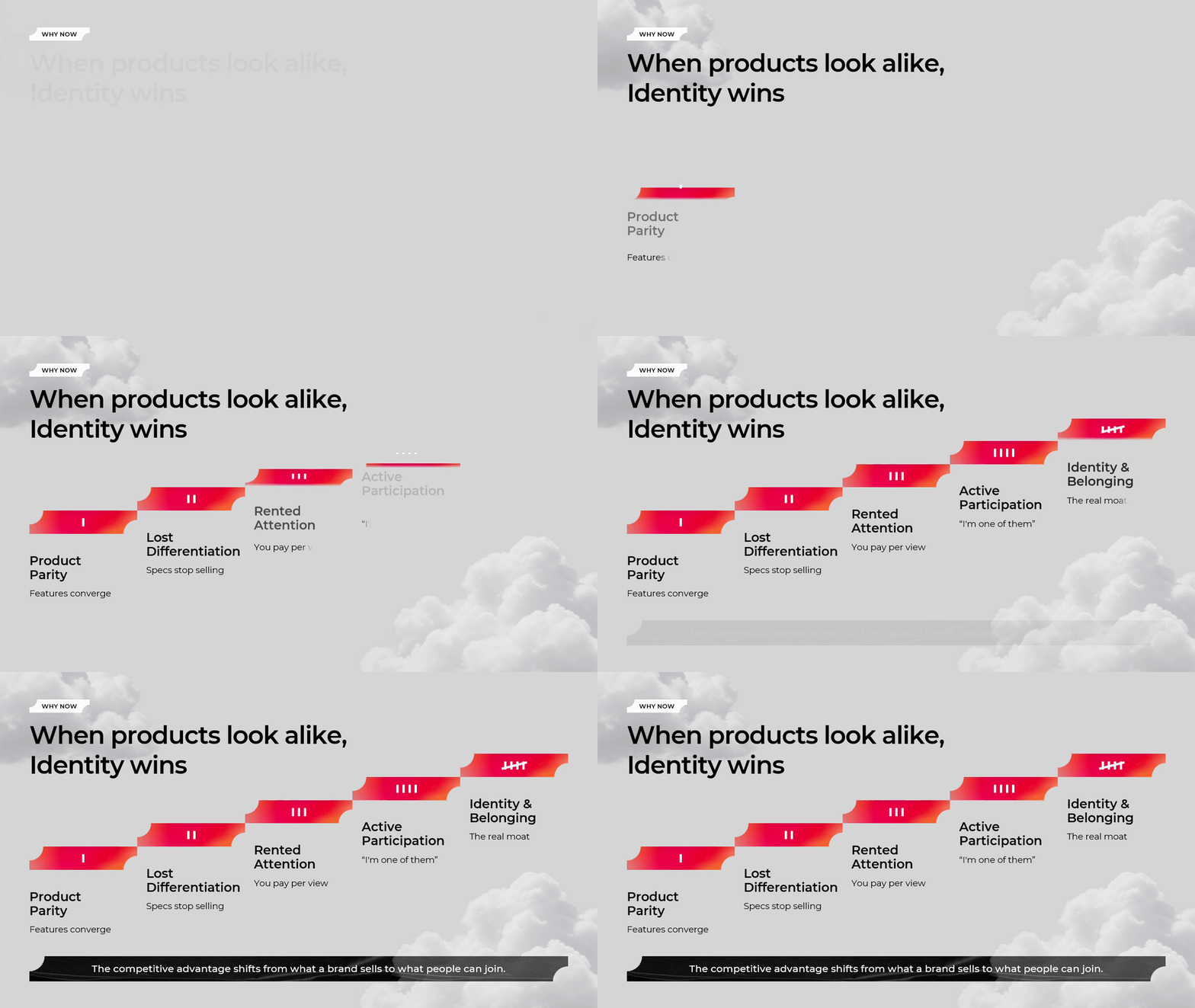
When a team needs to justify the shift from promotion to participation, this slide makes the case. It presents a five-step staircase that climbs from product parity and lost differentiation, through rented attention, up to active participation and identity. Managers mark the brand's current rung, then name the moat one step higher, so the whole team agrees on where the brand stands and where it must move next.
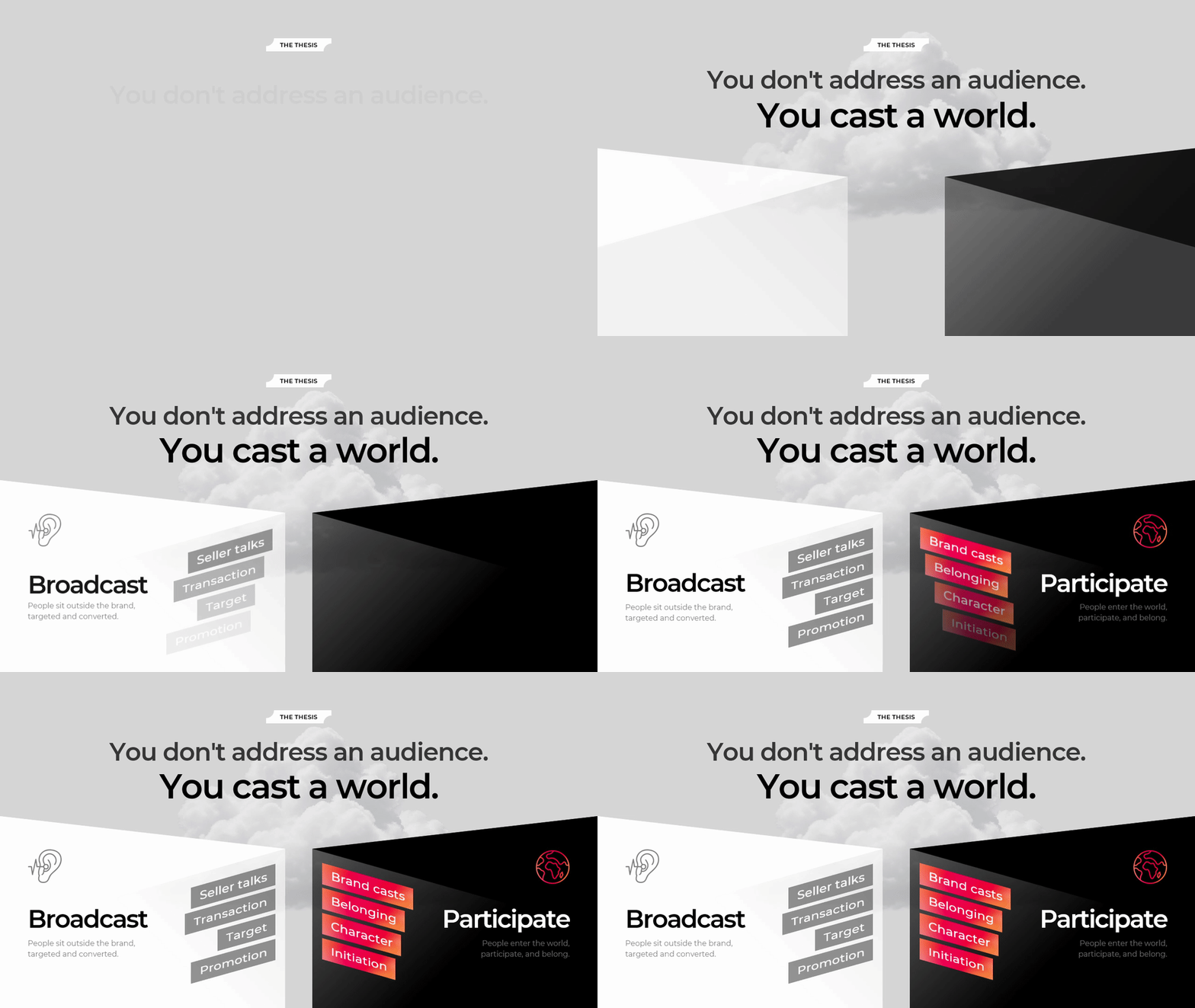
The thesis slide resets how a team frames its audience before any work begins. It sets two columns side by side: broadcast, with its language of target, transaction, and promotion, against participation, with its language of character, belonging, and initiation. Leaders rewrite one live campaign line from each side, which exposes how much of the current brand still speaks at people instead of inviting them in.
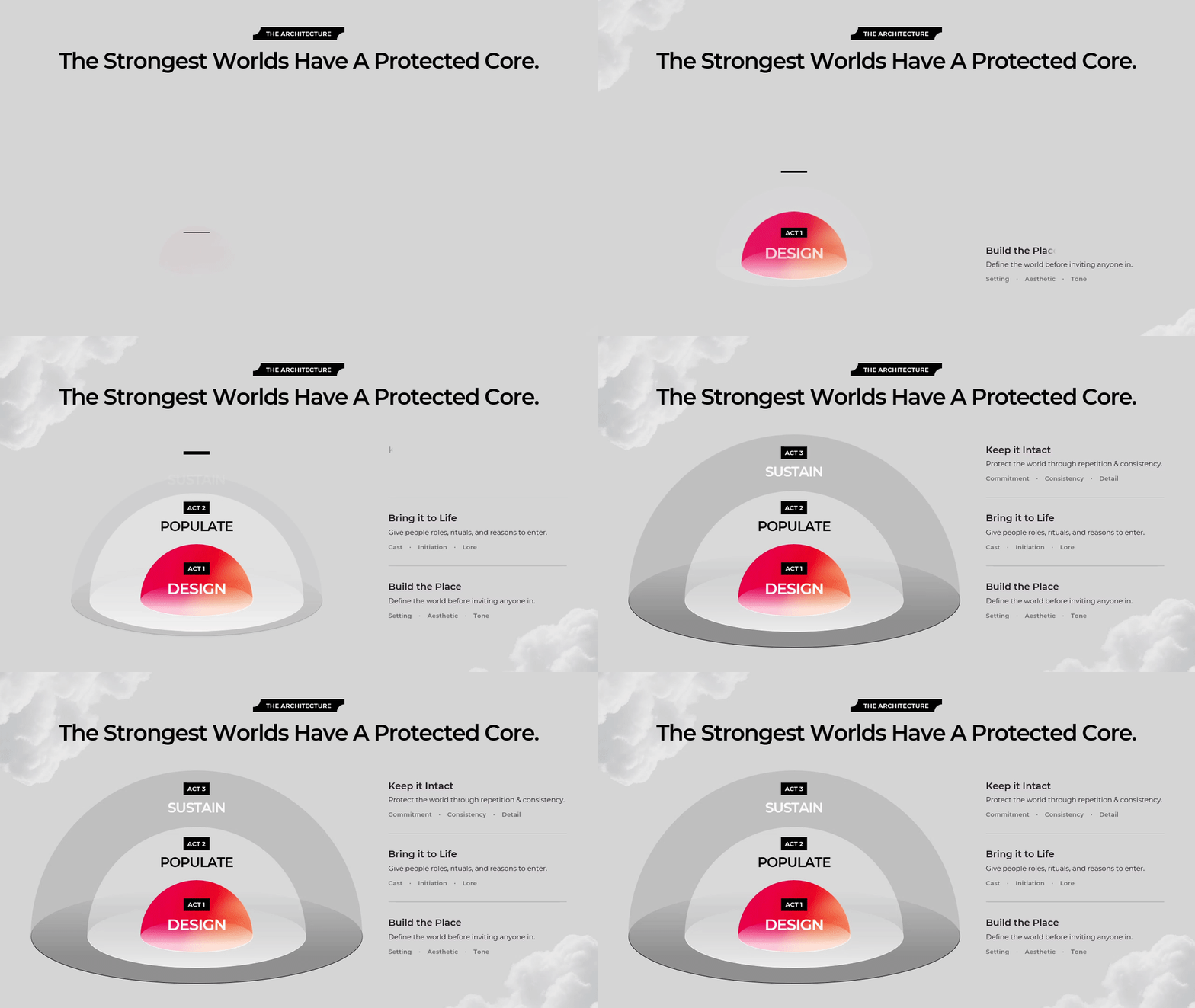
This slide shows the entire model on one canvas before the first task starts. A layered core diagram holds the three acts, Design, Populate, and Sustain, and each act carries its own three principles, from setting and aesthetic to cast and initiation to commitment and detail. Teams assign a clear owner to each act, then defend the core through repetition, so the world stays intact as it grows.
How to Design a World People Recognize
A world begins with a look and a voice that people know on sight. The design act turns a vague identity into a signature system, a fixed set of cues that hold constant across every asset. Recognition then becomes automatic, and the brand earns attention without a fresh purchase of it each time. Consistency of form, not novelty, is what makes the world feel real from the first glance.
Ehrenberg-Bass research on distinctive brand assets shows that consistent non-verbal cues, colors, type, and characters, build the memory structures that drive choice. Consider a mid-size retailer that commits to one palette and one narrator voice. It becomes far easier to spot on a shelf and in a crowded feed than a rival that redesigns its look every quarter and resets its own recognition to zero.
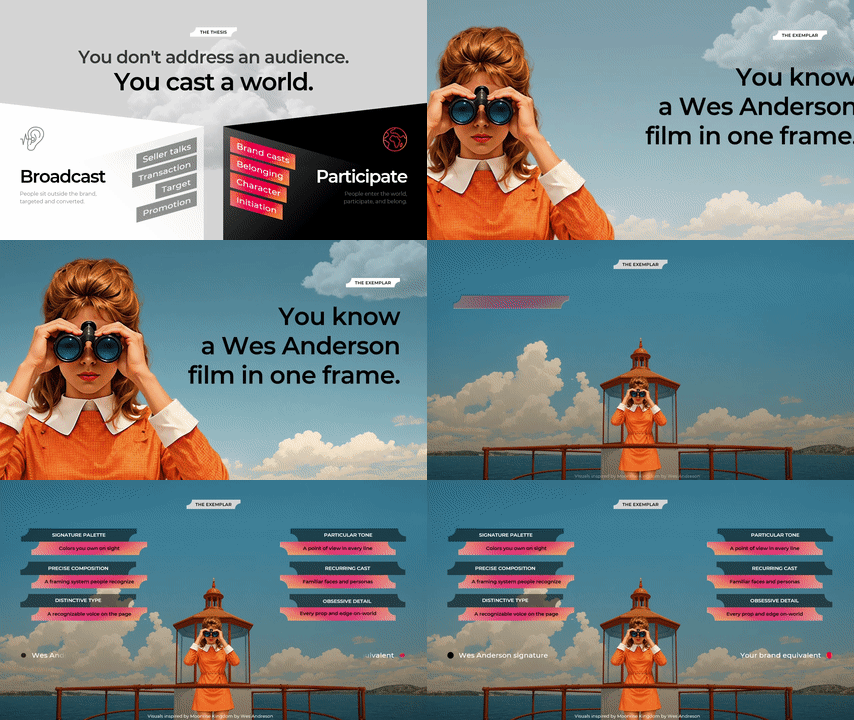
The exemplar slide sets a benchmark for what recognition should feel like. It uses the Wes Anderson example, a world so distinct that a single frame identifies it without a title. Managers apply one blunt test to the brand: would one cropped asset, with the logo removed, still identify the company? A world passes that test, while ordinary branding fails it.
This slide translates that benchmark into named cues a team can own. It lays out six signature dimensions, palette, tone, composition, cast, type, and detail, and pairs each with a brand equivalent to fill in. Teams write the brand's own version of every cue, then cut anything generic, so the identity stops borrowing from the category and starts defining it.
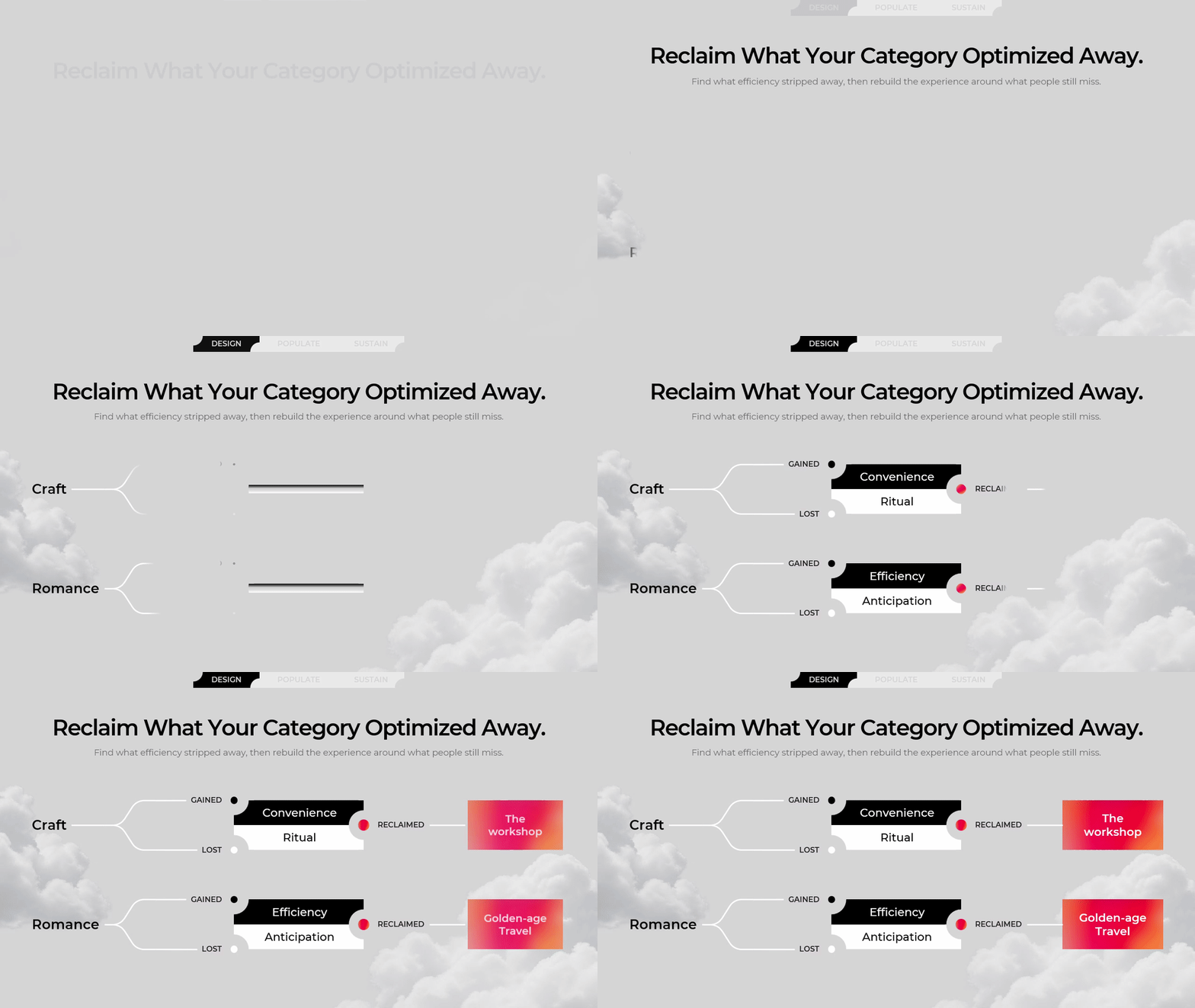
The reclaim slide helps a brand find meaning the category threw away. A branch diagram maps what efficiency stripped out, then what the brand can rebuild the experience around, values such as craft, ritual, and anticipation. Managers pick one lost value that customers still miss, then design a deliberate part of the world to restore it, which sets the brand apart on feeling rather than features.
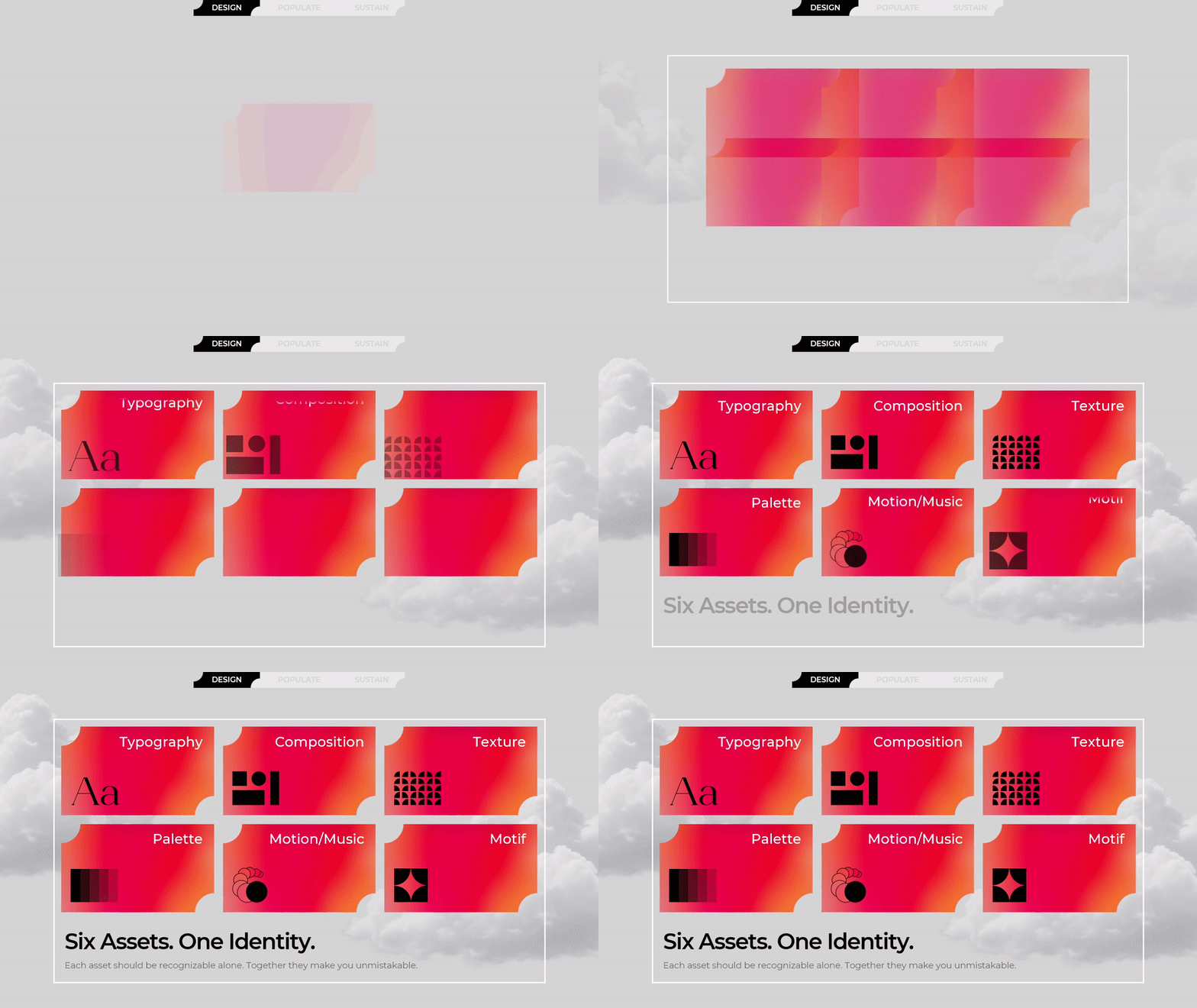
This slide makes the identity portable across formats and channels. A grid holds six assets, typography, composition, texture, palette, motion, and motif, each strong enough to stand alone. Teams test every asset in isolation and keep only the ones that still read as the brand on their own, so the world stays recognizable even when a single element appears without the rest.
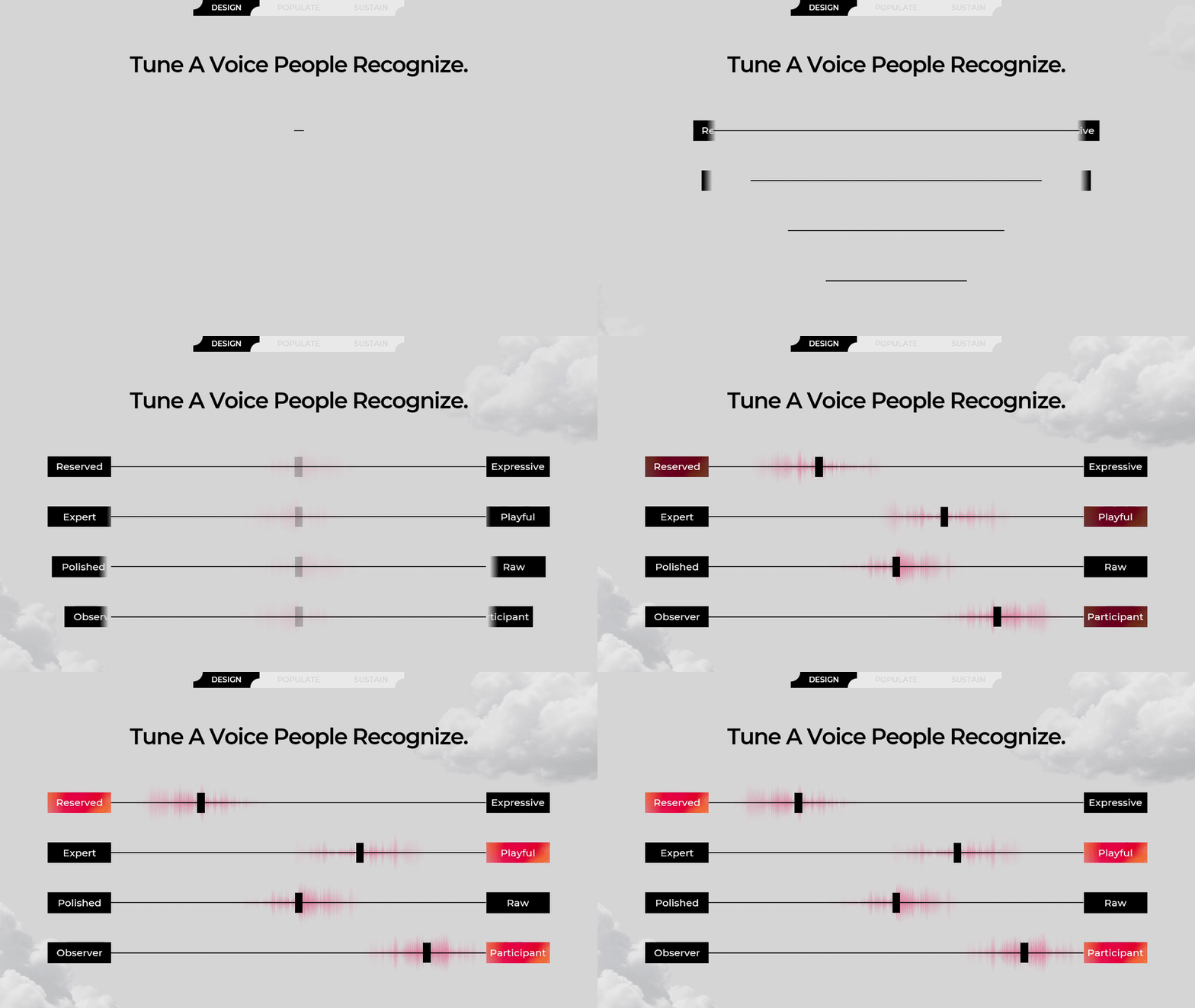
The voice slide fixes the tone of the world so it never drifts. Four sliders sit between poles such as reserved and expressive, expert and playful, and observer and participant. Managers set each slider to a deliberate position, then write three sample lines that match it, which turns an abstract idea of voice into a concrete rule any writer on the team can apply.
Download presentation

World Building for Brands
PowerPoint
17 Slides
To continue, enter your email:
How to Populate a World With Roles and Rituals
A world stays empty until people have a reason to enter and a part to play. The populate act gives members roles, rituals, and lore, so active participation replaces passive attention. People who join a world defend it, while people who only watch a brand forget it by the next scroll. Membership, not reach, becomes the measure that matters.
Pine and Gilmore argued in Harvard Business Review that leading companies stage experiences rather than sell plain services, and treat the offering as a stage with the customer on it. Separate Harvard Business Review research on brand communities adds that strong communities thrive when they offer members a range of roles, from curious newcomer to trusted insider, each with its own reason to take part.
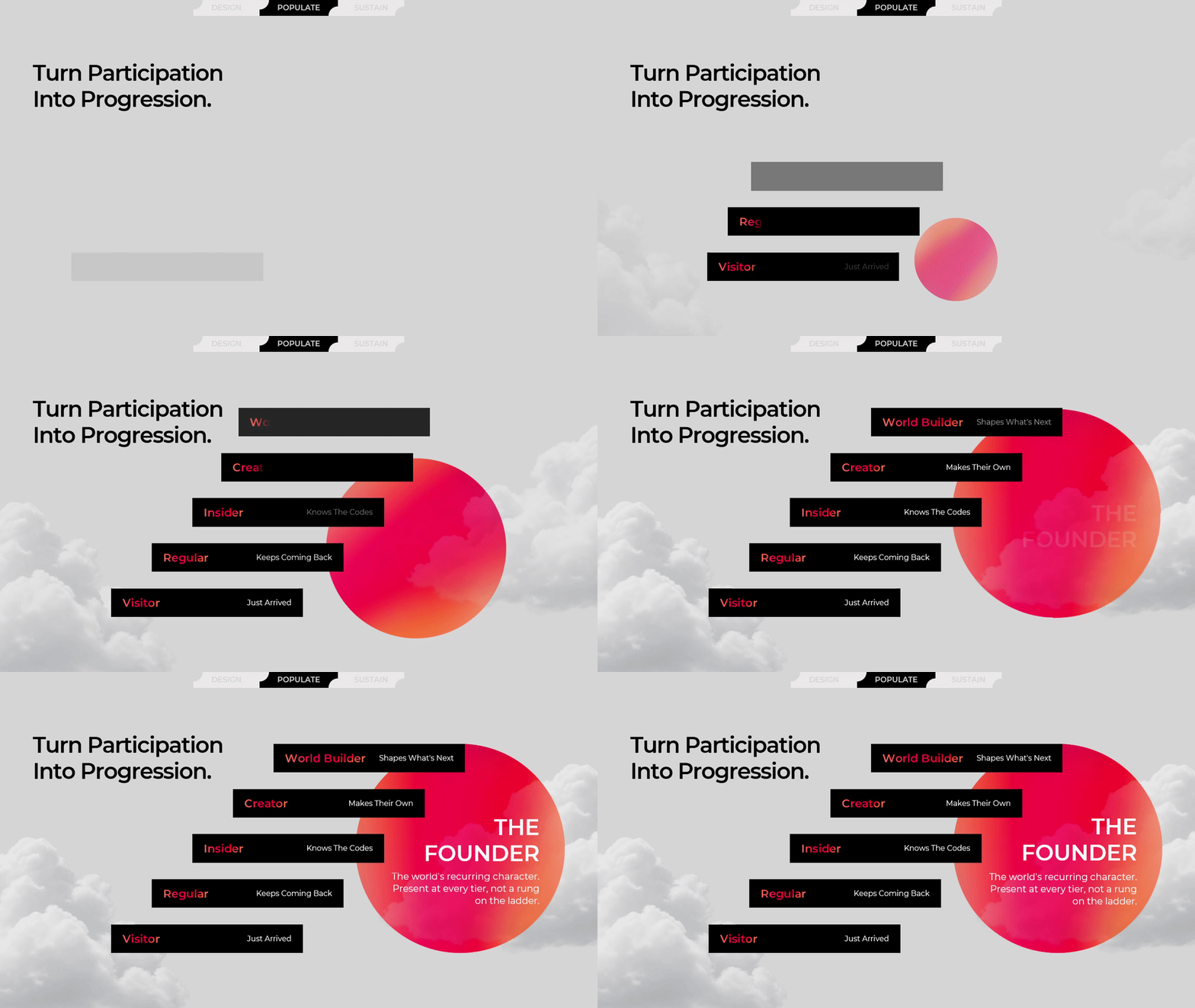
This slide turns one-time buyers into regulars through a clear path. A tiered ladder runs from visitor to world builder, with a recurring founder character present at every tier rather than fixed on a single rung. Managers define what each tier unlocks, then name the ritual that moves a member up, so progress inside the world feels earned and worth the effort.
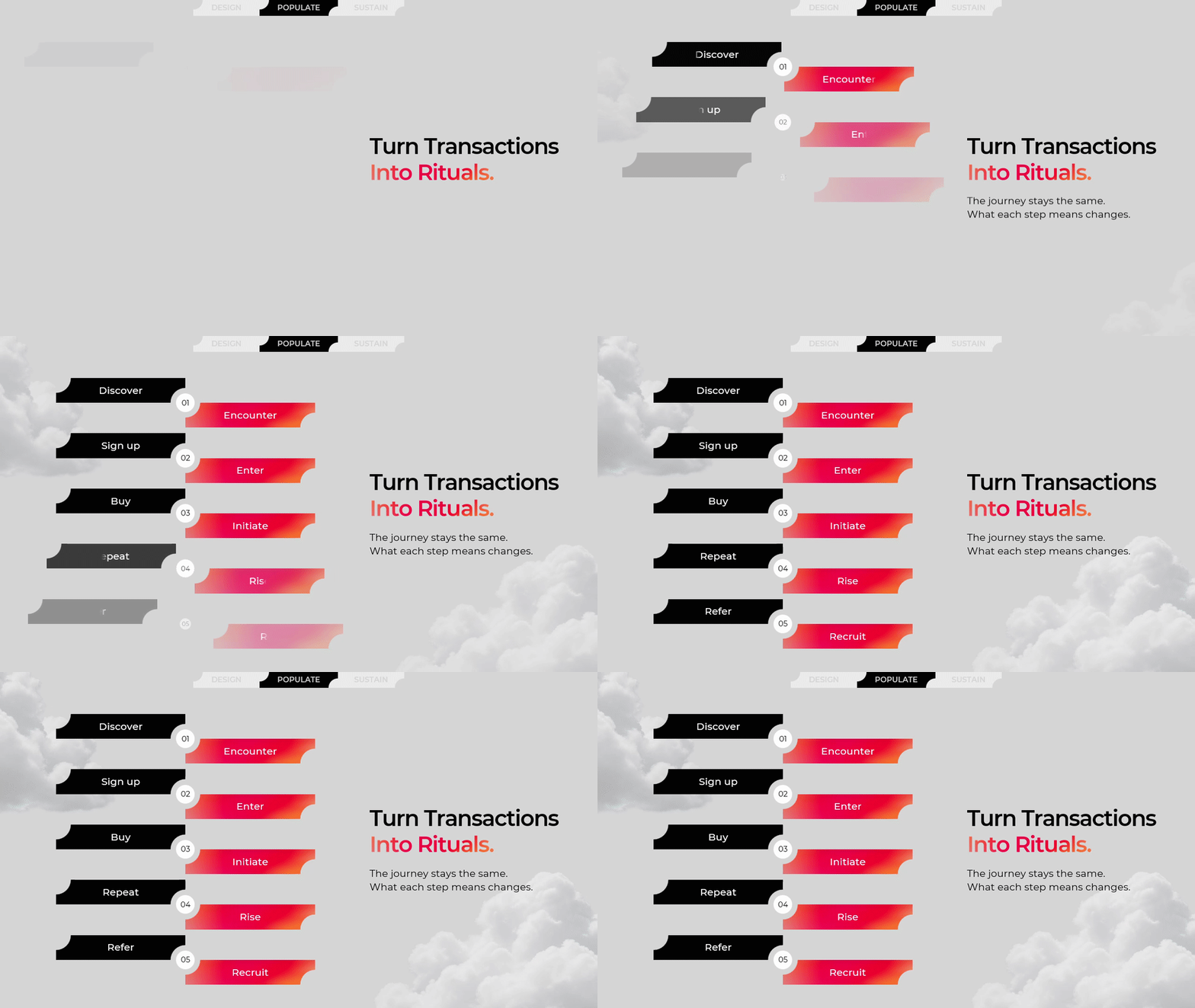
The rituals slide converts routine transactions into moments with meaning. A two-column map reframes ordinary steps, discover, sign up, and buy, as charged rites such as encounter, initiate, and rise. The journey itself does not change, yet the meaning of each step does. Teams rename every step in the brand's own language, so a plain purchase starts to feel like joining something.
This slide explains why a small visible surface can feel so true. An iceberg shows the ten percent that fans see, symbols, characters, and catchphrases, above the ninety percent they only feel, origin, history, rituals, artifacts, and rules. Teams build far more lore than the brand will ever show, because the unseen mass is exactly what makes the visible tip read as real.

How to Sustain a World Without Breaking It
A world feels real only when it never slips. The sustain act protects the brand through consistency and obsessive detail, so a single off-world moment cannot break the spell. Commitment across every touchpoint turns a distinctive idea into a believable place. One careless email or a stray off-brand page can undo months of careful world building in a second.
Consistency also pays in revenue. The State of Brand Consistency report from Marq, formerly Lucidpress, based on a survey of more than 400 organizations, links consistent brand presentation to a revenue lift in the range of 10 to 33 percent. The mechanism is recognition, which lowers the friction in every purchase decision and compounds each time a customer meets the brand again.
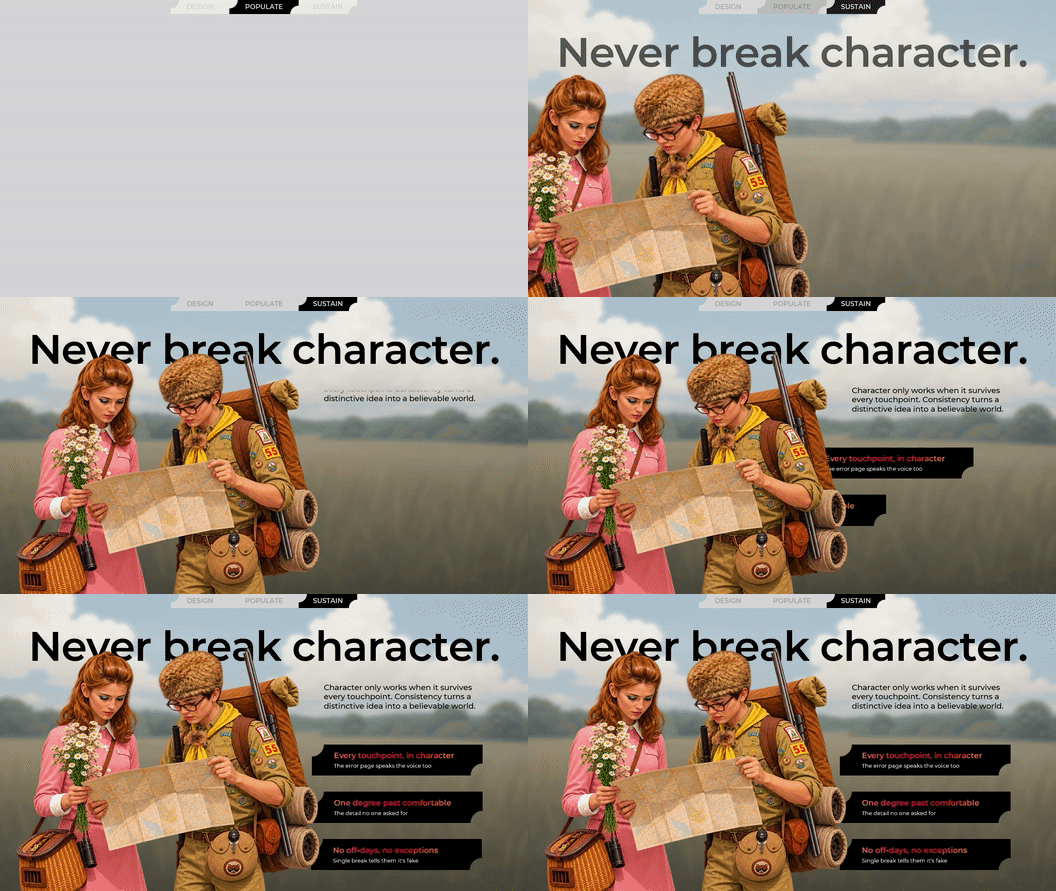
This slide holds the voice in place across every surface. It sets three rules, every touchpoint in character, one degree past comfortable, and no off-days and no exceptions. Managers audit the low-glamour surfaces first, the error page and the support reply, because character usually breaks in exactly the places no one thought to design.
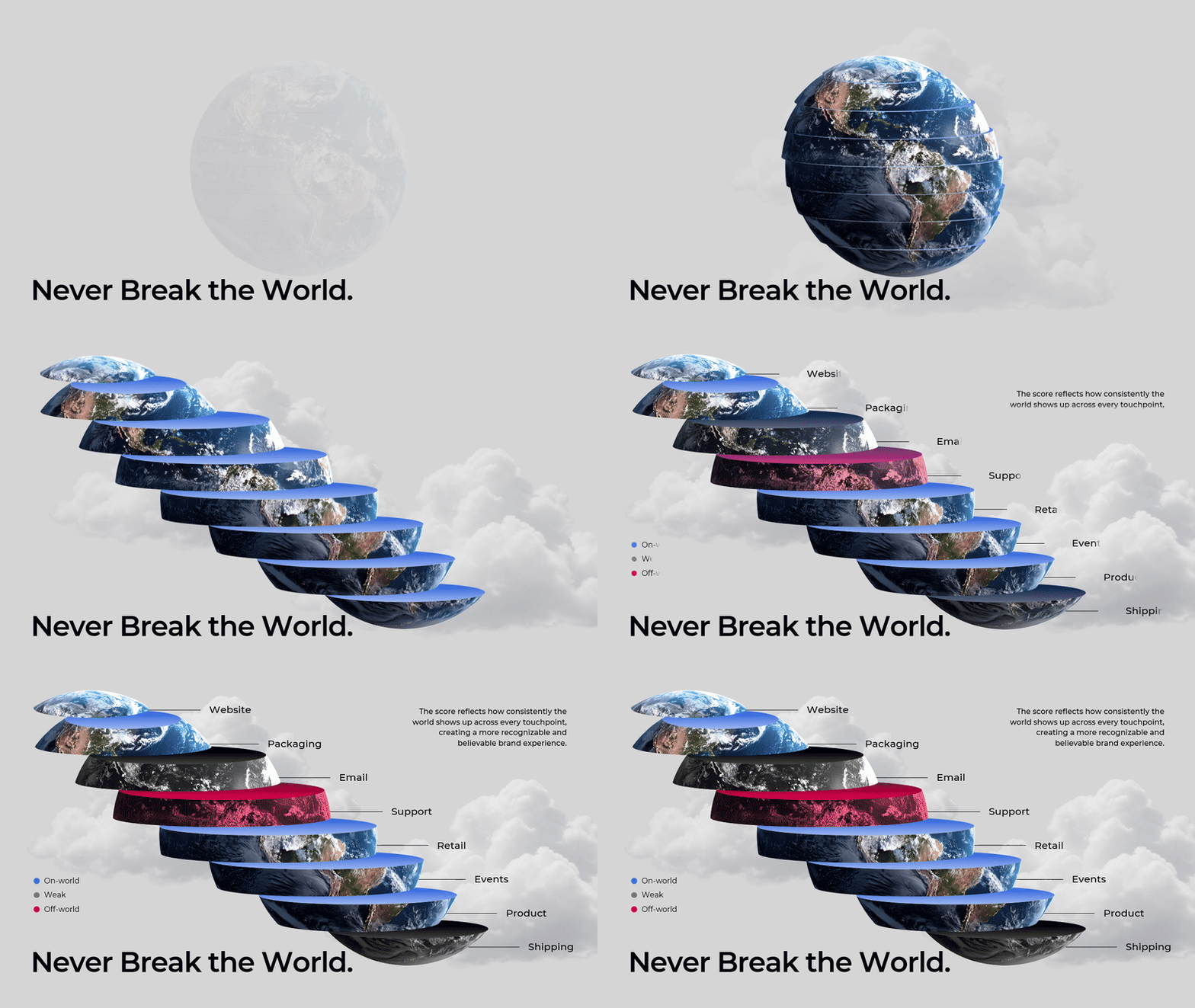
The touchpoint slide scores how consistently the world shows up across channels. A layered model spans website, packaging, email, support, retail, and shipping, and rates each surface as on-world, weak, or off-world. Teams score every touchpoint, then repair the weakest one first, so the brand closes the gaps where the world quietly falls apart before customers notice.
Download presentation
World Building for Brands
PowerPoint
17 Slides
To continue, enter your email:
How a World Compounds Into a Moat
A world is not a cost line; it is an asset that grows. Each turn of distinctiveness, recognition, participation, belonging, loyalty, and pricing power buys the next. Over time the moat compounds, and rivals cannot copy a place their own customers already belong to. The advantage stops depending on any single campaign and starts to defend itself.
Strong brands convert that loyalty into money. Kantar BrandZ data shows that the strongest brands command a price premium and consistently outperform major market indices, which treats brand equity as a financial asset rather than a soft metric. Nielsen found that 92 percent of consumers trust recommendations from friends and family above all other advertising, so members recruit members at almost no acquisition cost.
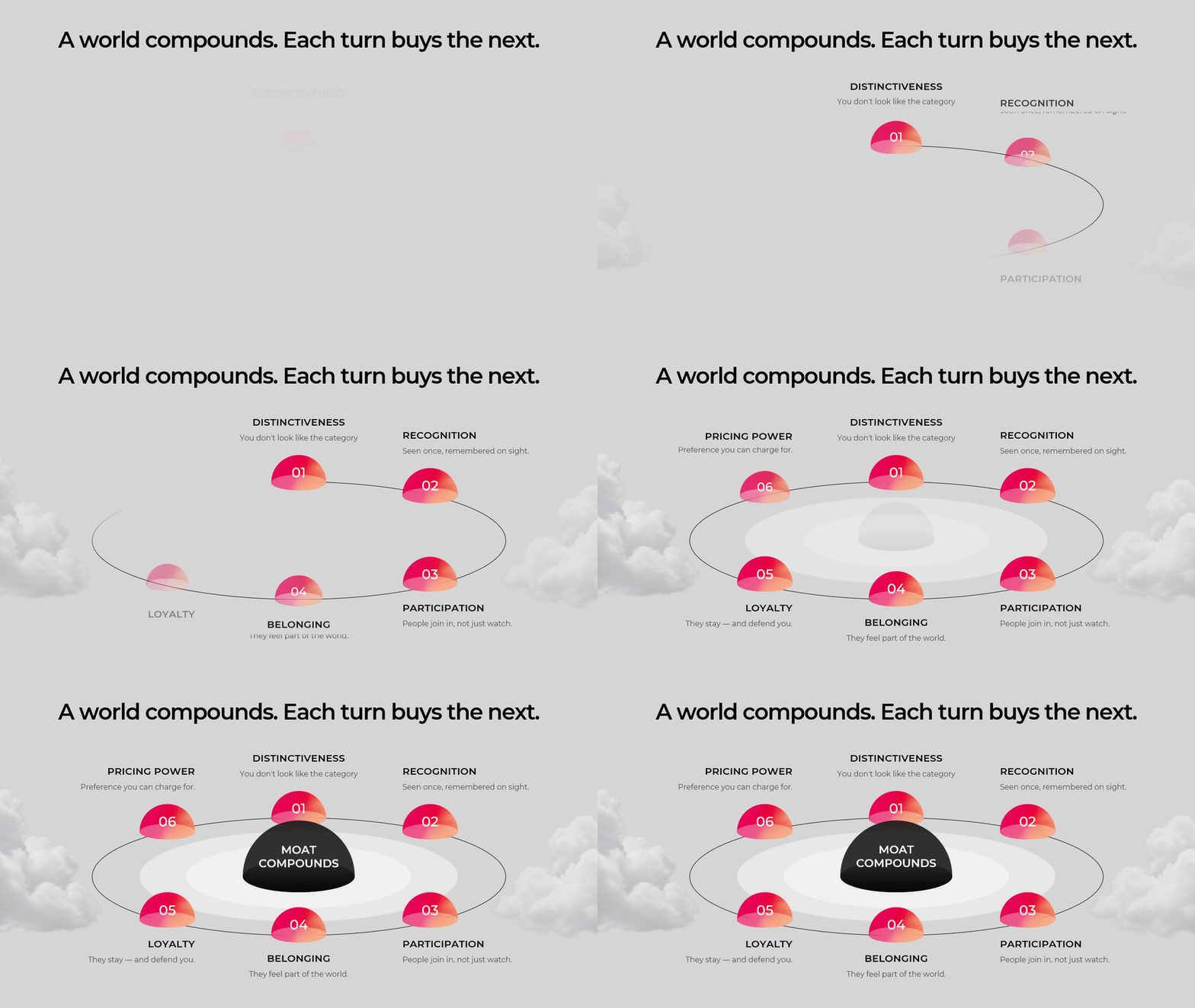
This slide shows how the advantages stack instead of standing alone. A six-node wheel links distinctiveness, recognition, participation, belonging, loyalty, and pricing power, with each stage feeding the next into a compounding moat at the center. Managers find the weakest node and invest there, so the loop keeps turning and no single gap stalls the whole system.
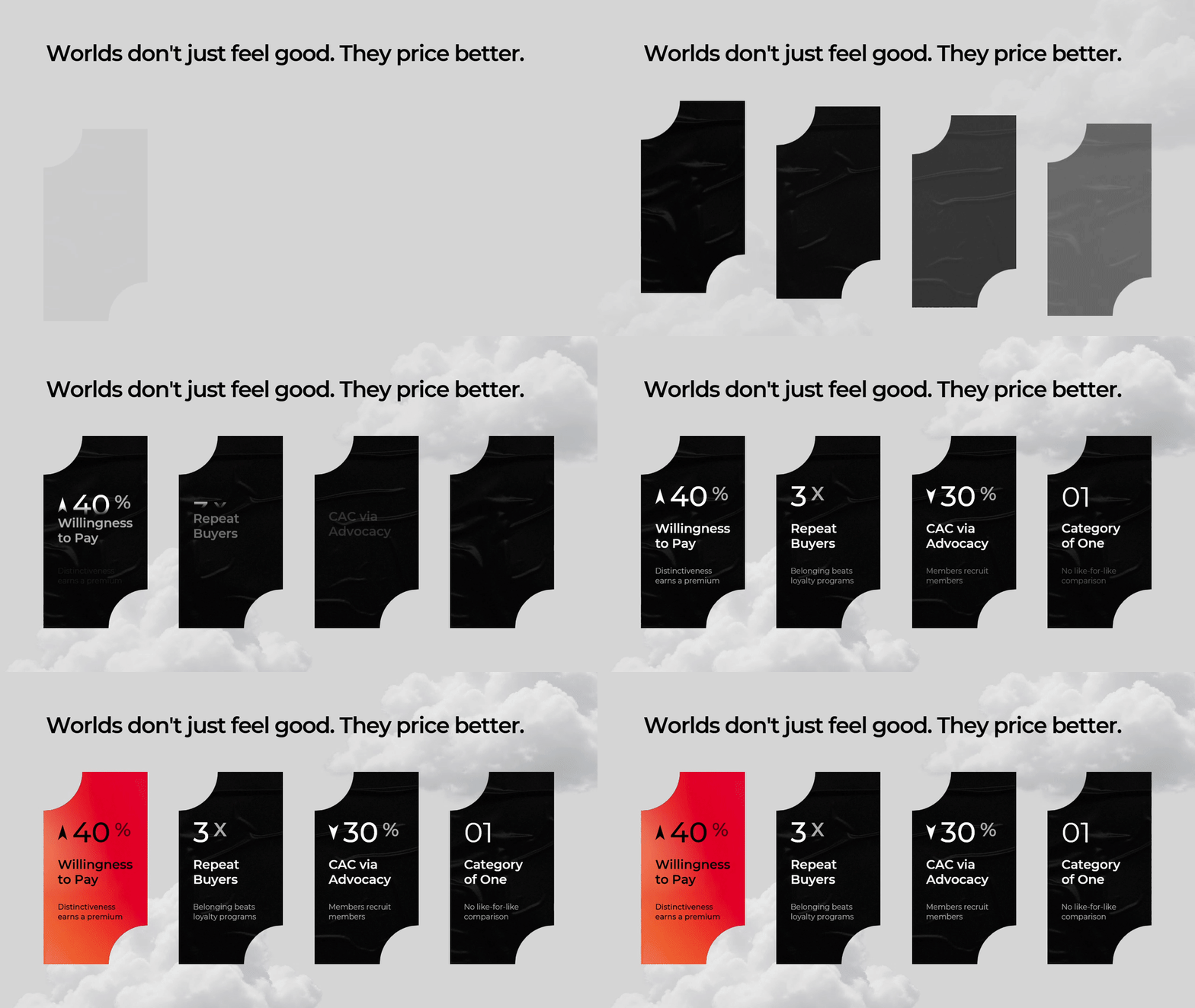
The pricing slide puts numbers on the premium a world earns. Four proof metrics anchor the case, willingness to pay, share of repeat buyers, acquisition cost through advocacy, and status as a category of one with no like-for-like comparison. Teams benchmark the brand against each metric, which sizes the opportunity in terms a finance leader will accept.
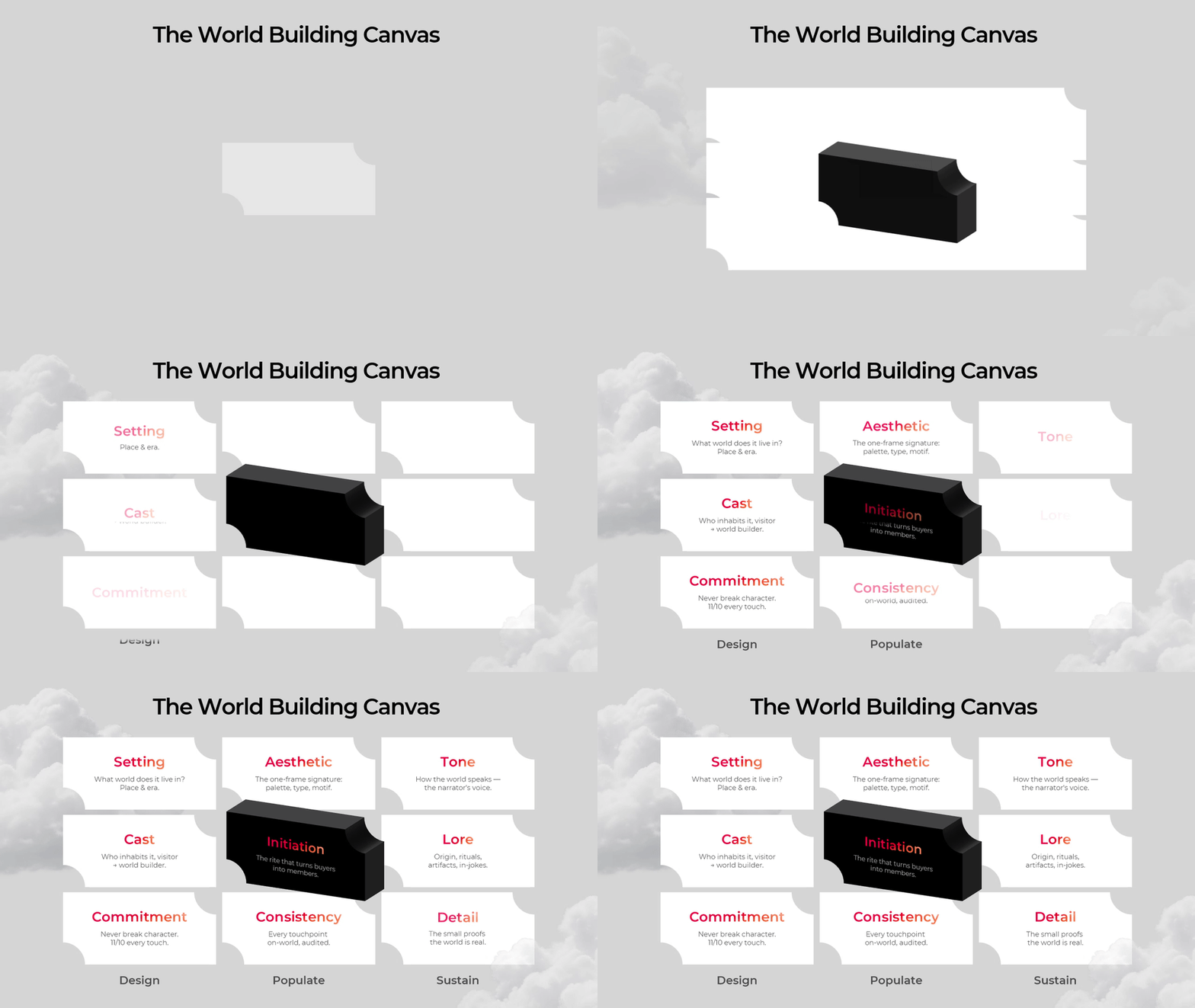
This slide captures the whole world on a single page. A nine-cell canvas spans the three acts, with setting, aesthetic, and tone under design, cast, lore, and initiation under populate, and commitment, consistency, and detail under sustain. Teams complete every cell before any launch, so the world stays coherent and no act ships half-built.
The assessment slide tests whether a brand truly behaves like a world. An eight-dimension radar plots distinctiveness, voice, touchpoints, lore, roles, participation, community, and detail, and maps the brand against the profile of a full world. Managers score each dimension, which exposes the honest gap between good branding and a place customers actually want to belong to.

World building moves a brand from a message that people receive to a place that people enter. It replaces attention that must be rented with belonging that the brand owns, and it turns scattered campaigns into one coherent world with a protected core. The three acts give that ambition a discipline: design a signature people know on sight, populate it with roles and rituals worth joining, and sustain it so no touchpoint ever breaks the spell. Distinctiveness earns recognition, recognition invites participation, participation deepens belonging, and belonging compounds into a moat that price and features can never build. In a market where products converge and specs stop selling, the strongest position is not a better claim but a world of one, a brand that competitors cannot copy because their customers already live inside it.
Download presentation
World Building for Brands
PowerPoint
17 Slides
To continue, enter your email:


